



Heat pump running all the time in Lexington, SC

Get matched

A heat pump that never shuts off is running against something. In Lexington, that something might be a thermostat that can't read the house right, a unit low on refrigerant, or a system too small for what summer here asks of it. Mild winters don't make it easier either, since a heat pump that short cycles in the cold is often the same one that won't stop in July. Either way, the running itself is costing you. Power in this area isn't cheap, and most houses around Lexington County heat and cool with electricity, so a unit stuck on all day shows up fast on the bill. Figuring out which one of those it is takes someone who can look at your system in person. Send in what's going on and you'll be matched with a contractor who takes on jobs like yours, and they'll reach out to you directly. You won't have to track down who to call or sort through options on your own.

A heat pump that runs nonstop is trying to close a gap it can't close. It reaches the temperature on the thermostat slower than the house loses ground, so it never gets to shut off and rest. In Lexington, summer is the usual cause: long stretches of heat and humidity ask the system to run longer hours than a mild spring day does, and if the unit is low on refrigerant, undersized for the house, or losing airflow to a dirty coil or a clogged filter, it falls behind and just keeps going. Winter here is mild, so a heat pump running constantly in January usually points to the same kind of problem rather than the cold itself. Either way, a unit that never cycles off is working harder than it should, and with electricity rates here, that shows up on the bill before anything else does. It is worth having someone look at it rather than letting it run.

A smiling man in a dark green long-sleeve shirt reclines on a sofa in a dimly lit living room, with a bowl of popcorn on a side table in the foreground and a bookshelf, lamp, and houseplant behind him.
A smiling man with graying hair and stubble in a blue henley shirt sits on a gray sofa with cushions in a living room, with a bowl of popcorn on a wooden table in the foreground.
A bearded man in a dark quarter-zip sweater sits smiling on a brown sofa in a dimly lit living room, with a bowl of popcorn and a mug on a table in the foreground and a potted plant near a window behind him.
A smiling bearded man in a dark blue henley shirt sits leaning back on a light grey sofa in a living room, with a bowl of popcorn on a wooden coffee table and a large window behind him.

Why is your heat pump never catching up in Lexington?

  • Winter nights average 36°F

    Winter nights here average 36°F, cold enough that a struggling heat pump runs long stretches without shutting off.

  • Heat runs November through March

    Heat runs November through March here, five months where a unit that can't keep up stays working the whole time.

  • Cooling runs May through September

    Cooling runs May through September here, five months of long demand that wears on a system already running too much.

NOAA nClimDiv 1991-2020

Short cycling versus running nonstop

Some heat pumps in Lexington turn off and on every few minutes instead of running straight through. That's a different problem from one that never stops. Short cycling usually points to a unit oversized for the house, a dirty filter choking airflow, or a refrigerant issue that trips the system's safety controls before it can finish a cycle. Each start draws a surge of power and puts wear on the compressor, and the house never quite feels even because the system keeps interrupting itself. If your outdoor unit shuts off within a few minutes and kicks back on soon after, that's short cycling, not a unit working nonstop to keep up.

What a healthy cycle looks like

A heat pump that's sized right and working properly runs for a stretch, reaches the thermostat's setting, and shuts off for a while before starting again. In Lexington, a normal cooling cycle during a hot July afternoon might run fifteen to twenty minutes and then rest. In the mild stretches of spring and fall, cycles are shorter and the gaps between them longer. A system that never reaches that off period, through the muggy months or even on a cooler night, isn't resting because something in the house, the equipment, or the setup is keeping it from ever closing the gap it was built to close.

Power here costs 16.52 cents per kilowatt-hour

At 16.52 cents per kilowatt-hour, a heat pump that won't shut off shows up fast on your bill. It's pulling power the whole time it runs, and a unit stuck running nonstop is pulling it around the clock.

EIA-861 2025

What you'll notice in the house

Rooms stop matching each other. The room with the thermostat might finally hit the set temperature while a back bedroom or an upstairs room stays warm all afternoon. The air coming out of the vents feels less cold than it used to, even with the system running. You might catch the outdoor unit running at night when the house doesn't need it to. None of that is normal wear. A heat pump that's keeping up with your house cycles off and gives those rooms a rest. One that doesn't shut off is telling you it can't close the gap, and the rooms farthest from the thermostat show it first.


What it does to your bill

A heat pump pulls power the entire time it runs, not just when it starts up. At 16.52 cents per kilowatt-hour, a unit running nonstop through a Lexington summer is pulling that power around the clock instead of cycling off like it should. You'll likely see it on the bill before you see it anywhere else, since the strain on the system doesn't always show up as a noise or a smell. If a jump in your electric bill lines up with a system that never seems to shut off, that's not a coincidence worth ignoring.

A woman with dark hair tied up reclines on a sofa with her eyes closed under a gray blanket, with a lit floor lamp, framed picture, and a book beside her in a dim room.
A smiling bearded man in a dark green sweater sits at a dinner table with a glass of red wine, plates of food and a lit candle, with a lamp and houseplant in the dim background.

Matched to your heat pump job

Get the heat pump repair search off your mind today.

Sending the form costs nothing.

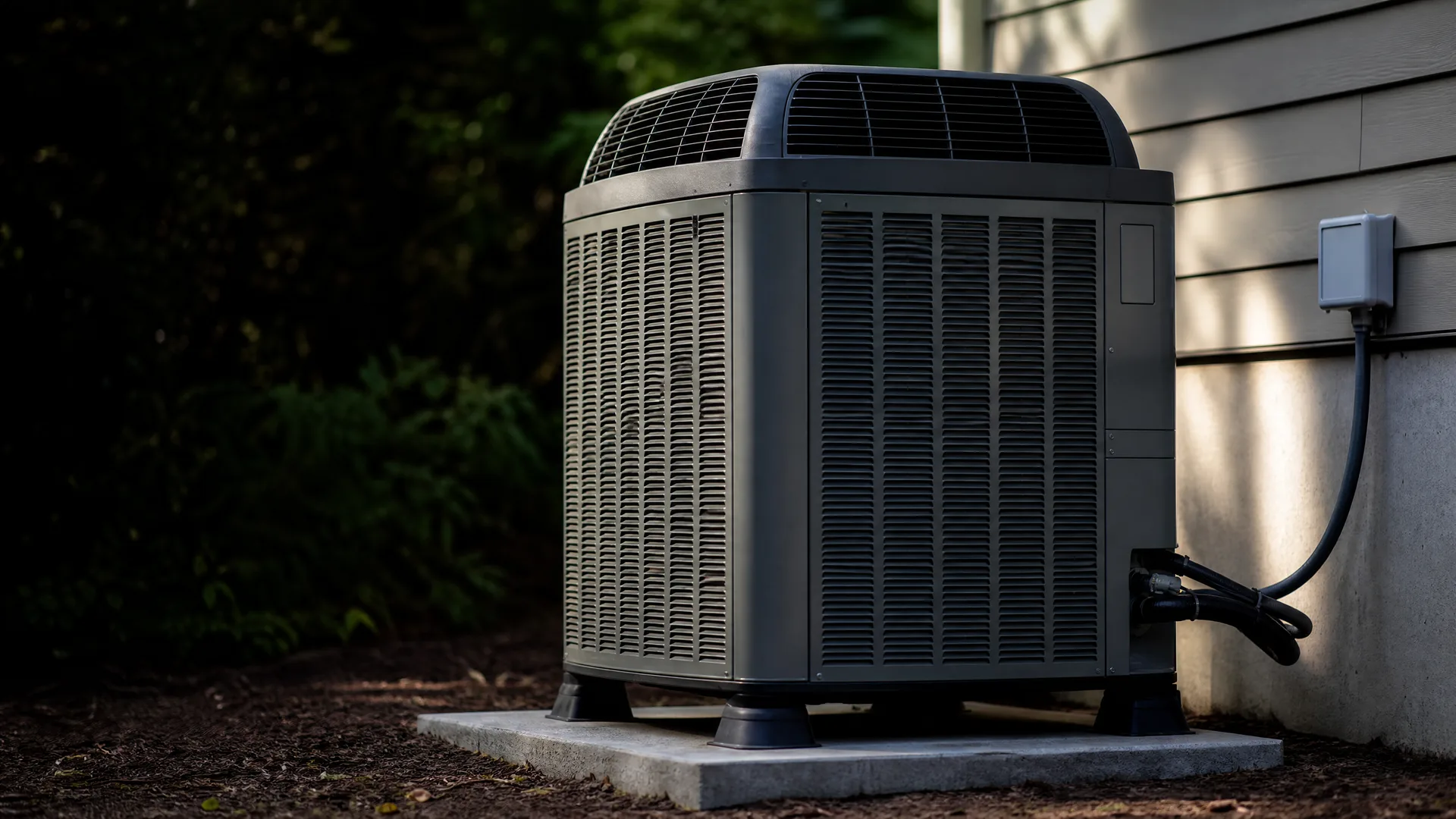
A gray outdoor condenser unit on a concrete pad beside a light-colored horizontal-siding house, with a disconnect box and refrigerant line on the wall, ornamental grasses and a shrub in mulch nearby, and a concrete patio in the foreground.

A heat pump cycling the way it should

This unit sits on its pad, lines running clean to the disconnect box, and it shuts off. It runs long enough to cool the house, then stops. You'd hear the quiet between cycles instead of a compressor that never lets up.

An outdoor condenser unit on a concrete pad beside a horizontal-sided house, with insulated refrigerant lines running to a wall-mounted box, surrounded by bare dirt.

A heat pump that's lost the fight

This one's older, the casing showing what years outside do to a condenser. A unit in this shape is more likely to be low on charge or losing the capacity it had when new, and that's often why it can't shut off anymore.

Fix the Problem or Replace the Unit

Fix now

  • A contractor can check the refrigerant charge and add what's missing, since low refrigerant is a common reason a heat pump can't catch up.
  • A thermostat that's misreading the house can be recalibrated or replaced without touching the outdoor unit at all.
  • Clearing a dirty outdoor coil or a clogged filter sometimes gets a unit back to shutting off on its own.
  • A technician can confirm whether the defrost cycle is working correctly, since a stuck defrost board keeps a unit running when it shouldn't.
  • Repair costs you only what the actual problem costs to fix, not the price of new equipment.

Replace

  • If the unit is undersized for the house, no repair changes that, since the equipment was never matched to the load in the first place.
  • A heat pump nearing the end of its working life may keep running nonstop no matter what gets repaired, because the compressor itself is wearing out.
  • New equipment sized correctly for the house stops the nonstop running at its source instead of chasing one failure after another.
  • Replacement is the larger cost up front, but it ends the pattern of repeated repairs on a unit that keeps falling behind.
  • A system sized and installed for Lexington's summers gives the house a fighting chance where the old one couldn't keep pace.
  1. The thermostat calls for cooling or heat and the compressor starts.

  2. Refrigerant carries heat between the outdoor unit and the indoor coil.

  3. The system checks the house temperature against the thermostat setting.

  4. If the house hasn't caught up, the compressor keeps running instead of shutting off.

What is this doing to your power bill and your system

You already know the bill is up. A heat pump that runs nonstop pulls power the entire time, and when it can't shut off at all, that's a full day of draw instead of the usual on and off. You might also notice the outdoor unit running warm to the touch, or the air from the vents feeling weaker than it should, cool but not cold. Left alone, a unit running this hard this long wears on the compressor faster than normal cycling does, since it never gets the rest periods a working system has built in. Some homeowners also notice the unit icing over on the coil, a sign it's struggling even harder than the nonstop running already tells you.

A gray outdoor condenser unit on a concrete pad beside a light green lap-sided house, with a wall-mounted electrical disconnect box, mulch bed with shrubs, river rock, and a paved walkway in the foreground.

Running like it should

The unit sits on its pad, lines running clean to the disconnect box. It kicks on, cools the house, and shuts off. You'd notice the quiet in between, compressor off, fans still, nothing pulling power until the house needs it again.

An outdoor air conditioner condenser unit on a concrete pad beside a house with horizontal siding above a concrete block foundation, with insulated refrigerant lines and a vertical white pipe on the wall.

Worn down and struggling

This unit shows its age. Lines run along the foundation to a compressor that's lost ground somewhere, a weak capacitor, a slow refrigerant leak, a part wearing out. It runs and runs because it can't close the gap, and every hour it runs is an hour on your bill.

An outdoor air conditioning condenser unit with dusty coils sits on a concrete pad against light horizontal siding, with an electrical disconnect box and refrigerant lines on the wall and a shrub and mulch at left.
Before you get your heat pump repair
A gray outdoor condenser unit on a concrete pad beside a house with horizontal lap siding, connected by conduit and lines to a wall-mounted disconnect box, with a shrub and gravel bed to the left.
After you get your heat pump repair
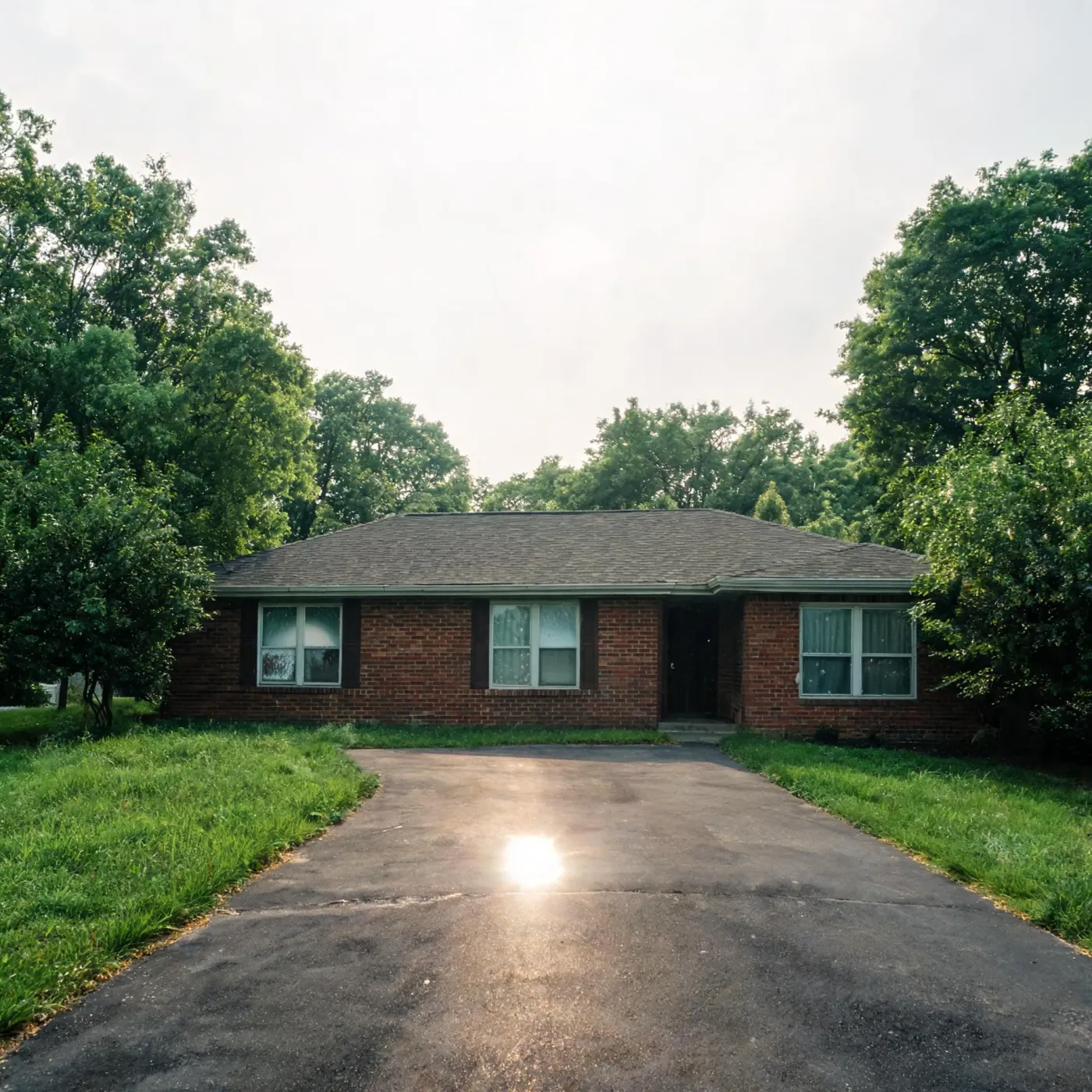
A single-story brick ranch house with a shingled hip roof and dark front door, fronted by a wide asphalt driveway with sun glare, flanked by grass and leafy trees under a pale overcast sky.

A heat pump does two jobs at once in summer here, it pulls out heat and it pulls out moisture, and the moisture is the harder one. Lexington County averages a summer dew point of 68°F, heavy enough that the air feels thick even once the temperature itself isn't that high. A unit that's already struggling to keep up spends extra runtime wringing that moisture out, and if it can't keep up, you'll feel it as a house that's cool enough but still feels damp, floors that feel clammy, air that doesn't feel dry even when the thermostat says you're at temperature. Source: regional dew point averages, June through August.

NASA POWER T2MDEW

A woman stands in the open doorway of a white stucco house holding the dark door, facing a man in a black cap and shirt seen from behind in the blurred foreground, with a potted flowering plant beside the entry.

A heat pump that won't shut off has a reason

A heat pump running nonstop in Lexington is telling you something specific. It's low on refrigerant, or the thermostat is misreading the house, or it was never sized for what summer here demands. None of those get better on their own, and none of them are things you can see by looking at the outdoor unit. Someone has to check the charge, test the thermostat, and look at what the system is actually up against.

That's the part that's out of your hands once you ask for it. A contractor who works on heat pumps in Lexington County can look at your system, tell you which of these it is, and take it from there. You won't need to figure out whether it's the refrigerant or the thermostat or the size of the unit before you call. That's the diagnosis, and it's someone else's job now.

Interior corner of a room with a window and sheer curtain at left, a gray upholstered sofa with a cushion at right, and a round wooden table holding stacked books and a round vase with an olive branch.
An outdoor air conditioning or heat pump condenser unit on a concrete pad beside a house with horizontal siding, with a wall-mounted disconnect box and refrigerant lines, and dark shrubs to the left.

A heat pump pro near you

RepairHeat PumpLexington County, SC
Step 1 of 2

What ZIP code is the job in?