Why your heat pump won't turn on in South Carolina

Tell a local repair pro what your heat pump is doing.

Get matched

Why won't my heat pump turn on?

You walked over to the thermostat expecting warm air or cool air and got nothing. No hum, no click, no fan. In South Carolina, where most homes rely on the heat pump for both, that kind of silence gets your attention fast, especially if it happened overnight or while you were checking a small change before it turned into a bigger one.

Most likely a tripped breaker, a bad thermostat setting, or a safety switch stopping the unit

A heat pump that won't start usually comes down to power not reaching it or something telling it not to run. Check the breaker first, since a heat pump pulls a fair amount of current and a tripped breaker is the simplest explanation. Next, check the thermostat is set to heat or cool and the batteries aren't dead. If power and settings check out, the outdoor unit may have a safety switch that shut it down, often tied to a float switch near the indoor coil if condensate has backed up. Since most homes here heat with electricity, a heat pump that stays off means no heat at all, not just a backup system taking over.

An outdoor condenser unit encased in thick ice stands on snow beside a house with horizontal siding and exterior pipes, with bare trees and a sunset glow in the background.

You're up before the sun, coffee in hand, and you go out to check on the unit because the house never warmed up overnight. The side yard is still dark, just the porch light reaching the edge of the concrete pad. The outdoor unit is wrapped in ice, thick over the coils, down into the fan grille, a solid white shell where metal should show through. You crouch down and touch it and your finger doesn't leave a mark. Nothing is turning. No fan, no hum, just the tick of the ice settling as the temperature drops another degree before dawn.


Check It Yourself or Call for It

Something You Can Check

  • If the outdoor unit is iced over and the indoor fan still runs, the system may just need a defrost cycle to finish before it responds again.
  • A tripped breaker or a thermostat that lost its schedule after a power blink can look like a dead system when it isn't.
  • If the air filter is packed with dust, some heat pumps shut the fan off to protect the coil, and a clean filter brings it back.
  • A thermostat set to the wrong mode, or batteries that died quietly, will leave you standing in front of a screen that looks fine but does nothing.
  • If the outdoor unit runs but no air moves inside, that points to the air handler, not the compressor, and it's worth knowing before anyone opens a panel.

Something Only a Contractor Should Touch

  • If the outdoor unit is silent and the indoor unit is silent, a failed capacitor or a bad contactor can stop the whole system cold, and neither is a part you replace yourself.
  • A refrigerant leak will eventually shut a heat pump down entirely, and finding the leak means gauges and a reclaim machine, not a flashlight.
  • If the reversing valve has failed, the system may run but never deliver heat, which looks like a power problem until someone checks it directly.
  • Burnt wiring at the outdoor unit, often from a failed component that overheated, is a safety issue as much as a repair one.
  • A compressor that hums and then cuts out is drawing current it shouldn't, and running it that way again can finish it off for good.
A gray outdoor condenser unit sits on a concrete pad beside a house with horizontal lap siding, with a wall-mounted disconnect box and refrigerant lines, mulched beds and a shrub nearby, and a concrete walkway in the foreground.

Running the way it should

This is a heat pump doing its job. The fan turns, the disconnect box sits ready on the wall, and the unit draws power without tripping anything. Nothing on the pad or around the lines should stop it from answering the thermostat.

An outdoor air conditioner condenser unit on a concrete pad beside a light gray vinyl-sided house, with an electrical disconnect box and conduit on the wall and bare soil in the foreground.

Something is keeping it quiet

Same setup, same disconnect box, but the unit isn't responding. If the lines or the cabinet look iced, frosted, or the fan won't spin when you flip the thermostat up or down, that's a sign worth having someone look at before it goes further.

A woman in a cream cowl-neck sweater sits by a window with snow outside, in a dimly lit living room with a sofa, lit lamp, mirror, candles and a fireplace.
A woman in a gray turtleneck sweater sits beside a large window looking out at snow-covered evergreen trees, in a dimly lit living room with a lit fireplace, lamps, couch and houseplant.
A woman in a cream turtleneck sweater stands beside a large window with snow-covered ground and bare trees outside, in a dimly lit living room with lamps, a sofa and framed art.
A woman in a grey cowl-neck sweater stands indoors near a window, looking out at falling snow, with a lamp, framed picture and couch in the warmly lit room behind her.

Get the right pro for your heat pump

Get the heat pump repair search off your mind today.

You only hire the pro if you want to.

How the Signal Gets Lost

  • The thermostat sends a low voltage signal to a control board inside the air handler before anything else moves.
  • That board has to see 24 volts from the transformer or it won't energize the contactor that starts the outdoor unit.
  • A blown low voltage fuse on the board is a common reason a heat pump sits dead with the thermostat lit up fine.
  • The contactor is a small switch in the outdoor unit that closes to send full power to the compressor and fan.
  • If the contactor's coil fails or its contacts pit and burn, the outdoor unit gets no power even though the indoor fan runs.
  • A reversing valve stuck between heat and cool can also keep the system from responding the way the thermostat expects.

Everything starts with a small signal, not a big one. The thermostat doesn't run your heat pump directly. It sends 24 volts to a control board in the air handler, and that board decides what happens next. A transformer somewhere in the system steps household power down to that low voltage, and if the transformer or the wiring to it fails, the board never wakes up even though the thermostat screen looks normal and still lights up when you touch it.

A lot of these failures trace back to one small part: the low voltage fuse on the control board. It's there to protect the system, so it blows on purpose when something downstream draws too much, often a short in a thermostat wire or a failing component outside. Once it blows, the signal stops there and nothing downstream gets power, even though the thermostat is doing its job correctly.

If the signal does get through, it has to close the contactor, a switch in the outdoor unit that sends full power to the compressor and the outdoor fan. That switch works by an electromagnet pulling a set of contacts together. Over years of cycling on and off, those contacts pit and burn, or the coil that pulls them just gives out. When that happens, the indoor fan can still run because it's on its own circuit, while the outdoor unit sits there drawing no power at all. A reversing valve stuck mid-position causes a similar standoff, where the system is energized but can't settle into heating or cooling.

An outdoor condenser unit sits on a concrete pad beside a house with horizontal vinyl siding, with a gray electrical disconnect box and conduit on the wall and a shrub at left.
Before you get your heat pump repair
A gray outdoor condenser unit on a concrete pad beside a light-colored horizontal-siding house, with a disconnect box and refrigerant line on the wall, ornamental grasses and a shrub in mulch nearby, and a concrete patio in the foreground.
After you get your heat pump repair
  1. Thermostat calls for heat and sends a 24 volt signal to the air handler.

  2. The control board gets that signal and energizes the contactor.

  3. The contactor closes and sends power out to the outdoor unit.

  4. The compressor and outdoor fan start running together.

A woman in a long cream cardigan and jeans stands at an open wooden front door of a gray shingled house with stone-based porch columns, with a second person visible inside, and potted flowers and shrubs beside the entry.

What a dead heat pump means for your house

With most homes here heating on electricity, your heat pump is the only thing standing between the house and whatever the night does outside. When it won't start, there's no backup kicking in on its own. The house just sits there losing warmth while you figure out what's wrong, and in a cold snap that doesn't take long to notice in the bedrooms.

You already check the small stuff before it turns into a bigger problem, so you've probably reset the breaker and bumped the thermostat before you got this far. If none of that brought it back, the cause is sitting somewhere between the control board and the outdoor unit, and that's not something to keep testing piece by piece on your own. Once you send the form, you're done chasing it. A contractor who handles heat pumps in your area gets your information and reaches out, and the house is someone else's problem to solve from there.

A shallow dark wooden bowl and a stack of books rest on a wooden table in front of a beige sofa with linen and green cushions, with a tall ceramic vase of thin branches beside a window in the background.

Power costs 15.12 cents per kilowatt-hour statewide

At 15.12 cents per kilowatt-hour, running strip heat or portable heaters while your heat pump sits dead adds up fast. That's the backup cost built into the rate itself, not the fix. Getting the heat pump running again is what keeps your bill where it belongs.

EIA-861 2025 statewide residential average

A bearded man in a plaid flannel shirt stands indoors looking out a window at snow-covered conifers, with a ceramic mug on the wooden sill and wooden cabinets behind him.
A bearded man in a navy T-shirt sits on a light-colored couch indoors, smiling while looking down at a laptop screen in the foreground, with a framed picture and a potted plant blurred behind him.
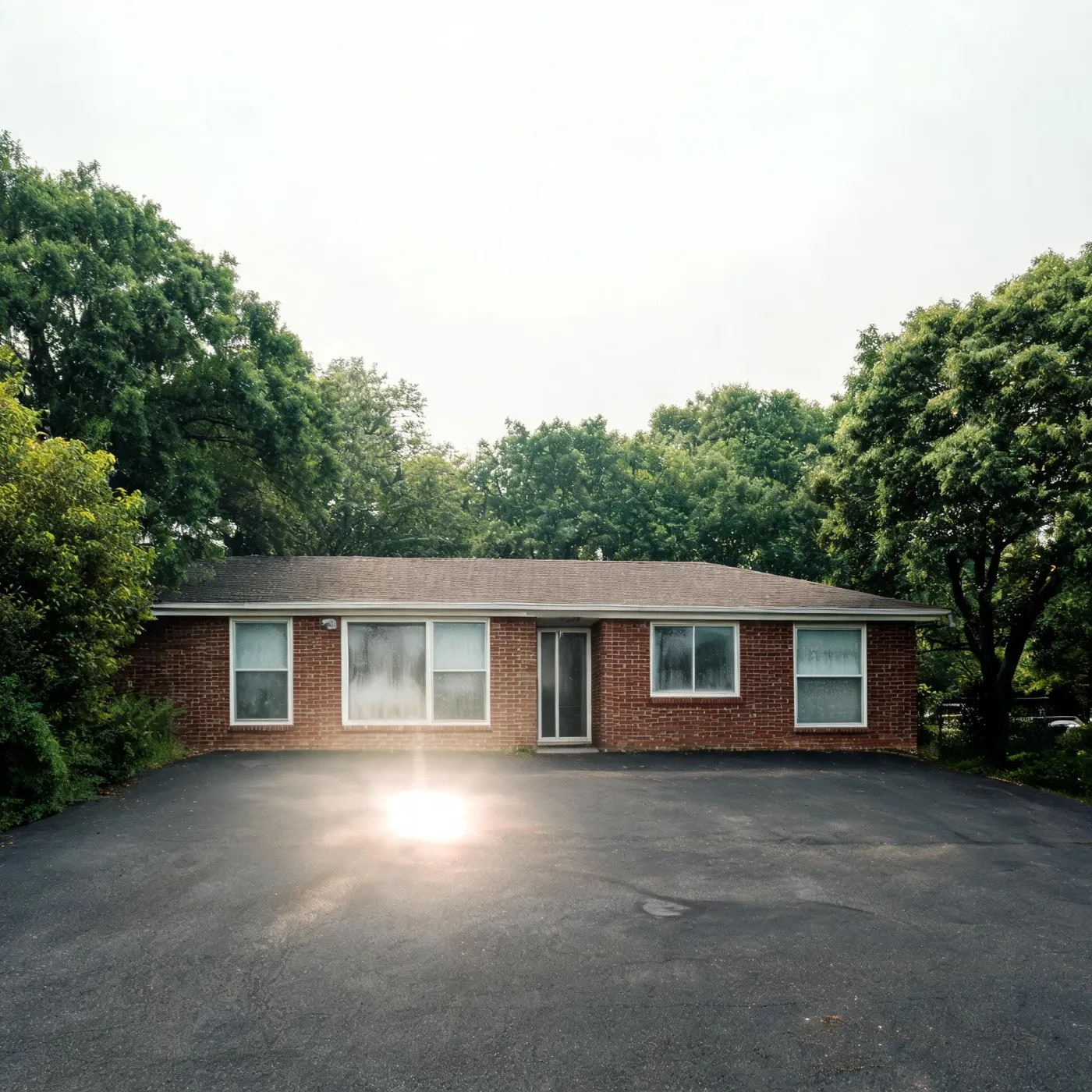
A single-story red brick ranch house with a low shingled roof, white-framed windows and a central glass door, fronted by a large empty asphalt parking area with sun glare, surrounded by green deciduous trees under a pale overcast sky.

That muggy air sits around the outdoor unit nearly all summer, with the dew point averaging 69°F across June, July and August. Air that heavy carries more moisture for the system to pull out of your house, and the coil works harder to do it. If the heat pump is already struggling, that extra load is often what pushes it from running rough to not starting at all. You might notice the house feels damp before it feels warm, or the system short cycles on the hottest, stickiest afternoons instead of running steady.

NASA POWER T2MDEW county cells weighted by homes

A heat pump that won't start usually comes down to something specific: a low voltage signal that never reached the board, a tripped breaker, ice that hasn't finished clearing, a fuse that blew. Someone who works on these every day can look at your unit and know within minutes which one it is. You don't have to be the one to trace it back to the contactor or the transformer or the defrost board. Once you send the form, that part stops being yours to carry. A contractor who covers your area gets your information and reaches out to you about getting the system looked at. The house still needs heat, the unit is still sitting there dead, but the work of figuring out why and who can fix it is no longer something you're doing alone at the thermostat. That's the part you hand off.

A gray outdoor condenser unit on a concrete pad beside a house with horizontal lap siding, bordered by mulch, shrubs and a mowed lawn.

A pro who works on heat pumps

RepairHeat PumpSouth Carolina
Step 1 of 2

What ZIP code is the job in?