


Before you get your AC repaired
You're still checking the coil for ice, running the fan-only cycle to thaw it, and waiting hours before you can try cooling again while the house stays muggy.
Tell a local repair pro what your air conditioner is doing.
You walk outside to check the condenser or notice the vents barely blowing, and there it is, ice built up along the refrigerant lines or across the indoor coil. It happens more than once and always seems to land on the hottest, most humid days, when you need the system working the most. You want to know why it's doing this and whether it's something to worry about.
A frozen coil almost always comes down to one of two things: not enough air moving across it, or not enough refrigerant inside it. A dirty filter, blocked vents, or a failing blower motor can all starve the coil of airflow, and once that happens the coil gets too cold and the moisture in the air freezes right onto it instead of draining away as condensation. South Carolina's humidity makes this worse, since there's more moisture in the air for the coil to pull out. A low refrigerant charge, often from a slow leak, does the same thing by dropping the coil's temperature below where it should run. Either way, running the system while it's frozen can damage the compressor, so it needs attention before you turn it back on.
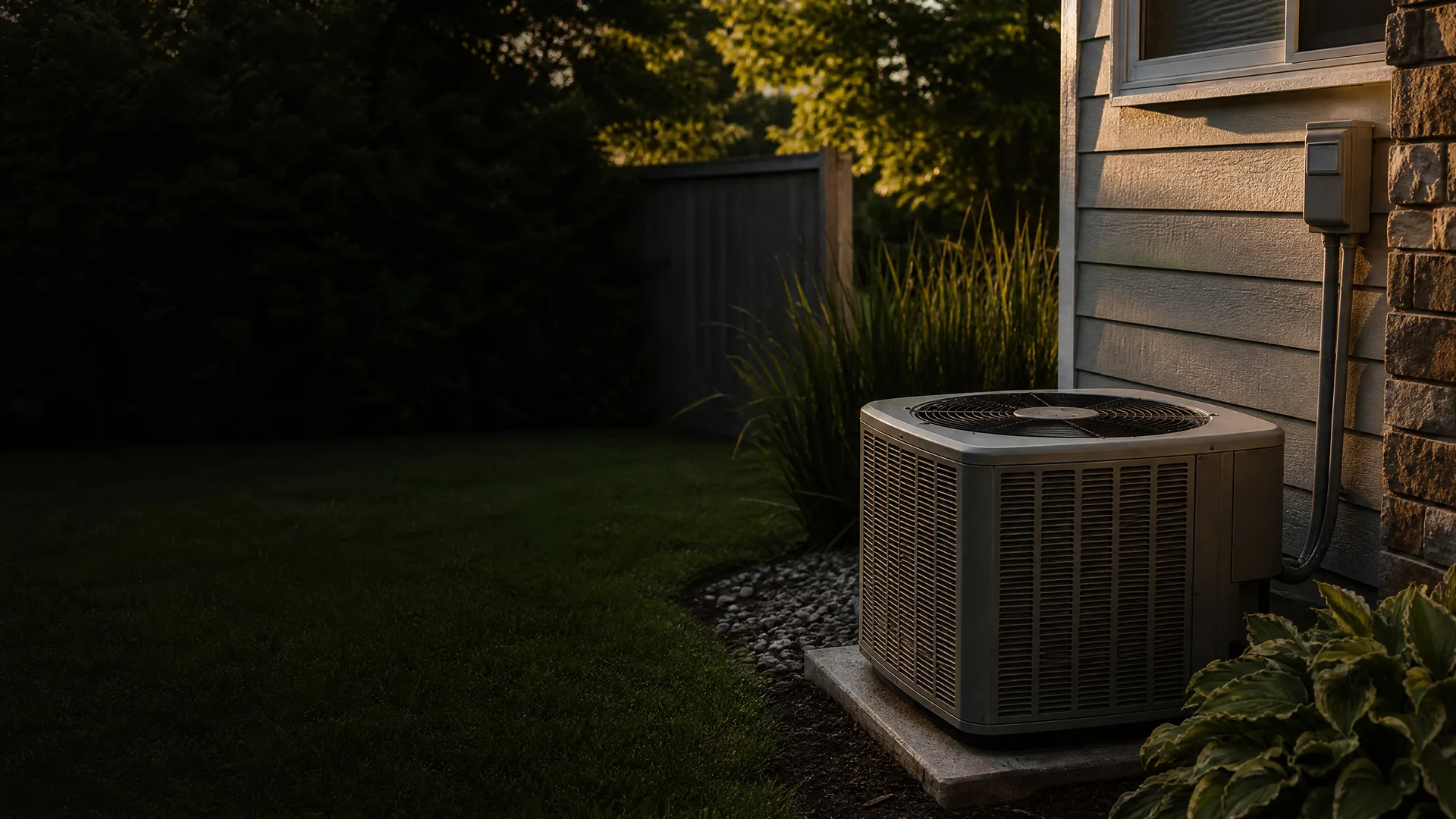
You're out back around seven, still light but going gold, and you notice it's quiet. Too quiet. The condenser fan isn't spinning. You walk over and feel no air moving off the unit at all, just the hum of it trying. Inside, the air has that damp, heavy feel it gets when the system's been fighting the humidity all day and losing. You crouch down and see frost already forming where the line runs into the wall. It's still warm out, the kind of evening where the grass is wet from the air alone, and your AC has picked now, of all times, to quit on you.
Once ice forms, airflow drops, so rooms farther from the air handler stop cooling even while the unit runs nonstop. You might notice water pooling near the indoor unit or a stain spreading on the ceiling below it as the ice melts and overflows the drain pan. The system pulls power the whole time without actually cooling the house, so you're paying for a unit that's working against itself. Left alone through a few more muggy days, the compressor keeps running against that frozen coil, and that's the part that's expensive to replace if it fails. The ice itself is a symptom. What matters is catching it before it costs you the compressor.
Warm, humid air moves across the indoor coil as it runs.
Low refrigerant or weak airflow drops the coil below freezing.
Moisture in the air lands on the cold coil and freezes.
Ice spreads across the coil and blocks airflow further.

The indoor coil has to stay above freezing to shed the water it pulls out of the air. Drop the refrigerant charge or starve it of airflow and the metal itself falls below 32 degrees. Once that happens, condensation on the coil turns to ice instead of running off into the drain pan. The ice doesn't stay put. It builds outward, coating more of the coil each hour the system keeps running, which is why a unit left alone overnight can be solid white by morning.
Airflow across the coil matters as much as the refrigerant charge does. A filter clogged with dust slows the air moving through, and the coil behind it gets colder than it should because less warm air is passing over it to keep the temperature up. South Carolina summers push a lot of moisture through that filter fast, so one that would last longer somewhere drier can choke a system here in weeks. Either problem, low refrigerant or restricted airflow, ends the same way: ice instead of cold air.

A frozen coil usually shows up on the worst night for it, after the house has been shut up all day holding in heat. You turn the thermostat down and nothing changes, the air coming out is warm, and now you're deciding whether to run fans and wait it out or start calling. Meanwhile the compressor keeps trying to run against blocked airflow, which is the part that tends to turn one bad night into a bigger repair.
You don't have to spend that evening on hold or explaining the same thing to three different companies before anyone can tell you what's wrong. Answer a few questions about your system and a contractor who handles this in South Carolina homes reaches out to you directly. No sorting through quotes, no repeating yourself, just someone who already knows what you're dealing with getting in touch.





Describe your air conditioner job once, to one pro.
Sending the form costs nothing.
South Carolina summer air holds a dew point around 69°F, according to NOAA climate data, and that's the number that matters more than the temperature on the thermostat. Air that heavy is packed with moisture, and your coil has to pull a lot of it out of the air just to do its job. That's more condensation forming on the coil with every hour the system runs. If the charge is low or airflow is weak, that moisture freezes onto the coil instead of draining off. You'd notice it as weaker airflow at the vents, or the unit running long stretches without the house actually cooling down.
NASA POWER T2MDEW county cells weighted by homes


Most freeze-ups trace back to something blocking airflow before the real trouble starts. A filter clogged with dust, or vents shut in rooms you're not using, means less air crosses the coil than the system was built to handle. The blower motor matters just as much. It has to move a set volume of air across that coil every cycle, and if it's weak or failing, the coil has nowhere to dump its cold into and just keeps getting colder. Refrigerant loss works the same way from the inside. Less refrigerant means lower pressure, and lower pressure means the coil runs at a lower temperature than it was ever designed to hit. None of this shows up on your thermostat. It only reads the air in the room, so it keeps calling for cooling long after the coil has iced over. A clogged drain line adds to it, trapping moisture right where the ice is already forming. Run the system overnight, when temperatures drop outside but humidity stays high indoors, and a unit already struggling has even less room to keep up.


You're still checking the coil for ice, running the fan-only cycle to thaw it, and waiting hours before you can try cooling again while the house stays muggy.
A contractor finds why the coil dropped below freezing, whether it's refrigerant or airflow, and fixes that instead of you guessing and waiting through another melt cycle.
A frozen coil forces your AC to run longer once it's thawed, trying to catch up on a house that's sat warm and muggy for hours. At 15.12 cents per kilowatt-hour, that extra runtime shows up on your next bill, on top of whatever repair gets the freezing stopped for good.
EIA-861 2025 statewide residential average

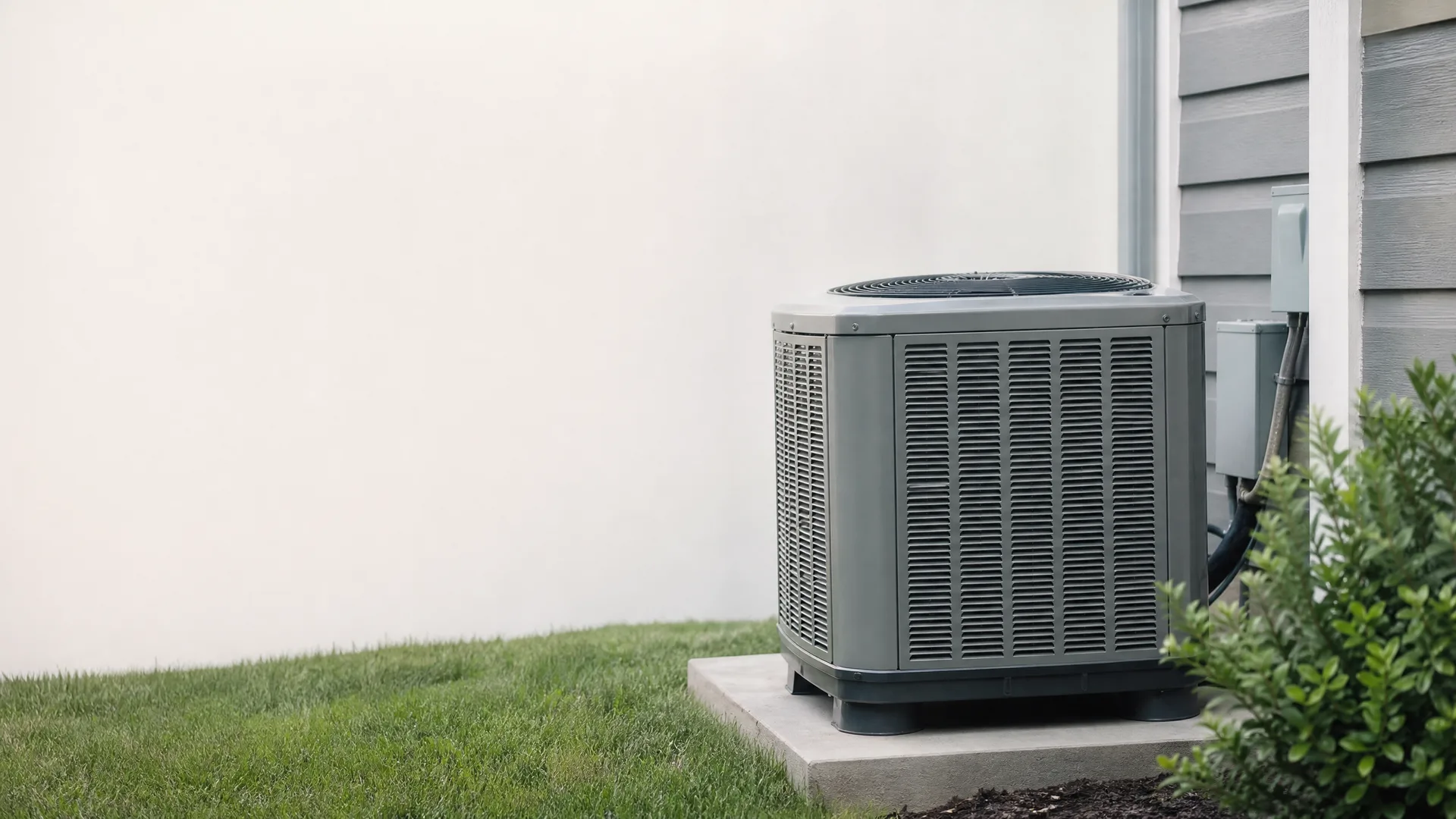
Air moves across the coil, the fan spins, and the condenser outside does its job without ice anywhere on it. The disconnect box and conduit sit untouched on the siding. This is what a working unit looks like from your yard.

Dirt and grime cover the louvered panels and the fan grille on top, built up over years outside. A unit in this shape can't move air the way it needs to, and that's often where the freezing starts. The refrigerant lines at the back are worth a look too.
A frozen coil comes down to one thing: the AC can't move enough heat out of your house, whether that's from low refrigerant or air that can't get across the coil fast enough. Thawing it yourself buys a few hours, not a fix. What stops the ice from coming back is a contractor who checks the charge, checks the airflow, and finds which one let the coil drop below freezing in the first place. Instead of searching through contractors, calling a few, explaining the ice and the warm vents all over again to each one, then sitting on quotes trying to compare them, you answer a few questions once and a contractor who handles this in your area follows up with you directly. Your coil still has to come apart, get checked, and get fixed. That part doesn't get shorter. But the part where you're the one tracking down who can do it, that part is off your plate the moment you ask.

It costs nothing to send, and you don't have to hire anyone.
You could keep thawing the coil yourself every few days, or you could send one request and let a contractor find out why it keeps happening. No calling around, no repeating the story to three different companies. Just someone who already knows what you told them, reaching out.