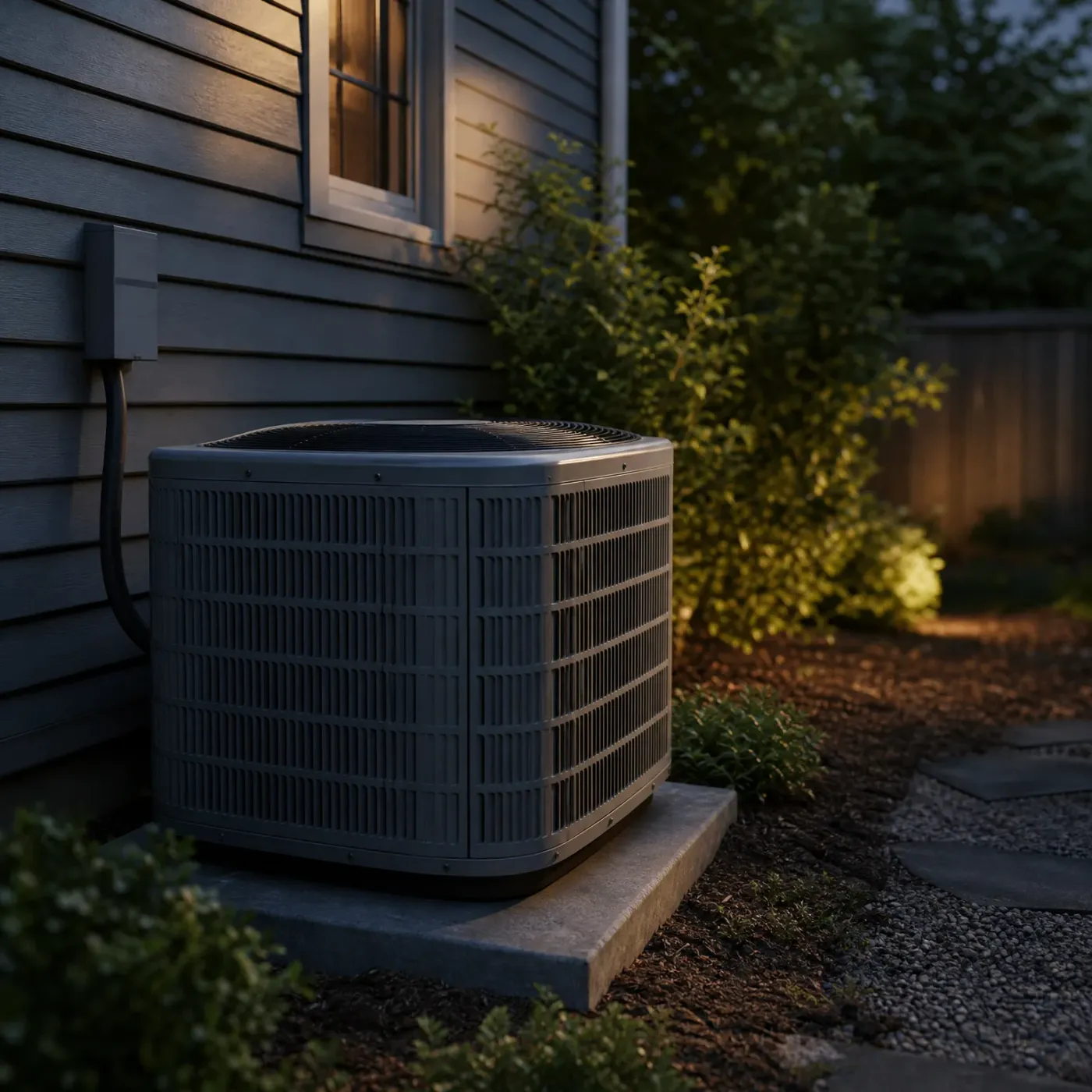






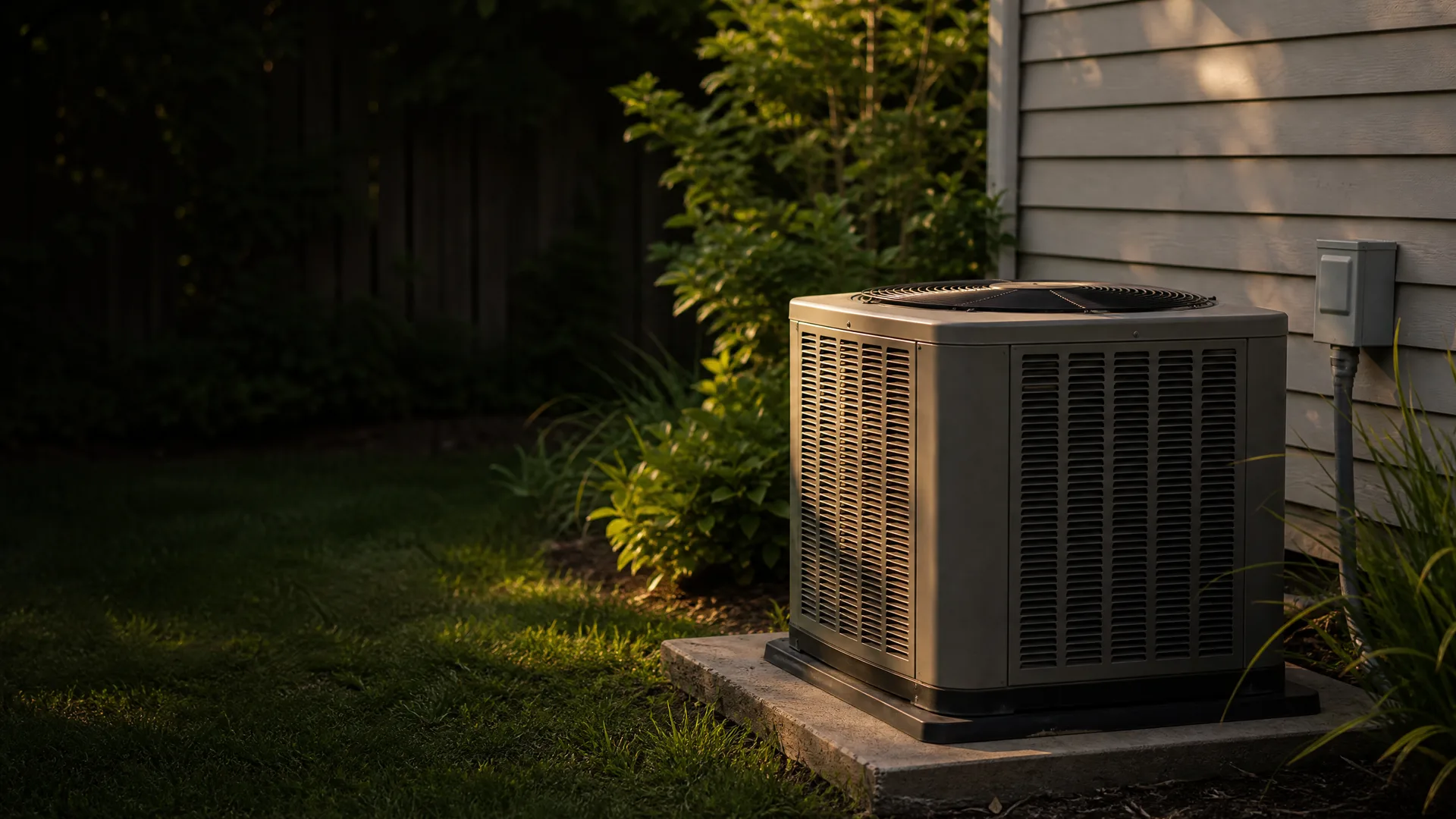
An outdoor air conditioner condenser unit on a concrete pad beside a gray horizontal-siding house at dusk, with a wall-mounted disconnect box, shrubs, and a gravel path with stepping stones nearby.

Let someone else find the pro

AC making a loud noise in Rock Hill, SC

A loud noise from your AC usually points to one of a few things: a loose part banging around, a failing motor, or a compressor under strain. Which one it is changes whether it can wait or not. This page walks through what the noise is likely telling you, so you're not stuck calling around York County trying to describe a sound over the phone.

Hand it over

A loud noise from your AC usually comes down to what kind of sound it is. A rattle or metallic clank is often a loose panel, a bent fan blade, or debris caught in the outdoor unit. A high-pitched squeal points to a worn blower motor bearing. A deep humming or buzzing can mean the compressor is straining, especially on the long, sticky runs of a Rock Hill summer when the system barely shuts off for days at a time. Grinding usually means a motor bearing has failed outright. The sound tells you how urgent it is. A rattle might run fine for another week. A grinding compressor can fail for good within hours if it keeps running. Shutting the unit off and having someone look at it before you turn it back on is the safer call when the noise is new, sudden, or getting worse.

A gray outdoor air conditioner condenser unit on a concrete pad beside a house with horizontal siding and a stucco foundation, with a disconnect box and conduit on the wall, decorative gravel, mulch, and a shrub nearby.
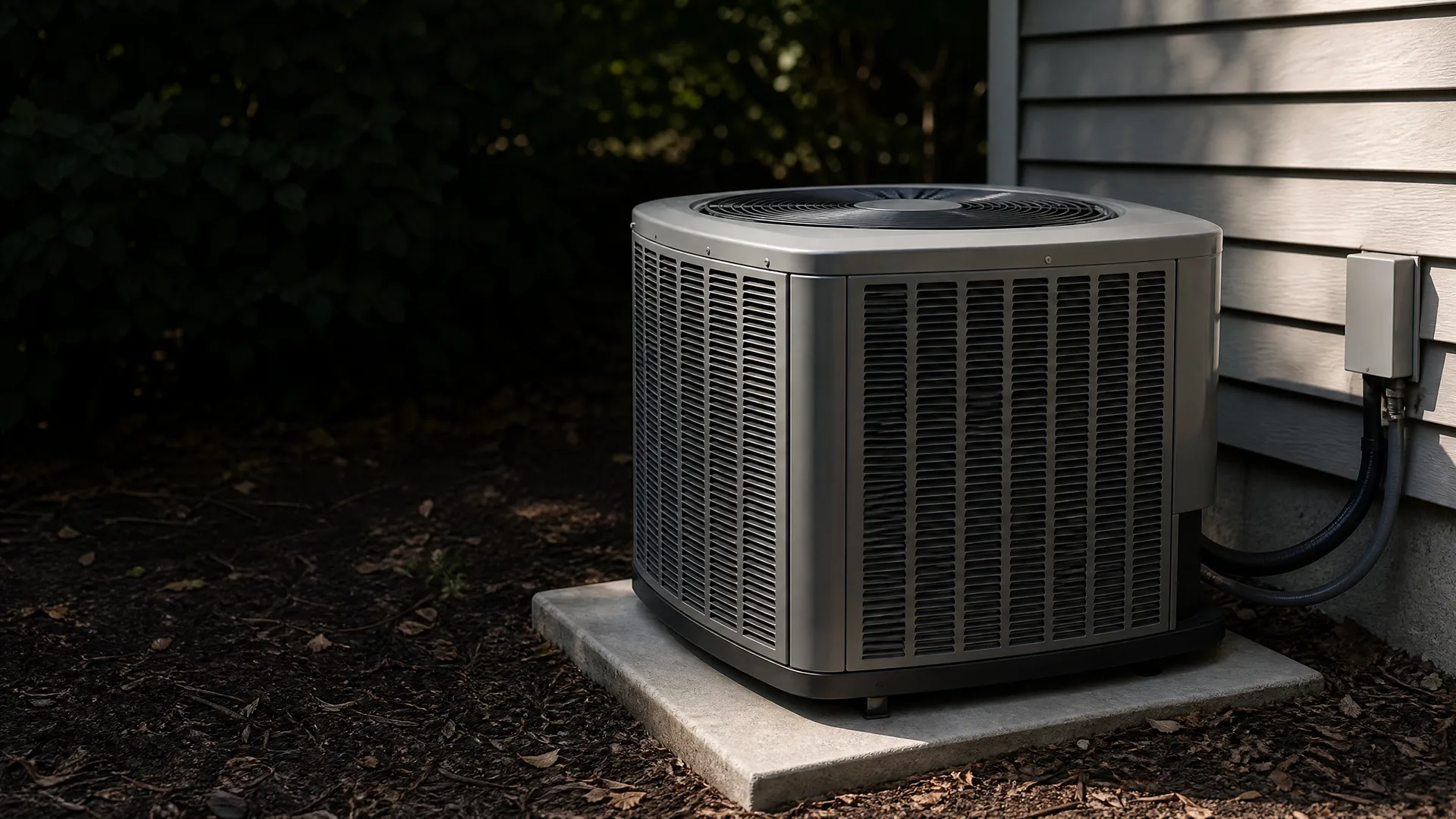
A condenser like this runs quiet, just a steady low hum while the fan spins and the coils stay clear.
An outdoor air conditioning condenser unit on a concrete pad beside a house with horizontal lap siding, with an electrical disconnect box and conduit on the wall, mulch and a green shrub to the right, and a concrete walkway in the foreground.
Dirt packed into the coil grilles forces the unit to work harder, and that strain is often where the noise starts.

A broken compressor mount lets the whole unit rock when the compressor kicks on, so the bang lines up with the cycle, not with the fan. Most newer systems run on a direct-drive blower with no belt at all, so that screech at startup usually means the bearing itself, unless your system is old enough to still use a belt. Refrigerant hissing out through a line isn't something that fixes itself. The charge keeps dropping until the system can't pull heat out of your house the way it should. A clicking relay or a bad capacitor will often click away trying to start the compressor and fail, over and over, which wears down whatever it's trying to start. A fan blade that's come loose can eventually hit something else inside the cabinet. Loose connections in the disconnect box carry their own risk, since a connection that's arcing is a connection generating heat somewhere it shouldn't.

What the Sound Is Telling You

  • A banging sound that comes and goes with the compressor cycle often means a mounting foot inside the compressor has broken loose.
  • A screeching noise when the system first starts is usually the blower motor belt or bearing, found on older units that still use a belt drive.
  • A hissing sound near the indoor unit can mean refrigerant escaping through a small leak in the line, not just a pressure change.
  • A loud clicking that repeats every few seconds without the system starting often traces back to a failing relay or a bad capacitor.
  • A rhythmic thumping tied to the fan blade usually means the blade has warped or come loose from the motor shaft.
  • A buzzing sound at the outdoor unit that gets louder over time can point to loose electrical connections inside the disconnect box.
An outdoor air conditioner condenser unit on a concrete pad beside a house with light horizontal vinyl siding, surrounded by bare dirt, gravel and dry leaves, with refrigerant lines and conduit running along the wall.
Before you get your air conditioner repair
A gray outdoor air conditioner condenser unit on a concrete pad beside a house with horizontal lap siding, with a flowering shrub at left and a disconnect box with conduit on the wall at right.
After you get your air conditioner repair

Your condenser sits outside through York County summers that run long and sticky, from April into October some years. That stretch of hard running is exactly when a loose part or a strained compressor tends to make itself heard.

A noise that shows up under that kind of load rarely fixes itself once the heat eases off. It usually means the same part is working harder every time the system cycles on.

A woman with dark hair in a bun reclines on a light gray armchair with eyes closed and a slight smile, wrapped in a knitted beige blanket, with a lit table lamp, plant and dark green book nearby.
A man in a dark gray sweater sits smiling at a dining table with a glass of red wine, plates of salad, a candle in a holder, and a glass of water, with a window, lamp and houseplant behind him.
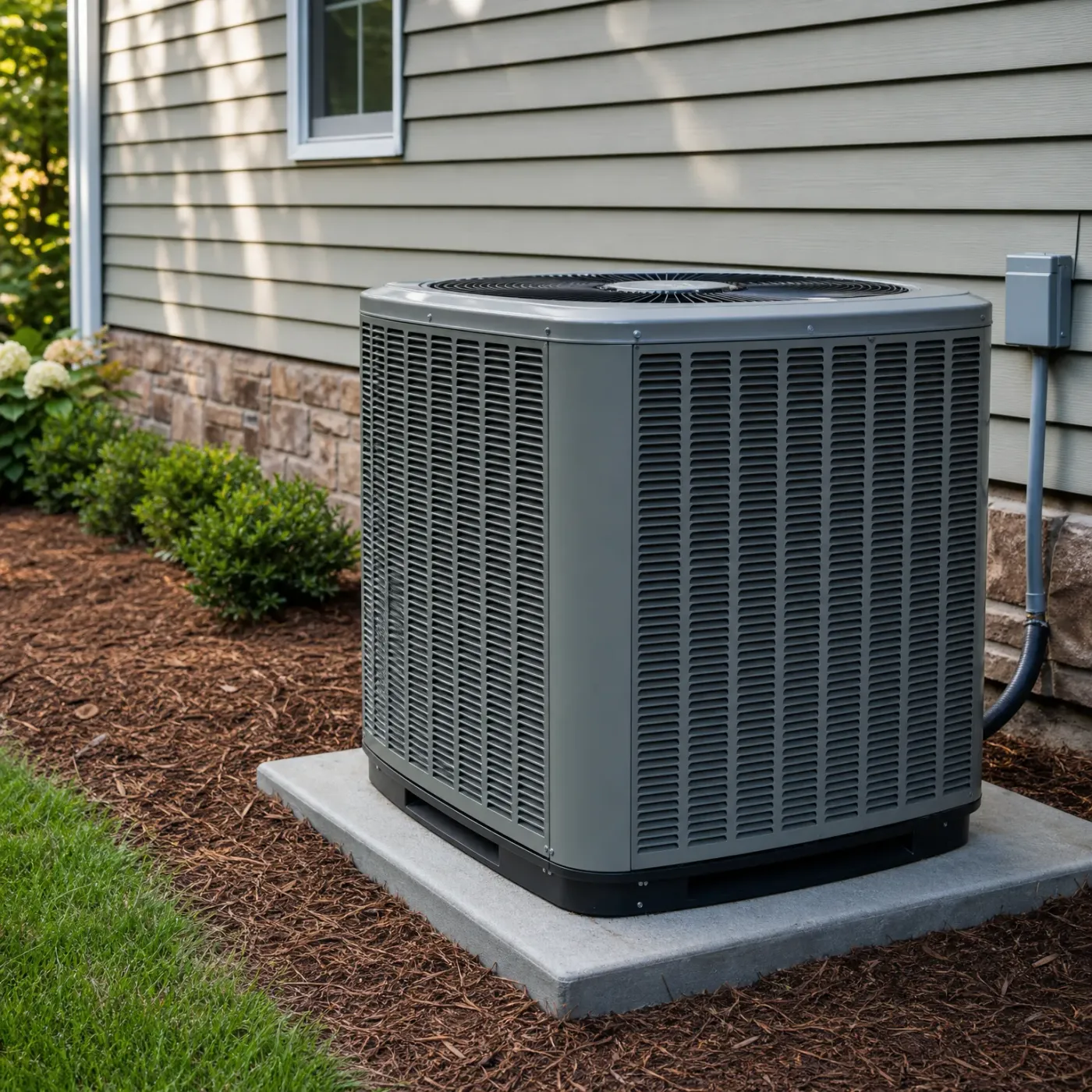
A gray outdoor air conditioner condenser unit on a concrete pad beside a house with horizontal siding and a stone veneer base, surrounded by mulch, shrubs and grass.

One request and it's handed off

Explain the air conditioner problem once instead of to every shop in York County.

Send it once and finding someone is no longer on you.

Hand off my repair

Asking costs nothing, and the choice to hire stays yours.

Can the Noise Wait or Not

Noise That Can Wait

  • A rattle that only shows up when the wind kicks up is often just a loose screw on the access panel, not the unit itself.
  • A faint hum while the compressor runs is normal; it only becomes a problem if it grows louder or changes pitch over a few days.
  • A noise that stops once you clear leaves and debris away from the outdoor unit was likely just that, not a mechanical fault.
  • If the sound only happens once, right at startup or shutdown, and doesn't repeat through the cycle, it's usually not urgent.
  • A rattle that stays the same volume and doesn't come with warm air or higher bills can often wait for a scheduled visit.

Noise That Needs a Call Now

  • A screeching or grinding sound that gets louder the longer the system runs usually means a motor bearing is failing.
  • Banging that lines up with the compressor cycling on means a mounting foot has likely broken loose inside the unit.
  • A loud noise paired with warm air coming from the vents means the system is struggling while it's already failing.
  • Any noise that's new, loud, and getting worse over hours rather than days points to a part under active strain.
  • A metallic grinding or clanking sound usually means something is hitting the fan blade and can cause more damage the longer it runs.
  • If the noise shows up alongside a tripped breaker or the unit shutting itself off, that's the compressor protecting itself from damage.
An outdoor air conditioner condenser unit sits on a concrete pad beside a house with horizontal lap siding, surrounded by grass and shrubs in low evening light.

You're out back around seven, grill going, and the condenser kicks on like always. Then you notice it. The fan isn't spinning. The unit is humming, straining, but the blades sit still. Evening light is going gold over the fence line, bugs starting up, and under all that you hear this low strained buzz coming from the cabinet, not the usual steady whir. You crouch down near the vent and the air coming off the top is warm. Inside, the house is already starting to feel it, the air not quite as cool as it was an hour ago. You turn the grill down and just stand there listening to it struggle.

Cooling runs May through September

Your AC in Rock Hill runs about five months straight, May through September. That's five months of the compressor and fan working every day without a break, which is when a loose part or a strained motor is most likely to turn into a noise you can hear from the yard.

NOAA nClimDiv 1991-2020

Waiting it out yourself

You can turn the noise into background noise, run a fan to cover it, close the door to that side of the house. Most people try this first. But a loose part that's left alone tends to wear on whatever it's banging against, and a strained compressor doesn't rest just because you've stopped noticing it. By August, with the unit running all day in York County heat, the same noise is often worse, and now it's a bigger repair than it would have been in May.


Having someone look at it

A contractor who hears the noise and opens the unit can tell you in minutes whether it's a loose panel or something in the compressor itself. That's the difference between a quick fix and a system on its way out, and you don't have to guess which one you're dealing with. You skip the part where you call around, describe the sound to three different people, and wait to see who calls back. One form, and finding someone to look at it stops being your problem to solve.

A smiling bearded man in a dark gray t-shirt sits on a gray couch in a living room, with a large glass bowl of popcorn on a wooden table in the foreground.
A smiling middle-aged man in a dark shirt sits on a gray sofa in a living room, with a bowl of popcorn on a side table and shelves, a window and kitchen area behind him.
A smiling man in a green long-sleeved shirt sits on a beige sofa in a living room, with a bowl of popcorn in the foreground, a large potted plant and shelving behind him.
A smiling bearded man in a dark green hooded jacket and blue t-shirt sits on a couch in a living room with shelves, a potted plant, and a bowl of popcorn on a wooden table.
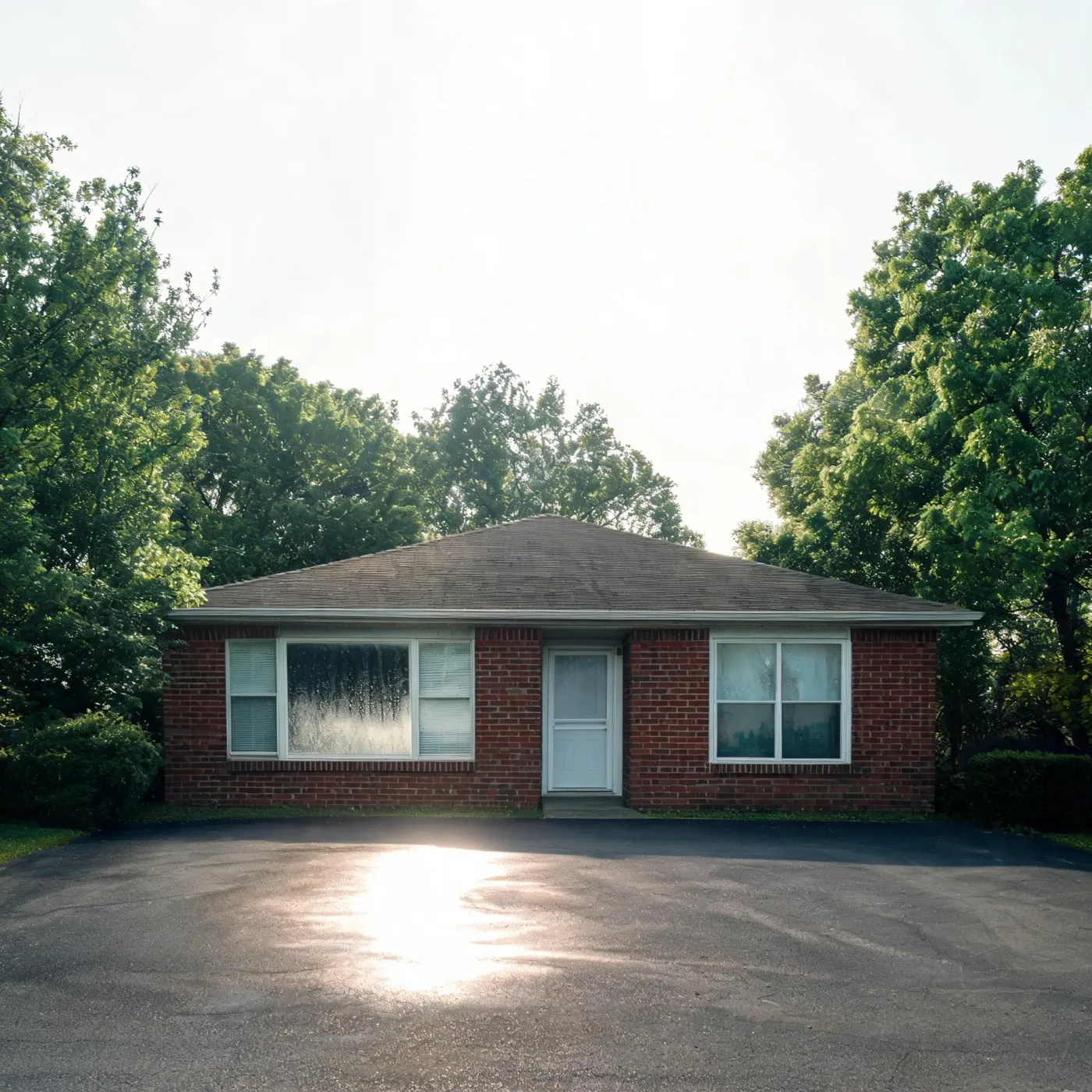
A single-story red brick building with a hipped shingle roof, a white door and white-framed windows, fronted by a large asphalt parking area with sun glare, surrounded by green deciduous trees under a bright hazy sky.

That 66°F dew point is the York County summer average, measured across June, July and August. Air that heavy means your AC isn't just dropping the temperature, it's pulling a lot of moisture out of the air at the same time, and that extra load falls on the same fan and compressor that make the noise you're hearing. A unit running stressed in thick air tends to get louder before it gets quieter, not the other way around. If the sound showed up this summer and the air outside has felt heavier than usual, that's likely not a coincidence.

NASA POWER T2MDEW

A wooden table holding a closed silver laptop, a cup of coffee on a saucer, and a glass vase with leafy branches, with a marble-backed counter, potted plant, and window in the background.

So the noise is telling you something specific

A loud noise is your AC pointing at a part. A rattle usually means something loose. A squeal means a bearing is wearing out. A deep hum with no airflow means a motor straining against something it can't move. None of those get quieter on their own, and running the unit through another stretch of a York County summer tends to turn the small problem into a bigger one.

Instead of searching through contractors, calling a few, explaining the same noise over and over, and sitting with quotes trying to guess who's worth trusting, you send one form. Finding someone who can look at it stops being your problem to carry around.

Interior corner of a room with a dark upholstered sofa and textured cushion, a potted plant, sheer curtains at a multi-pane window showing blurred green and yellow trees, and a dark table holding a wooden tray with stacked coasters and a small ceramic vase.
An outdoor air conditioner condenser unit on a concrete pad beside a house with horizontal lap siding, with an electrical disconnect box and conduit on the wall and dark mulch and shrubs around it.

Done looking for an air conditioner pro

RepairCentral ACYork County, SC
Step 1 of 2

What ZIP code is the job in?