Banging means something is loose or broken inside
A banging or clanking noise is often a sign a part has come loose or broken off, like a fan blade or a piece of the compressor, and it needs a look before it causes more damage.

A loud noise from your AC usually means something inside the unit is loose, worn, or hitting something it shouldn't. A rattle often points to a loose panel or a stick or branch caught in the outdoor fan. A high-pitched squeal can mean the blower motor's bearings are wearing out. Banging or clanking points to something more serious, like a loose or broken part on the compressor itself. In South Carolina, your AC runs hard for months at a time to keep up with the humidity, and that steady workload is exactly what wears a part down to the point it starts making noise. A noise that shows up now and gets ignored tends to get louder, and the part behind it tends to get more expensive to fix the longer it runs that way. Catching it while it's still just a noise, before it becomes a system that won't turn on, is the difference between a repair and a replacement.


A banging or clanking noise is often a sign a part has come loose or broken off, like a fan blade or a piece of the compressor, and it needs a look before it causes more damage.
A hum or buzz can point to a failing capacitor or a loose electrical connection. Left alone, it can keep your AC from starting at all.
You probably heard it from the yard or through a window, maybe while the unit was working hard against the heat and humidity outside. A rattle that comes and goes with the wind might be a loose cap or a twig in the fan. A squeal that shows up every time the system kicks on is different. So is a clank that keeps time with the compressor. Left alone, a loose part can wear against something else and turn a simple fix into a bigger repair, and a struggling compressor can stop cooling your house altogether on a hot South Carolina afternoon. If the noise is new or getting worse, it is worth having someone look at it before that happens.
Some homeowners let the noise ride because the air is still cold. A squeal from the blower motor bearing usually gets louder over days, not weeks, and a motor that seizes can take the blower wheel or belt mount with it. A grinding compressor can go from a repair to a full replacement in the time it takes to put off a call. The noise is the warning. What it's warning about keeps working while you wait.
Send the form and the job of finding a licensed South Carolina contractor, calling around, and explaining the noise more than once is off your plate. A technician checks the panel, the fan blade, the motor bearing, whatever's loose or grinding, and tells you what it is. Most of these noises trace back to one worn or loose part. Catching it while it's still a rattle instead of a breakdown is the difference a quick look can make.







South Carolina summers sit at a dew point around 69°F on average through June, July and August, per NOAA climate data. Air that heavy makes your AC's compressor and fan run long stretches with little rest, and long run times are exactly when a loose panel starts to rattle or a motor bearing starts to squeal. A unit that might hum along quietly in a drier month gets pushed hard enough here to turn a small, loose part into something you can hear from inside the house. If that's the noise you're catching now, send the form and the job of tracking down a tech who can look at it today is off your plate.
NASA POWER T2MDEW county cells weighted by homes
That noise isn't going to fix itself, and in a South Carolina summer your AC doesn't get much downtime to make it worse gradually. It runs for hours at a stretch against the heat and the humidity, and a loose panel or a worn bearing gets its chance to fail every one of those hours. Finding someone to look at it is its own chore: searching for a contractor, calling a few, explaining the same rattle or squeal over and over, then weighing quotes against each other while the noise keeps going. Send the request here and that part is done. One contractor gets it, not five, and you're not the one chasing anyone down. You still have a noise to deal with, but you're not also carrying the job of finding who deals with it. That's off your plate the moment you send this.

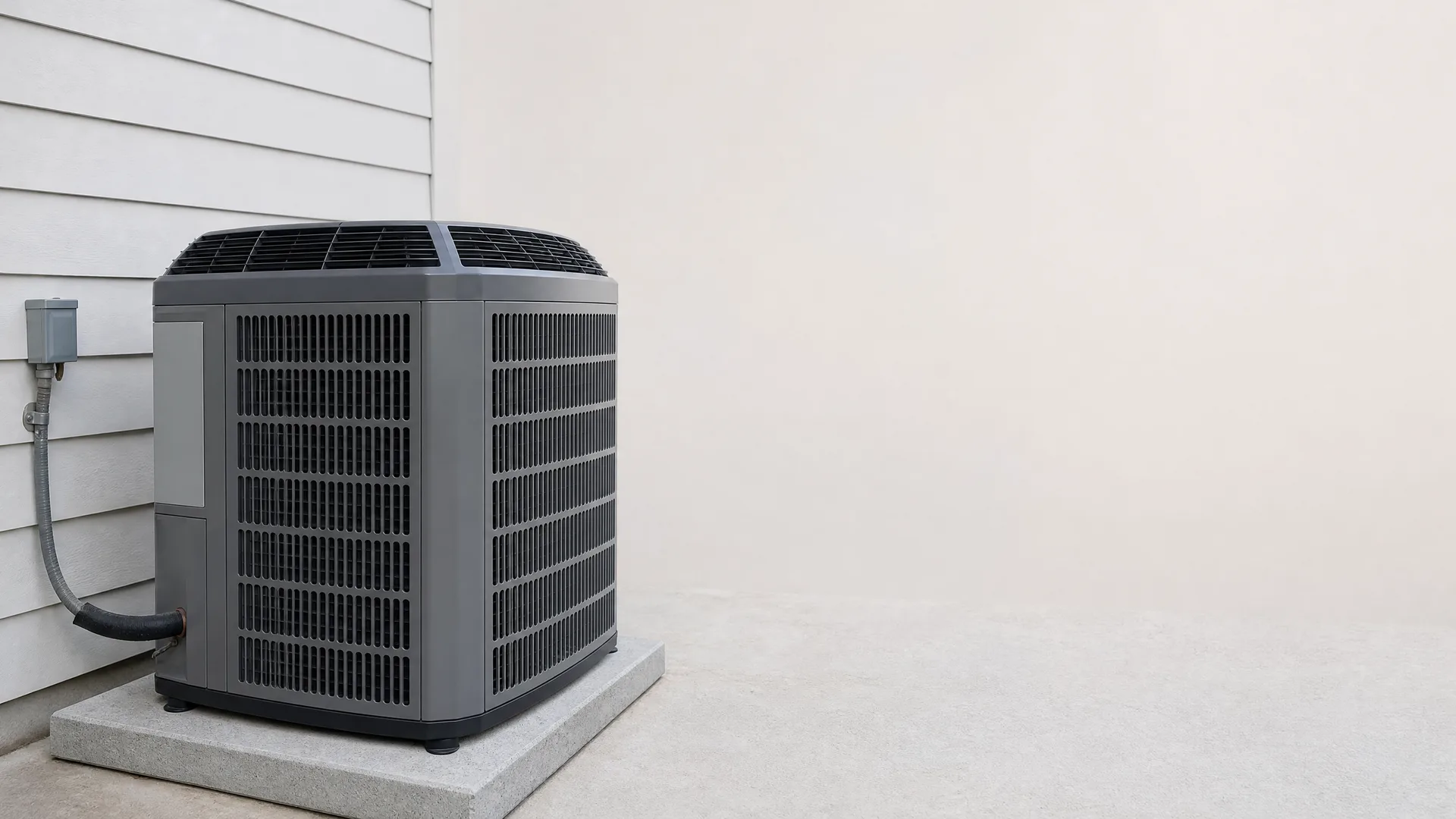
This condenser sits on its pad with the fins open and the fan turning without a knock or a rattle. Mulch and grass around it stay clear of the cabinet, so nothing gets pulled into the fan and nothing muffles the sound a loose part would make.

This one has dirt, grime, and debris packed into the coil fins and the cage around them. A unit caked over like this has been running hard without a look inside, and a rattle or a squeal that started small has had time to turn into something worse.

Most of the noise you hear comes from one of two places: the outdoor fan and compressor in the condenser, or the blower inside the air handler. The outdoor fan spins at a fixed speed, and if a blade is bent or the motor mount has worked loose, it slaps the inside of the cabinet with every rotation. That's the knock you hear from the yard. Inside, the blower wheel pulls air across the evaporator coil and pushes it into your ducts. A wheel that's picked up dirt on one side spins out of balance, and an unbalanced wheel vibrates the sheet metal around it loud enough to hear through the vents.
None of that tells you which part on your unit it is without opening the cabinet and watching it run. That's the part you'd otherwise spend an afternoon on, calling around for someone who answers, explaining the sound over the phone, then doing it again with the next company when the first one can't come out this week. Send the form once and that search is off your plate. A licensed tech takes it from there.


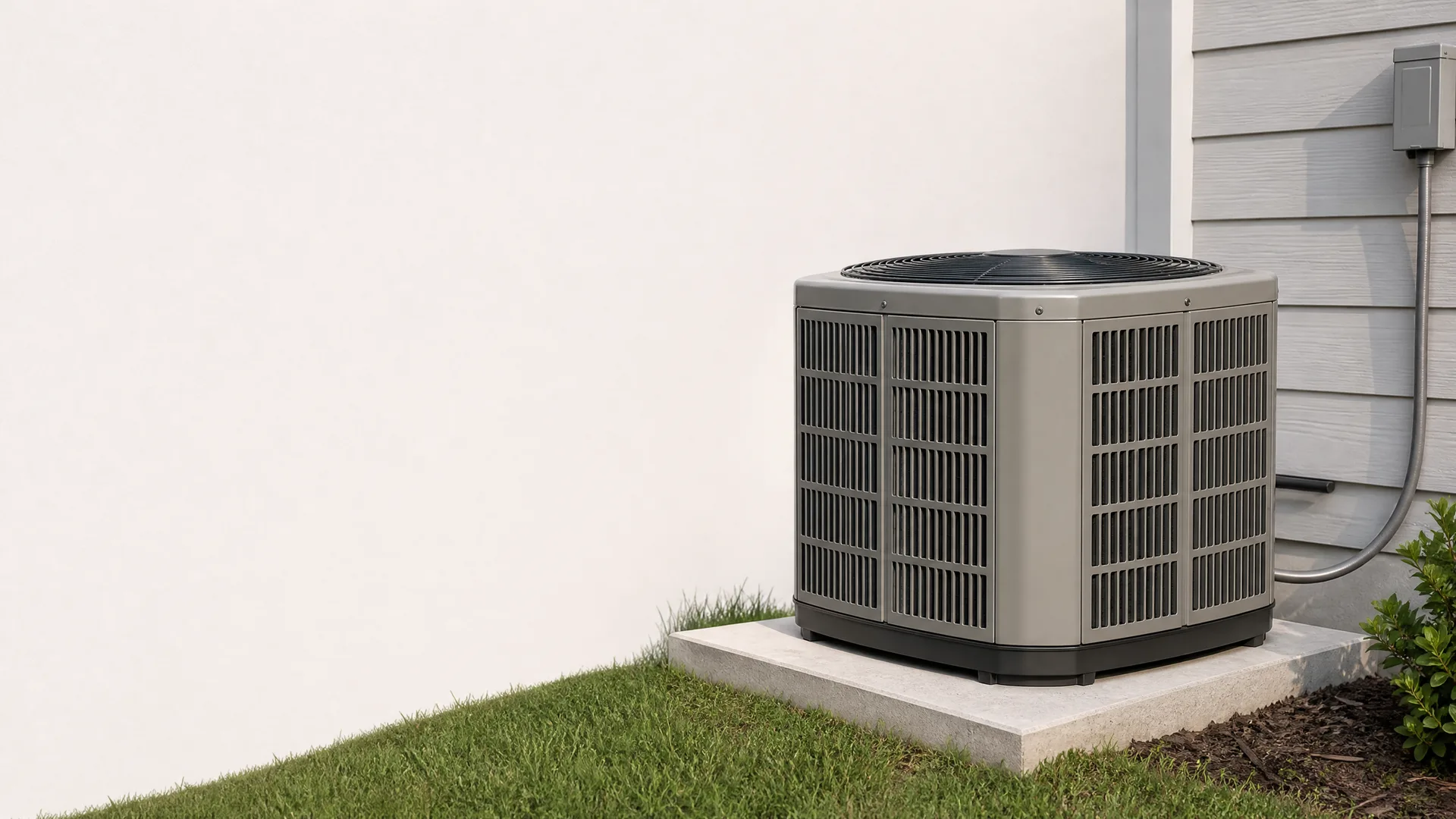
This condenser sits on its pad with the fan turning free and quiet. The conduit and disconnect are tied in clean, and the shrubs nearby stay clear of the cabinet so nothing gets pulled into the fan or rattles against the housing.

The coil guard on this one is caked with dirt and the cabinet shows its age. A fan running behind buildup like that works harder, and a loose fin or a stressed motor mount is often what you're hearing before it fails outright.


A tech listens to the noise before opening anything
The outdoor and indoor units get checked in turn
Panels come off to find the loose or worn part
That part gets tightened, repaired, or replaced on the spot
At 15.12 cents per kilowatt-hour, running the AC hard all summer already shows up on your bill. A part that's loose or worn makes the compressor or fan work harder to do the same job, so that noise is costing you before it costs you a bigger repair.
EIA-861 2025 statewide residential average
A loud noise from your AC is a part telling you it's loose, worn, or caught on something. Not a mystery, not a sign the whole unit is failing, just one part that needs attention before it takes a bigger one down with it. South Carolina summers don't give that part any rest. The compressor and fan run for hours against the heat and humidity, and every one of those hours is another chance for a bent blade or a worn bearing to get worse. That's the part you can't see from the yard. What you can do is stop guessing. A tech who opens the cabinet can tell you in minutes whether it's a loose panel, a stick in the fan, or something further along, and that's a different thing than listening to it rattle for another week and hoping it holds. The other piece of this is the part you've been doing yourself every time something like this comes up: pulling up listings, calling one shop after another, explaining the same noise to each one, then sitting with quotes from names you don't know and trying to guess who's worth trusting. Send the form and that part of it is done. You're matched with someone who can look at it, and the noise stops being something you're managing on your own and becomes something that's getting fixed.





Explain the job once and skip repeating it on every call.
You only hire the pro if you want to.