Two illuminated white colonial-style houses with wrap-around porches, flanked by oak trees draped in Spanish moss, photographed at night.

Heat Pump Repair in Aiken, SC

Tell us about the job

Takes about a minute. No obligation.

RepairHeat PumpAiken County, SC
Step 1 of 2

What ZIP code is the job in?

Check the thermostat and the breaker first

Make sure the thermostat is set to heat or cool and not sitting in a dead zone between calls. Then check the breaker panel for your outdoor unit and your air handler. A tripped breaker or a thermostat set wrong gets mistaken for a failed heat pump more often than you'd think.


Look at the outdoor unit and the filter

Walk outside and see if the outdoor coil is caked in ice, covered in leaves, or blocked by anything sitting too close to it. Then pull the air filter and hold it up to the light. A choked filter or a blocked coil can cause a lot of what looks like a broken heat pump, and both are things you can see yourself before anyone comes out.

5 months
November through March, your system heats
5 months
May through September, it cools
36°F
the average winter night it heats against
91°F
the average summer afternoon it cools against
Isometric grayscale illustration of a cutaway house showing interior rooms, ceiling ductwork and an air handler, connected by lines to an outdoor condenser unit on a pad outside.
Your system heats November through March and cools May through September.

NOAA nClimDiv, 1991–2020 normals

A tech starts by reading the heat pump's own fault history before touching anything.

The fault history points to the right test first instead of swapping parts to see what helps.

Half the heat pumps in Aiken County are still well inside their working life

Half the homes here were built by 1989
185 damaging wind events from 2015 to 2024
52 hail events from 2015 to 2024

April is worth a quick check, before the heat pump has to start cooling the house in May. October is the same, before it switches over to heat in November. A heat pump that struggled last year tends to struggle again in that first week of hard running, not months into it. If yours short cycled, iced up, or ran nonstop back in March, that weak point didn't fix itself over the summer. It's still sitting there waiting for the next time the system has to work.

Storms here are hard on outdoor units. Have yours checked.

Aiken County has seen 185 damaging wind events and 52 hail events over the past decade. Hail dents the fins on the outdoor coil and wind throws debris into the cabinet, and a heat pump can keep running for a while after either one before it gives out. If your outdoor unit took a hit this year, worth having it looked at now rather than waiting for it to quit on you.

Find a contractor
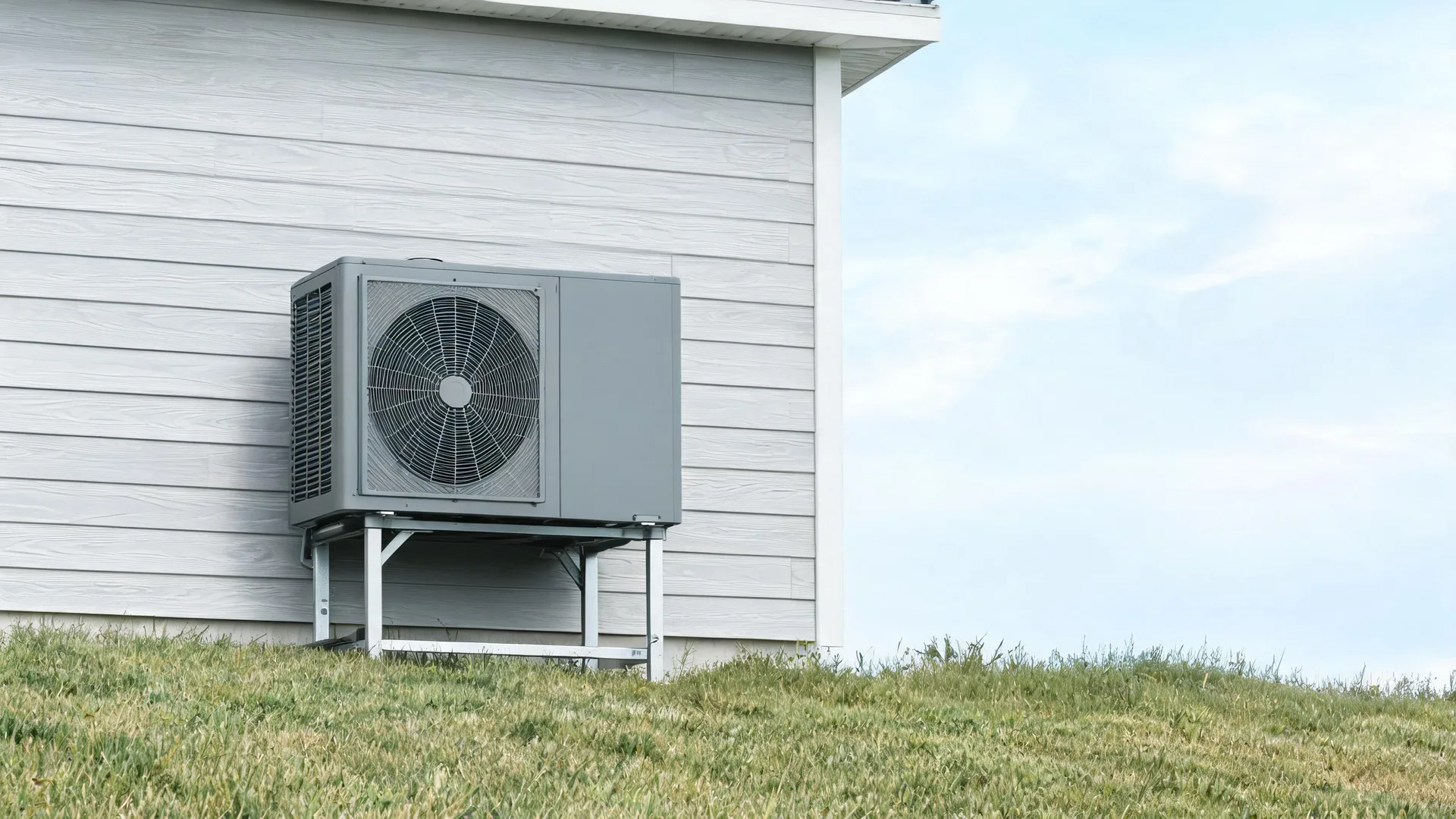
A gray heat pump condenser unit mounted on a concrete pad against the gray lap-siding exterior wall of a house.

The same few parts cause most of the trouble

Most heat pump failures trace back to a handful of weak points, and they're the same parts under the same kind of stress. The compressor is the one that ends a unit's life, because a shorted compressor almost never gets repaired on its own, it gets replaced along with whatever else is too far gone to justify leaving in. Capacitors and relays fail more often but mean less. A capacitor weakens over years of starting the compressor and the fan motor, and when it finally goes, the motor it was supposed to kick into motion just sits there humming or clicking instead of turning. The reversing valve is the part unique to a heat pump, the one that lets it switch between heating and cooling, and when it sticks, the system can get stuck defrosting when it should be heating or stuck heating when it should be in defrost. Low refrigerant charge is almost never the gas running low on its own. It means a leak somewhere in the lines or the coil, slow or otherwise, and topping it off without finding the leak just buys a little time before the same problem comes back. None of these fail on a schedule. They fail after enough cycles, enough hard starts, enough winters of the defrost cycle kicking on and off.

A weak start wears the compressor down

A compressor fighting a low charge or a bad capacitor pulls more current every time it tries to start. Each attempt heats the windings a bit more than the last. Left running that way, the heat breaks down the winding insulation until the compressor shorts out, and a shorted compressor doesn't get repaired, it gets replaced.

Ice on the coil blocks its own fix

A heat pump icing up in heating mode is supposed to reverse into defrost and melt it off. If the reversing valve is sticking or the defrost sensor is reading wrong, the ice just keeps building instead. Thick ice blocks airflow across the coil, and once that happens the system can't pull heat from outside at all.

Most of the time a heat pump gives warning before it quits outright. Air coming from the vents that's lukewarm instead of hot, or barely cool in summer, usually means it's running but struggling, not about to die. Short cycling, where it shuts off a few minutes after starting, points to a pressure problem or a sensor telling it to stop early. A hissing or bubbling sound near the lines suggests refrigerant escaping, and that won't fix itself or top off on its own. Clicking that repeats without the outdoor fan ever starting is usually a failed capacitor or relay, not a worn-out unit. If the outdoor fan spins but the compressor stays silent, or the whole cabinet is warm to the touch, that's worth a call before it stops working altogether rather than after.

Age matters more than any single symptom. A heat pump still well inside its working life is usually worth fixing no matter what broke, since one repair on a unit with years ahead of it is time well spent. One that's already old is a different question, especially if the compressor is what failed. A new compressor costs real money to put into a cabinet where the coil, the fan motor and everything else are the same age and wearing out right behind it. Frequency counts too. A unit that keeps needing a tech out is telling you something a single repair bill doesn't capture. At that point you're not fixing a heat pump, you're renting one a few months at a time.