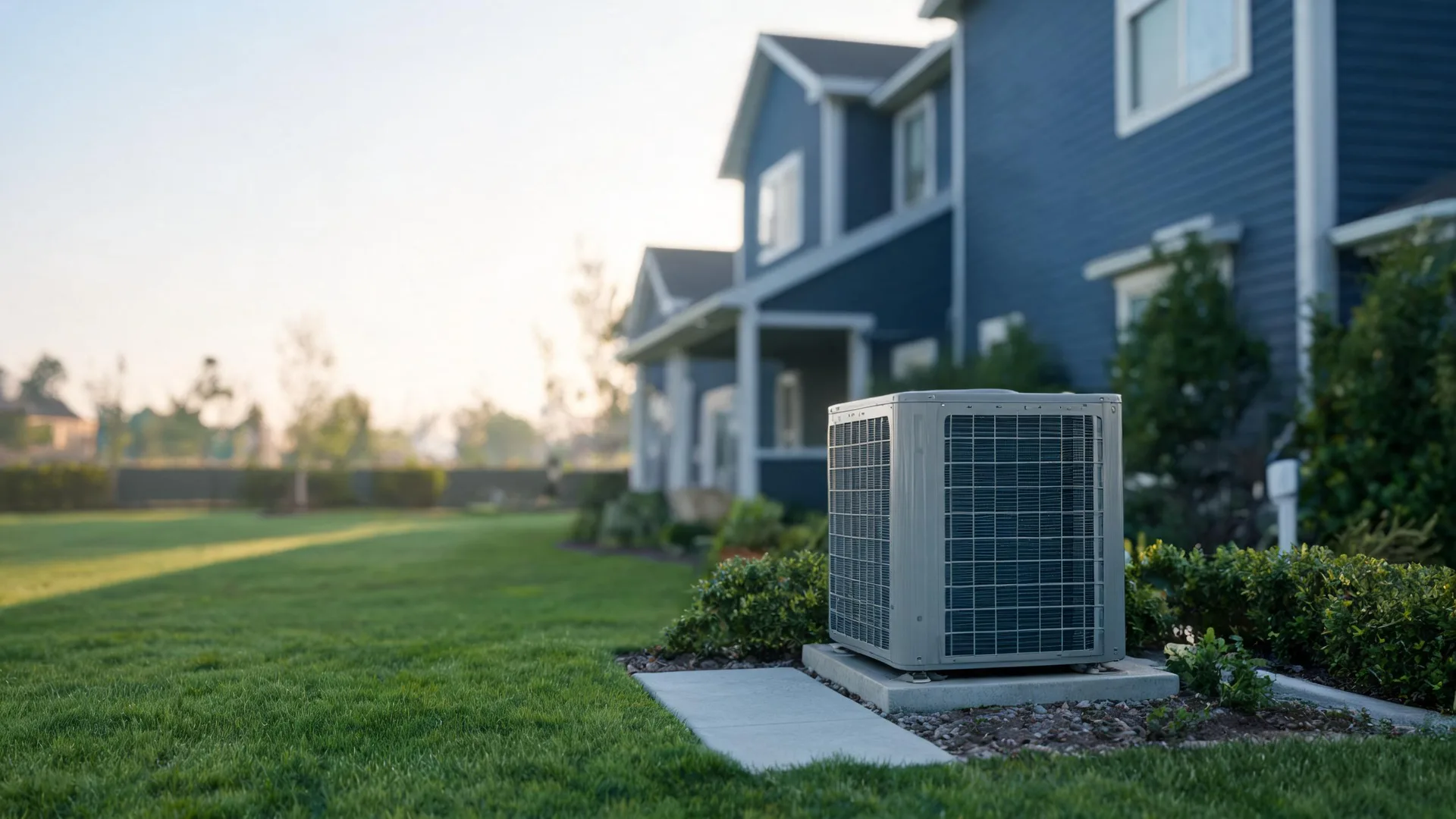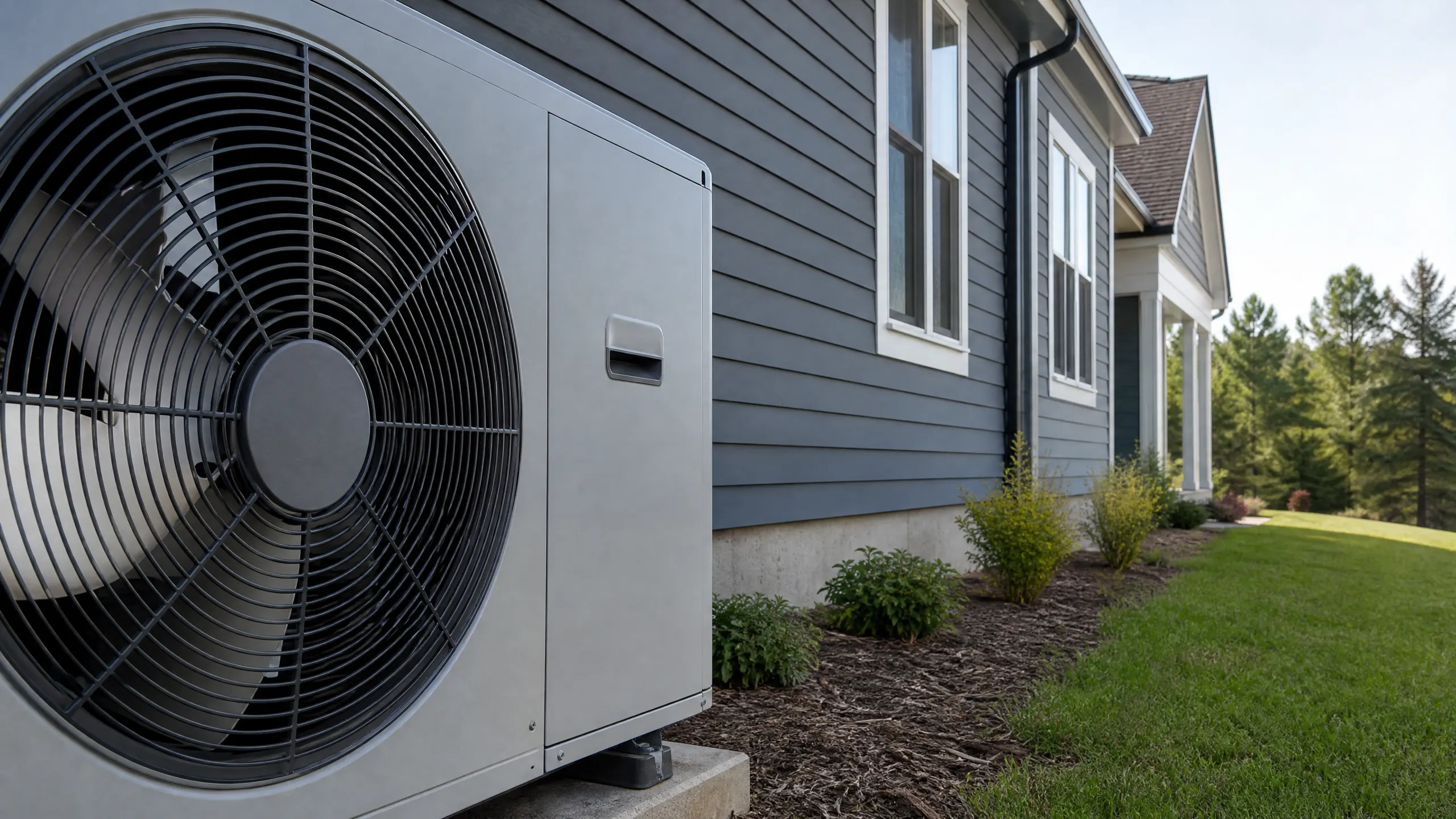
A heat pump outdoor unit mounted on a concrete pad next to the gray-sided exterior wall of a residential house.

Heat Pump Repair in Anderson, SC

Tell us about the job

Takes about a minute. No obligation.

RepairHeat PumpAnderson County, SC
Step 1 of 2

What ZIP code is the job in?

The tech checks the whole system, not just the symptom

A heat pump that won't heat might trace back to the outdoor unit, the indoor coil, the reversing valve, or the thermostat wiring. The tech checks refrigerant charge, electrical connections, the compressor, and airflow before settling on an answer. What looks like a dead unit is sometimes a tripped breaker or a bad capacitor, and what looks minor can trace back to the compressor itself.

What they find decides what happens next

A weak capacitor or a faulty defrost sensor usually gets swapped out on the spot. A failing compressor or a major refrigerant leak is a bigger conversation, since the reversing valve and compressor sit at the center of how the whole system runs. Either way, the visit ends with a clear answer on what's wrong and what it takes to put right.

5 months
November through March, your system heats
5 months
May through September, it cools
34°F
the average winter night it heats against
89°F
the average summer afternoon it cools against
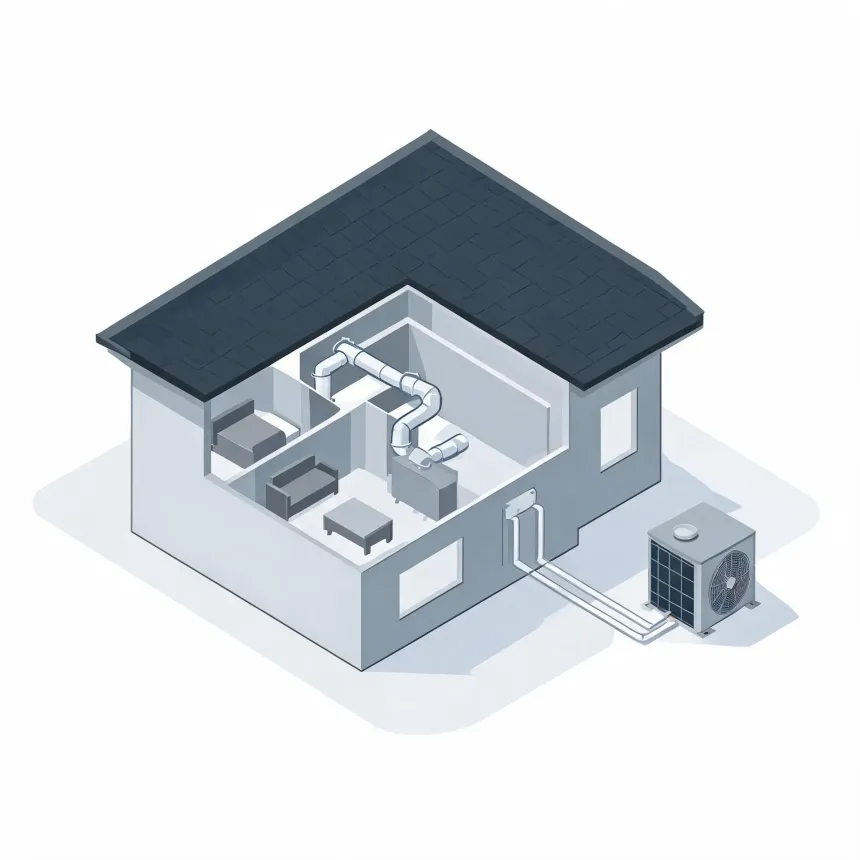
Isometric illustration of a cutaway single-story house showing interior ductwork, an indoor air handler and simple furniture, connected by lines to an outdoor condenser unit beside the building.
Your system heats November through March and cools May through September.

NOAA nClimDiv, 1991–2020 normals

Anderson County gets its share of hail and damaging wind.

A heat pump acting up here is usually the same thing that breaks one anywhere else.

March and November are when a weak heat pump finally gives out

Cooling runs May through September
Heat runs November through March
111 damaging wind events from 2015 to 2024
A lot of Anderson County's heat pumps are still youngHalf the homes in the county were built in 1988 or later.

A heat pump that's struggling still tries to hit the thermostat setting, and that means the compressor runs longer to make up for what it's losing. A low refrigerant charge makes the compressor work harder to move heat that isn't there, and that extra strain wears it down early. A failing capacitor makes the compressor pull hard on startup, and every start it survives weakens it a little more toward the one it won't. Ice on the outdoor coil blocks airflow, and running the system with a blocked coil pushes the compressor to compensate instead of giving it a reason to stop. None of this fixes itself by waiting. The part that's already struggling is the part doing the extra work, and it's the part at the center of how the whole system runs.

Your heat pump is probably worth fixing

If your house went up in 1988 or later, the system likely has years left in it. That makes repair the right first call when something's off, not replacement. Get the actual problem checked before you assume the worst.

Find a contractor
A gray heat pump condenser unit mounted on a concrete pad against the gray lap-siding exterior wall of a house.

The unit doesn't get a season off, so it shows wear differently

A heat pump runs in both directions all year, so it doesn't get the break a furnace gets. The first sign is usually sound. A grinding or screeching from the outdoor unit means a motor bearing is going. A loud clicking that repeats without the system starting points to a failed relay or capacitor. Then there's the air itself. If it's blowing cool when it should be warm, the reversing valve may be stuck, since that's the part that switches the system between heating and cooling. Short cycling, where the unit shuts off before the house reaches the set temperature, points to a thermostat problem or a refrigerant issue. It's not something to ignore, since every short cycle is a hard start the compressor has to survive. Ice building up on the outdoor coil outside of a normal defrost cycle means the defrost sensor or control board isn't doing its job. None of these fix themselves. The longer the compressor compensates for a failing part, the closer it gets to needing a much bigger repair.

Most failures start outside

The outdoor unit takes the brunt of it. Dirt and grass clippings packed into the outdoor coil choke airflow, and a fan motor exposed to the weather year round eventually wears out its bearings. A contactor pitted from years of switching the compressor on and off will start sticking, and when it does, the compressor may not start at all.

The reversing valve only fails one way

The reversing valve switches a heat pump between heating and cooling, and it either holds that switch or it doesn't. A valve stuck in one position means the system blows the wrong temperature air no matter what the thermostat says. That's a valve problem, not a thermostat problem, and no amount of adjusting the setting changes what the air coming out feels like.

A few things are worth checking before you call. Check the thermostat is set to heat, not just on, and that the set temperature is actually above room temperature. Go look at the outdoor unit. If it's buried in leaves or packed with grass clippings, clear it off, since blocked airflow alone can make a heat pump seem like it's failing. Check the breaker box too, since a tripped breaker looks exactly like a dead system from inside the house. If the outdoor coil is caked in ice outside of a normal defrost cycle, that's worth noting but not something to chip off yourself. And check the air filter. A filter packed with dust chokes airflow the same way a dirty outdoor coil does, and it's the one part of this system meant for a homeowner to handle.

A bad capacitor, a stuck contactor, a failed defrost sensor. These get replaced and the system runs like it did before, because the compressor itself was never the problem. The harder call is a compressor that's failing on its own, or a refrigerant leak big enough that the system has been running low for a while. Those sit at the center of how the unit works. A tech will tell you plainly when one of those is what's going on instead of dancing around it. Age matters too, but only once you know which part failed. A young system with a bad capacitor is an easy fix. An old system with a dying compressor is a different conversation.