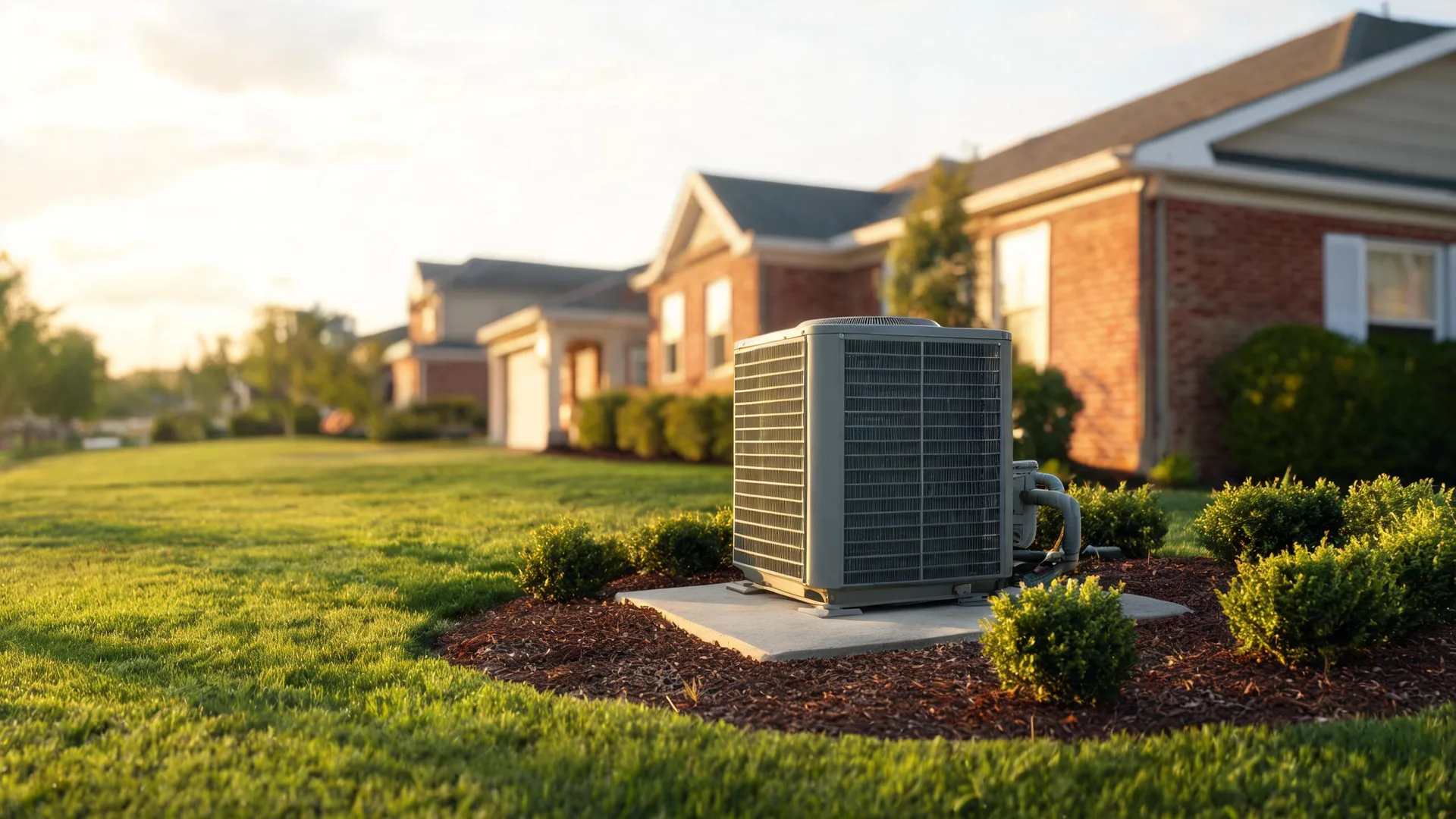
Weather here is hard on outdoor units
Barnwell County logged 67 severe weather events between 2015 and 2024, most of it damaging wind. A heat pump's outdoor unit sits through all of it, exposed to whatever blows through.

Takes about a minute. No obligation.
Barnwell County logged 67 severe weather events between 2015 and 2024, most of it damaging wind. A heat pump's outdoor unit sits through all of it, exposed to whatever blows through.
Wind-driven debris can bend the fins or crack a fan blade without stopping the heat pump from turning on. If a storm just came through, have it looked at even if you haven't noticed a problem yet.

NOAA nClimDiv, 1991–2020 normals
Check the outdoor unit for anything pressed against the coil or blocking the fan.
A branch or a pile of leaves against the coil can cut airflow enough to make the whole system struggle.




After a storm comes through, walk outside and take a real look at the unit before deciding nothing's wrong. Bent fins or a cracked fan blade won't always stop a heat pump from running, so a glance isn't enough. Call a contractor to check it over, especially after damaging wind, since that's hit Barnwell County 53 times in the last decade. Hail and tornadoes have come through too, just less often. If the unit took damage and then loses power in the next storm, that's a harder problem than one caught and checked now.
Storms hit hard here. If the outdoor unit took hail or debris, have it checked even if it still runs.
Find a contractor
A diagnostic starts outside, not with a screwdriver. A contractor runs the system in whichever mode it's complaining about and checks what it's actually doing against what it should be doing. That means gauges on the refrigerant lines, a meter on the capacitor, an amp reading on the compressor and the fan motor. Numbers don't lie the way a sound or a feeling can. A unit can sound fine and still be low on charge. It can hum along and still be pulling amps that tell you the compressor is struggling. The reversing valve gets tested by forcing a switch between heating and cooling and watching whether the valve actually moves or just clicks and stays put. None of this takes long, and most of it doesn't involve opening the unit up. The point of the visit is to find which part is lying about how well it's working, before it takes another part down with it.
A heat pump in heating mode should feel warm at the vent, not lukewarm. Air that feels barely above room temperature often means the system is stuck trying to help itself along, or it's losing ground to a problem it can't fix on its own. Short cycles, long run times that never quite catch up, or a unit that runs constantly without the house reaching temperature all point the same direction.
Some frost on the outdoor coil during a defrost cycle is normal. A heavy coat of ice that doesn't clear, or ice that builds up again within hours, is not. That usually means the defrost cycle itself isn't working right, or airflow across the coil is already restricted. Either way, running it longer in that state just adds strain to the compressor.
A heat pump that keeps running with a problem doesn't fix itself by staying on. Low refrigerant is a good example. The system still moves heat, just less of it, so it runs longer to make up the difference. That extra run time is what wears on the compressor, since refrigerant carries the oil that keeps its moving parts lubricated. Run it low long enough and the compressor is what fails, not the smaller part that started the problem. A stuck reversing valve works the same way. The unit keeps cycling on and drawing power while it delivers air that's the wrong temperature or never really catches up. Letting it run through either problem just turns a repair into a bigger one.
Whether a heat pump is worth repairing usually comes down to the compressor. That part costs more than most of what else can go wrong, and it's sealed, so a contractor can't just swap a worn piece inside it. If the compressor itself has failed, replacing the whole system is often the more sensible path. If the problem is a capacitor, a fan motor, or a reversing valve, that's a straightforward repair on a system that still has a lot of life left in it. Age matters too, not because of a number, but because the parts around a compressor wear down together over time. A unit that keeps needing service calls for different reasons is telling you something a single repair won't fix.