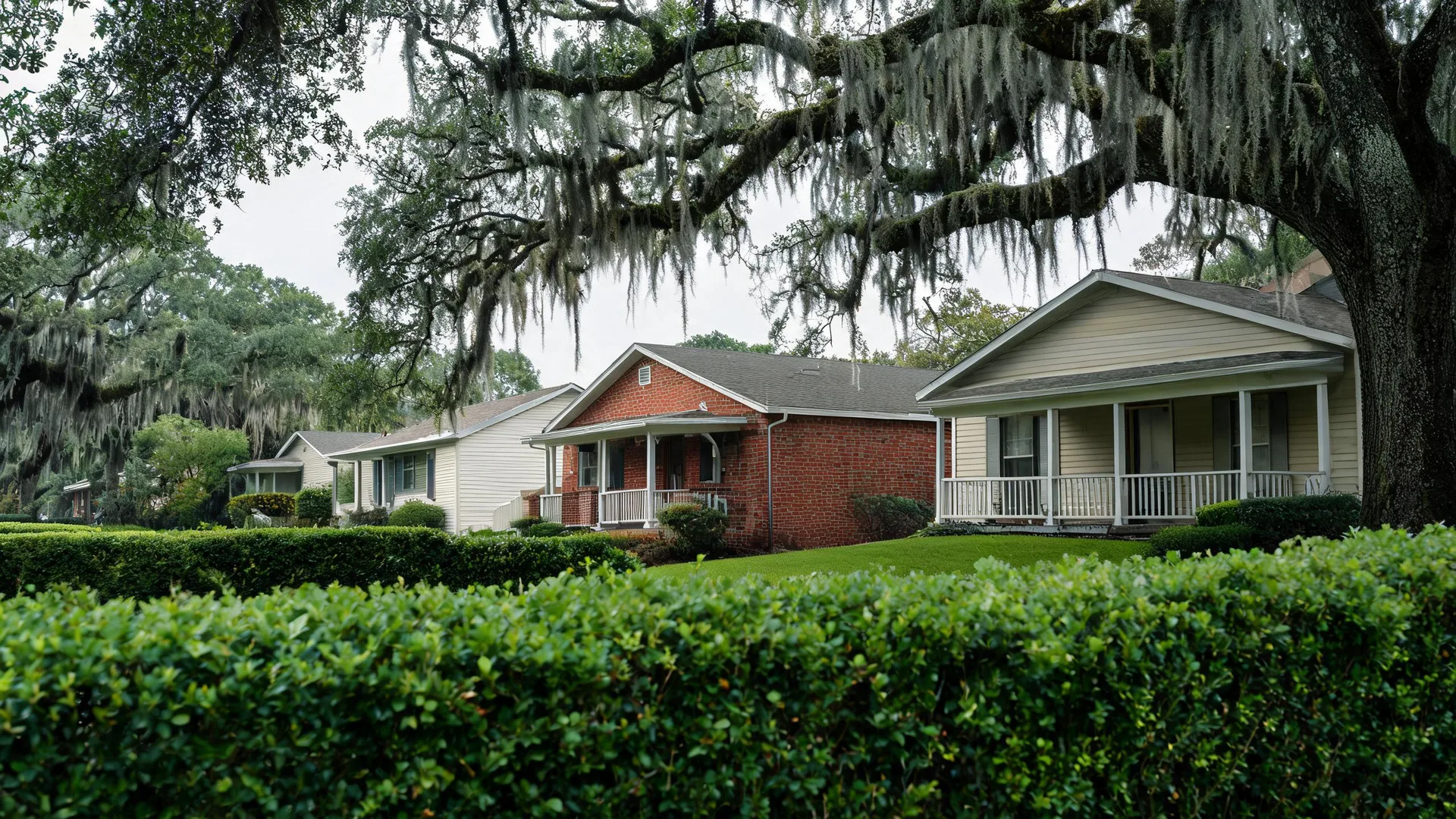
A row of single-story houses, one brick and others with light siding and covered porches, set behind a trimmed green hedge and lawn, under large oak branches draped with Spanish moss.

Heat Pump Repair in Camden, SC

Tell us about the job

Takes about a minute. No obligation.

RepairHeat PumpKershaw County, SC
Step 1 of 2

What ZIP code is the job in?

The reversing valve sticks or fails

A heat pump relies on the reversing valve to switch between heating and cooling. When it sticks, the system can get stuck blowing cold air when you need heat, or it may run constantly trying to shift modes it can't reach. Dirt and wear on the valve's seals are usually behind it.

Refrigerant charge runs low

A heat pump moves heat using refrigerant, so a slow leak at a fitting or coil shows up as weak heating or cooling long before the system quits outright. Ice building up on the outdoor coil during a heating cycle is often the first sign something is leaking.

5 months
November through March, your system heats
5 months
May through September, it cools
34°F
the average winter night it heats against
90°F
the average summer afternoon it cools against
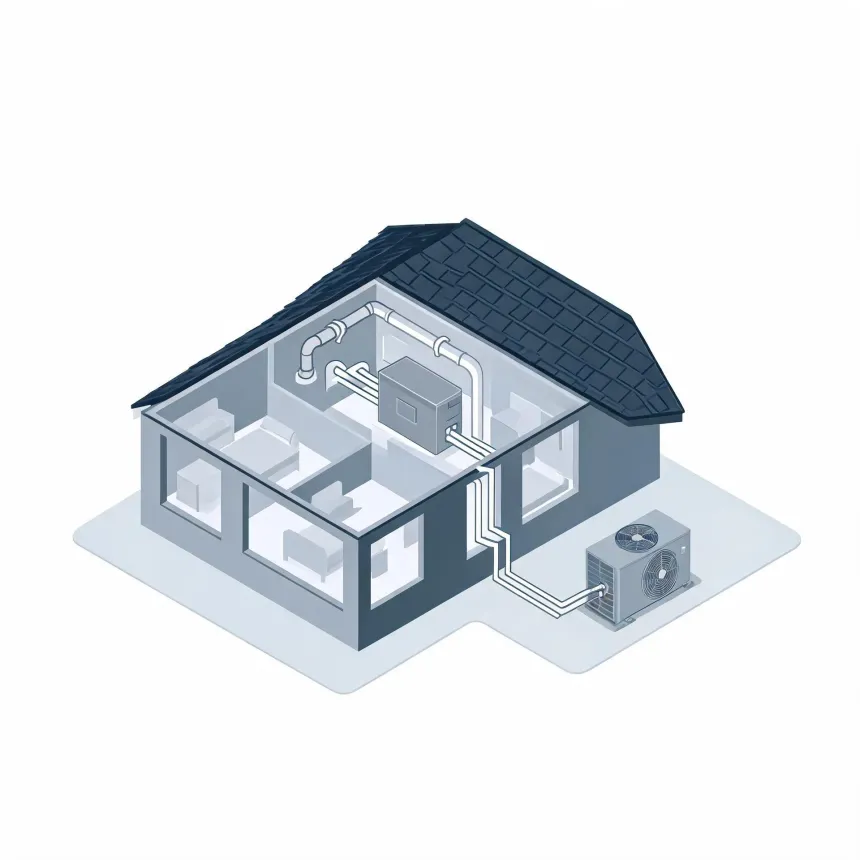
Isometric cutaway illustration of a gray house showing interior rooms, a central air handler with ducts in the attic, and refrigerant lines running to an outdoor condenser unit beside the building.
Your system heats November through March and cools May through September.

NOAA nClimDiv, 1991–2020 normals

Kershaw County has seen damaging wind 116 times between 2015 and 2024.

A heat pump's reversing valve and refrigerant lines don't wear any faster for it. The usual causes are still the usual causes.

November is when a weak heat pump gets found out

Cooling runs May through September
Heat runs November through March
116 damaging wind events from 2015 to 2024

Half the homes in Kershaw County were built in 1993 or later. If yours is one of them, your heat pump is probably not old enough to be the problem by itself. Reversing valves and refrigerant lines wear out from use and time, not from the age of the house around them, but a newer system has usually had less of both. A sticking valve or a slow leak is still a repair, not a reason to replace. Mobile homes make up close to a fifth of the county's housing, and their heat pumps wear the same parts out the same way.

Get the usual fix

Nothing about this area is especially hard on it. It's most likely the usual problem with the usual fix.

Find a contractor
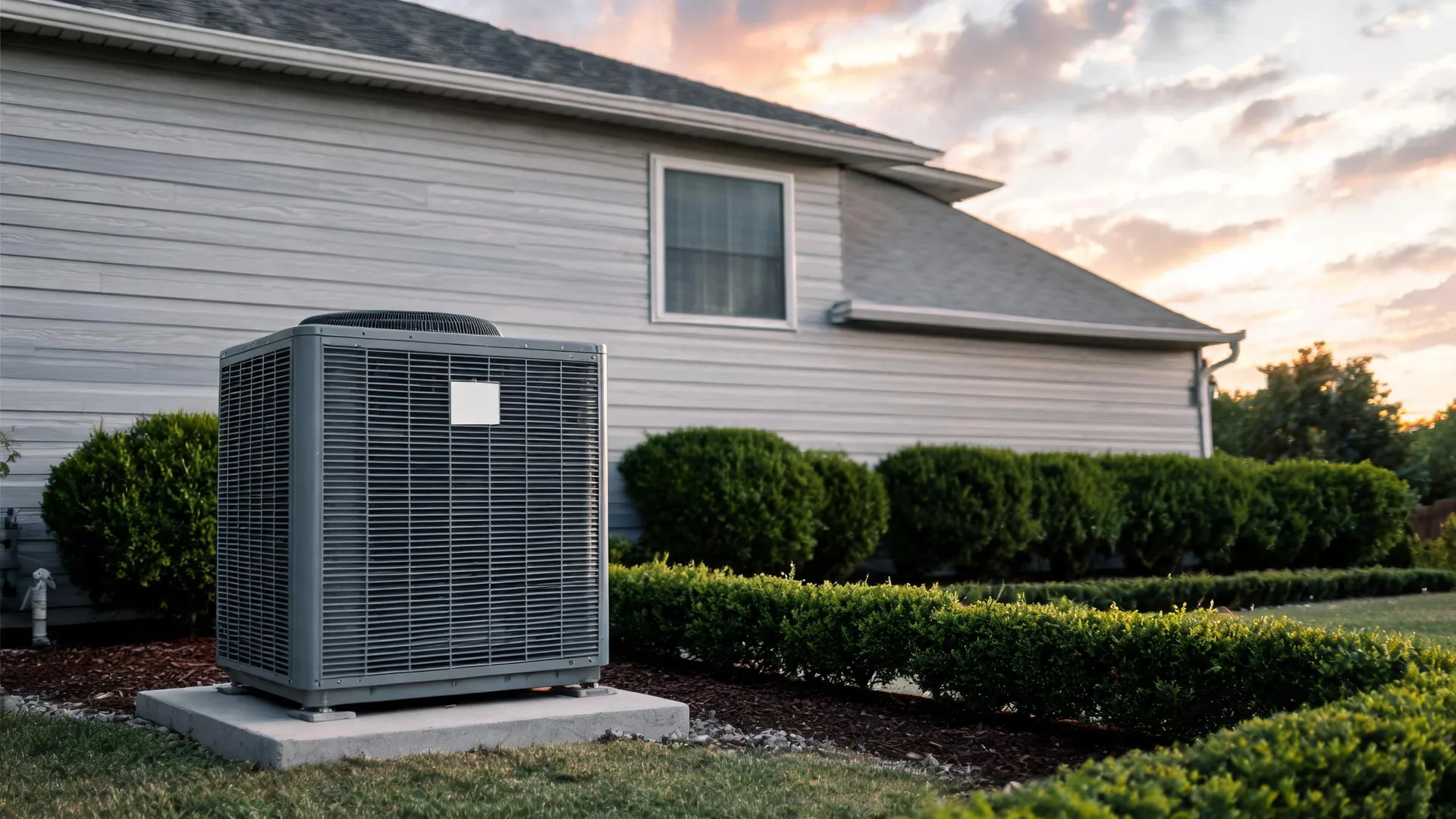
A gray heat pump outdoor unit mounted on a concrete pad next to the stone-accented exterior wall of a house.

Less time running means less reason to replace it

A heat pump that came with a newer house hasn't had many years to put wear on the reversing valve or the seals at the refrigerant fittings. That's the part worth having checked before anything else. Call a contractor out for the stuck valve or the slow leak, not for a replacement estimate. The day-into-night run time shown here is the same wear every heat pump logs, and a system with fewer years behind it has simply logged less of it.

A stuck valve gets worse with every cycle

Once the reversing valve starts sticking, running the system keeps forcing it through a motion it can't complete cleanly. Each cycle wears the seals a little more, and a valve that sticks sometimes can seize for good. Shutting it down and calling someone out early is what keeps this a repair.

A slow leak doesn't stay slow

A heat pump low on refrigerant makes the compressor work harder to move the same amount of heat, and that extra strain is what burns compressors out. Ice on the outdoor coil is the system telling you the charge is already low enough to matter. Left alone, a fitting leak you could have caught early turns into a compressor replacement.

Before anyone comes out, check a few things yourself. Look at the outdoor unit for ice on the coil or lines, especially if the system has been running in heating mode. Check the air coming from your vents, if it's blowing cold when the thermostat calls for heat, note how long that's been happening. Listen for the system running constantly without shutting off, or short cycling on and off. Check your thermostat batteries and settings first, since a dead battery or a mode switched to cool can look exactly like a stuck reversing valve. Write down what you saw and when, that detail helps a contractor figure out whether this is the valve, the charge, or something simpler.

A diagnostic visit starts with questions. When the problem started, whether it's heating or cooling that's off, whether the system is short cycling or running nonstop. Then the contractor checks the thermostat call against what the unit is actually doing, which rules out a thermostat problem before touching anything outside. Gauges go on the refrigerant lines to check the charge, and the outdoor coil gets a look for ice or frost. If the system is stuck in one mode, the reversing valve gets tested directly, usually by listening for it shift when the contractor forces a mode change. None of this takes long. Most of what turns up comes down to a valve that isn't moving right, or a charge that's dropped below where it should be.