





Single-story houses with covered porches sit behind a mowed lawn and a long trimmed hedge, framed by oak branches draped with Spanish moss.

Heat Pump Repair in Charleston, SC

Tell us about the job

Takes about a minute. No obligation.

RepairHeat PumpCharleston County, SC
Step 1 of 2

What ZIP code is the job in?

Most heat pump failures trace back to a few parts doing all the work, year after year. The reversing valve is a common one. It's what switches the system between heating and cooling, and after enough cycles it can stick or leak, leaving you stuck in one mode. The defrost control board is another. It tells the unit when to melt off the ice that builds up on the outdoor coil, and when that board fails, frost just keeps piling on until the system can't pull heat from the air at all. Capacitors wear out too, the same as in any AC, and a weak one will make the outdoor fan or compressor struggle to start or run hot. Low refrigerant charge, usually from a slow leak at a fitting or coil, shows up as a unit that runs constantly but never quite keeps up. Keeping the outdoor coil clean and the airflow clear around it goes a long way toward keeping all of this from happening sooner than it should.

5 months
November through March, your system heats
6 months
May through October, it cools
41°F
the average winter night it heats against
89°F
the average summer afternoon it cools against
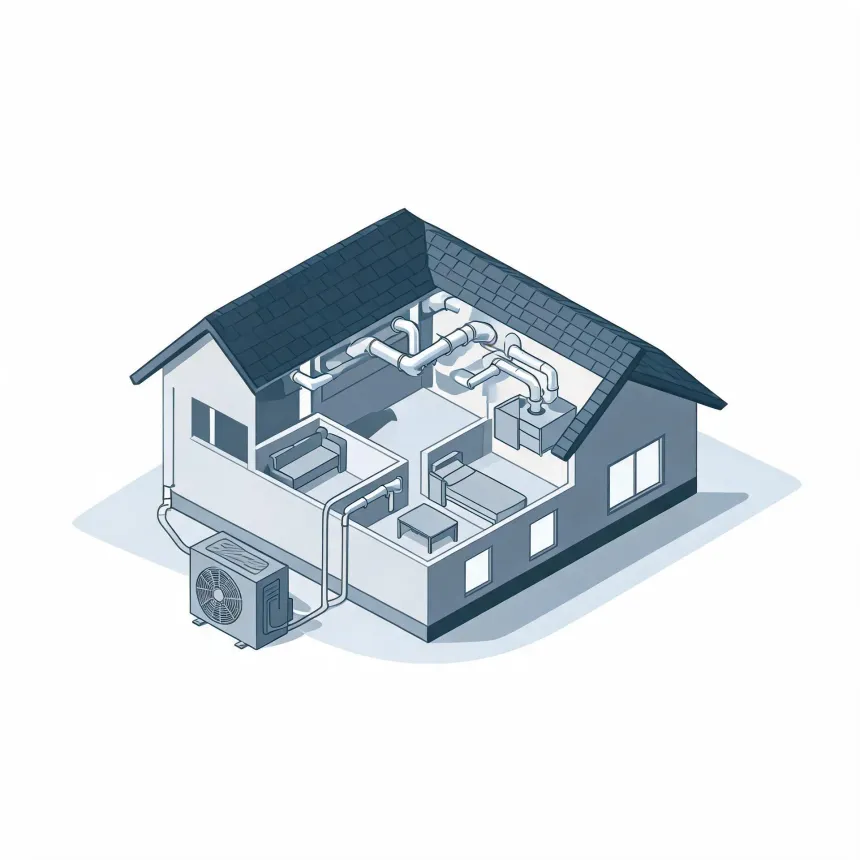
Isometric cutaway illustration of a house showing attic ductwork, an indoor air handler, furnished rooms, and an outdoor condenser unit connected by lines along the exterior wall.
Your system heats November through March and cools May through October.

NOAA nClimDiv, 1991–2020 normals

Half the houses in Charleston County were built in 1991 or later.

A heat pump that came with a newer house still has working life in it, which usually makes repair the right call.

Wind and hail put this equipment through a lot out here

304 damaging wind events from 2015 to 2024
61 hail events from 2015 to 2024
Power costs 14.23 cents a kWh statewide
Call before NovemberHeat pumps here switch over to heat in November, and October is when a weak one shows it.

Charleston County logged 436 severe weather events between 2015 and 2024, and most of that was wind. A heat pump's outdoor unit sits right in the path of it. Wind-blown debris can bend the fins on the coil or nick the fan blades, and hail dents the cabinet and can mark up the coil enough to slow airflow. None of that always stops the unit from running. It can keep cycling on for months with a coil that's restricted or a fan that's slightly out of balance, working harder than it should the whole time. If you know the outdoor unit took a hit from a storm, it's worth having someone look even while it's still keeping the house comfortable.

Repair it

If your system came with a newer house, it likely has plenty of life left. Repair is usually the right call.

Find a contractor
A gray air-source heat pump mounted on a concrete pad next to a house with gray vinyl siding, surrounded by gravel and flanked by green shrubs and white hydrangea flowers.

A newer house usually means a younger unit

The data card up top runs on a loop from morning to night, and that's the span worth thinking about here. Half the heat pumps in this county are sitting in houses built in 1991 or later, which means plenty of them haven't logged the years that wear out a compressor or coil on their own. Storms still take their toll on the outdoor unit no matter how new the house is, so the age tag doesn't rule out damage. It just means that when something is off, a tech is more likely finding a bent fin or a worn capacitor than a unit at the end of its life.

What you can check from the thermostat

Look at what mode it's actually in. If the system is blowing cold air when it's set to heat, or won't switch over at all, try changing the mode and see if it responds within a few minutes. Check the batteries if it's got a screen that looks dim or blank. Also look at the air filter. A filter clogged with dust chokes airflow across the indoor coil, and the system will struggle or ice up because of it, nothing to do with the heat pump itself failing.
What to check outside before anyone comes out

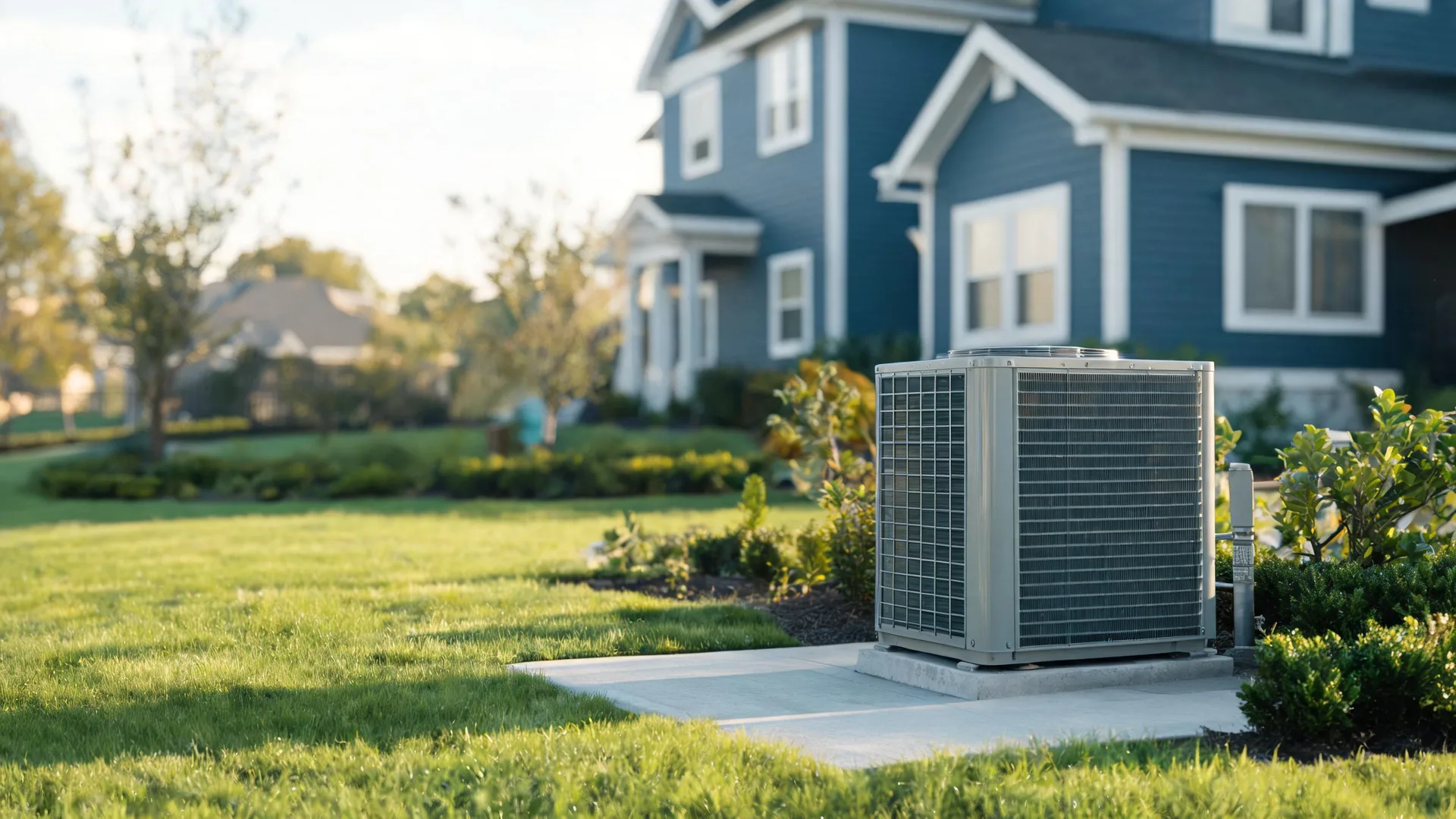
Walk out to the outdoor unit and look at the coil, the fins around the sides. If they're caked with leaves, pollen or grass clippings, that alone can be enough to make the system run constantly without keeping up. Clear debris away from the unit and make sure nothing is stacked against it blocking airflow. A layer of frost in mild weather is normal during a defrost cycle, but ice that never melts off points to a problem worth having someone look at.

A heat pump that's struggling still tries to keep up, and that's the problem. A weak capacitor forces the compressor to pull harder on start, and the extra heat that generates breaks it down faster. Low refrigerant does something similar from a different angle. The compressor runs longer to make up for what's missing, and it runs hotter doing it. A dirty coil chokes airflow, so the system stays in a cycle longer trying to reach the set temperature, and that wears the compressor and the fan motor both. None of this fixes itself by running more. Each extra hour just moves the part closer to the point where it quits instead of struggles.

A diagnostic visit starts outside at the unit, checking refrigerant pressure with gauges and watching how much current the compressor and fan are drawing. From there it moves to the reversing valve, making sure it actually shifts the system between heating and cooling instead of sticking halfway. The defrost board gets checked too, since a board that isn't triggering the cycle right will let frost build on the coil without ever clearing it. Electrical connections get tested along the way. A loose wire or a weak capacitor can look like a much bigger problem than it is. By the end you should know which part is failing, why it's acting up, and what it takes to fix it.