





A grey residential air-conditioning condenser unit mounted on a concrete pad beside a house, photographed at sunset.

Heat Pump Repair in Cheraw, SC

Tell us about the job

Takes about a minute. No obligation.

RepairHeat PumpChesterfield County, SC
Step 1 of 2

What ZIP code is the job in?

Chesterfield County saw 174 severe weather events between 2015 and 2024, and most of those were damaging wind. Your heat pump's outdoor unit sits outside year round, so it takes whatever comes through. Wind-blown branches. Hail. Grit kicked up off the ground. A unit can take a hit like that and keep running, and still be worse off than it was before. A dented cabinet or bent fins don't always show up as a problem right away. If a storm has come through recently and the heat pump is acting up, or even if it isn't, the outdoor unit is worth a look.

5 months
November through March, your system heats
5 months
May through September, it cools
34°F
the average winter night it heats against
90°F
the average summer afternoon it cools against
Isometric line illustration of a cutaway single-story house showing interior rooms, ceiling ductwork, an indoor air handler unit, and an outdoor condenser connected by a line set.
Your system heats November through March and cools May through September.

NOAA nClimDiv, 1991–2020 normals

Most of what a homeowner can check is outside, at the outdoor unit, without opening anything up.

Clear leaves and debris from around it, make sure nothing blocks the airflow, and check the air filter before assuming the worst.

November is the first cold month, and the first cold snap finds what's been wearing down since spring

Cooling runs May through September
Heat runs November through March
111 damaging wind events from 2015 to 2024

Mobile homes make up 37.5% of the housing in Chesterfield County. A heat pump on a mobile home does the same job as one on any other house. The outdoor unit often sits closer to the ground and closer to the skirting, with less room around it than a unit on a standard foundation. That matters less for what breaks and more for what a tech needs clear to get at it. The repair itself, a compressor, a capacitor, a reversing valve, is the same part doing the same job no matter what the house is built on.

Have the outdoor unit checked, especially after the last storm that came through

If the outdoor unit took a hit this year and nobody's looked at it since, acting up now or not, get it checked before the next storm adds to the damage.

Find a contractor
A gray air-source heat pump mounted on a concrete pad next to a house with gray vinyl siding, surrounded by gravel and flanked by green shrubs and white hydrangea flowers.

A problem that runs all day doesn't wait for you to notice it

A heat pump that's struggling doesn't fail all at once. It fails a little more every hour it runs. A weak capacitor still starts the compressor, just slower, with more strain each time, until one day it doesn't start at all. A low charge makes the compressor work harder to move the same heat, and that extra strain wears the compressor down faster than it would wear on its own. A dirty coil makes the whole system run longer to do the same job, and that longer runtime is what turns a small problem into a burned-out motor or a seized compressor. The system usually doesn't shut itself off to protect itself until something's already failed. Running it while something's off doesn't just risk a bigger repair later. It's actively causing one.

The reversing valve is often stuck, not dead

When a heat pump blows cold air in heating mode, the reversing valve gets blamed first. Sometimes it's the valve itself. More often it's the solenoid that moves it, and that can be replaced without touching the valve body. A stuck valve is worth checking before assuming the compressor is the problem, since the symptoms can look similar from inside the house.
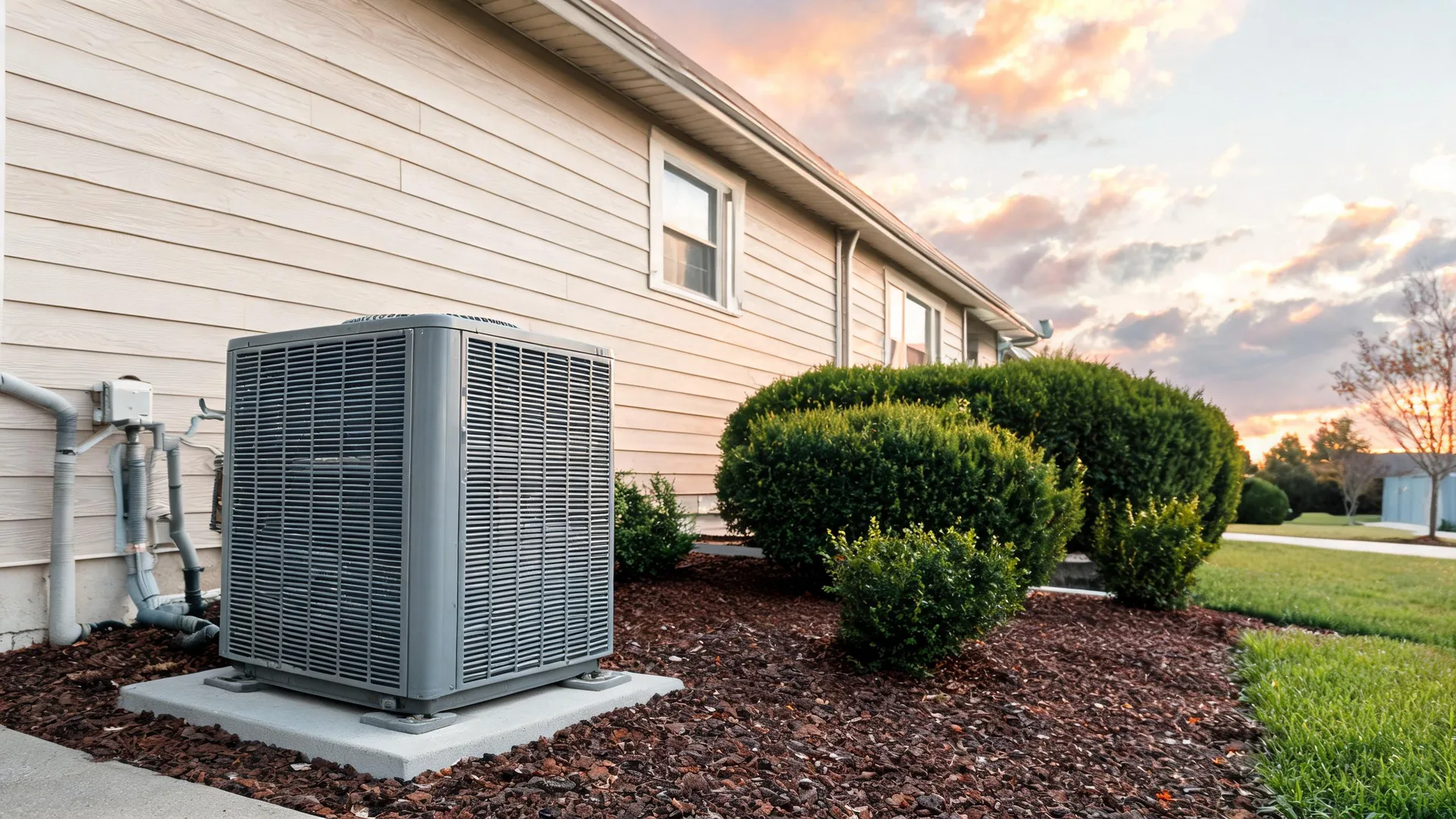
A failing compressor rarely fails without warning

Compressors don't usually quit cold. Most show signs first. The outdoor unit hums without starting, or the system short cycles, or it runs constantly without keeping up. Those signs point to a weak capacitor, a contactor with pitted contacts, or a low refrigerant charge putting strain on the compressor itself. Catching it at that stage spares the compressor from wearing down any further.

A heat pump in trouble usually tells you before it quits. The air coming out of the vents turns lukewarm instead of warm, because the system can't move enough heat to keep up. It runs longer than it used to, or it cycles on and off more than it should, or it just never seems to catch up to the thermostat. Ice can show up on the outdoor unit outside of a normal defrost cycle, and that's worth noticing. Listen for it too. A rattle from a loose panel, a squeal from a worn motor bearing, a clicking that repeats instead of starting the compressor. Any of these is worth a call before the system stops outright.

A diagnostic visit starts outside, not at the thermostat. A tech checks refrigerant pressure, voltage draw at the compressor, and the condition of the capacitor and contactor before ever touching the indoor unit. Gauges on the lines tell them whether the charge is right, because a system can look fine and still be running low. Inside, they check the temperature of the air coming off the coil and compare it to what the system should be putting out. They cycle the reversing valve to see if it actually switches, not just whether it hums. Most of what's wrong shows up before any panel comes off for good.