






A lit antebellum-style two-story house with white columns and a wraparound porch at night, framed by live oak trees draped in Spanish moss.

Heat Pump Repair in Columbia, SC

Tell us about the job

Takes about a minute. No obligation.

RepairHeat PumpRichland County, SC
Step 1 of 2

What ZIP code is the job in?

Richland County has seen 360 damaging wind events and 49 hail events over the past decade. That kind of weather goes after a heat pump's outdoor unit directly, bending fins, denting the cabinet, cracking a fan blade. A unit can take a hit like that and keep running for a while, with a bent coil choking airflow or a cracked blade throwing the motor off balance. If your outdoor unit has been through a storm, have it looked at even if it's still keeping the house comfortable.

5 months
November through March, your system heats
5 months
May through September, it cools
36°F
the average winter night it heats against
91°F
the average summer afternoon it cools against
Isometric cutaway illustration of a small house showing interior rooms with furniture, an indoor air handler with ductwork, and lines running to an outdoor condenser unit beside the building.
Your system heats November through March and cools May through September.

NOAA nClimDiv, 1991–2020 normals

Richland County has logged 360 damaging wind events in the past decade.

Your outdoor unit sits through that every year, and the wear catches up with it early.

November is when a storm-weakened heat pump finally gets tested

Cooling runs May through September
Heat runs November through March
360 damaging wind events from 2015 to 2024
A newer county, and newer systems to matchHalf the homes in Richland County were built in 1989 or later

A tech can check the coil fins for crushed spots, the fan blade for cracks, and the refrigerant charge, in the time it takes to tell you if anything's wrong. Power is worth asking about too. Almost half of South Carolina households lost power for a full day or more in 2024, and a heat pump that sat off during a storm doesn't always restart clean on its own. If yours cut out this year, have it looked at along with the cabinet and coil. It's one visit either way.

A young system is worth repairing

A heat pump that came with a newer house still has most of its working life ahead of it. That's worth knowing before you decide whether a storm-bent fin or a cracked blade is a repair or a reason to replace. If your system is young, get it looked at and fixed.

Find a contractor
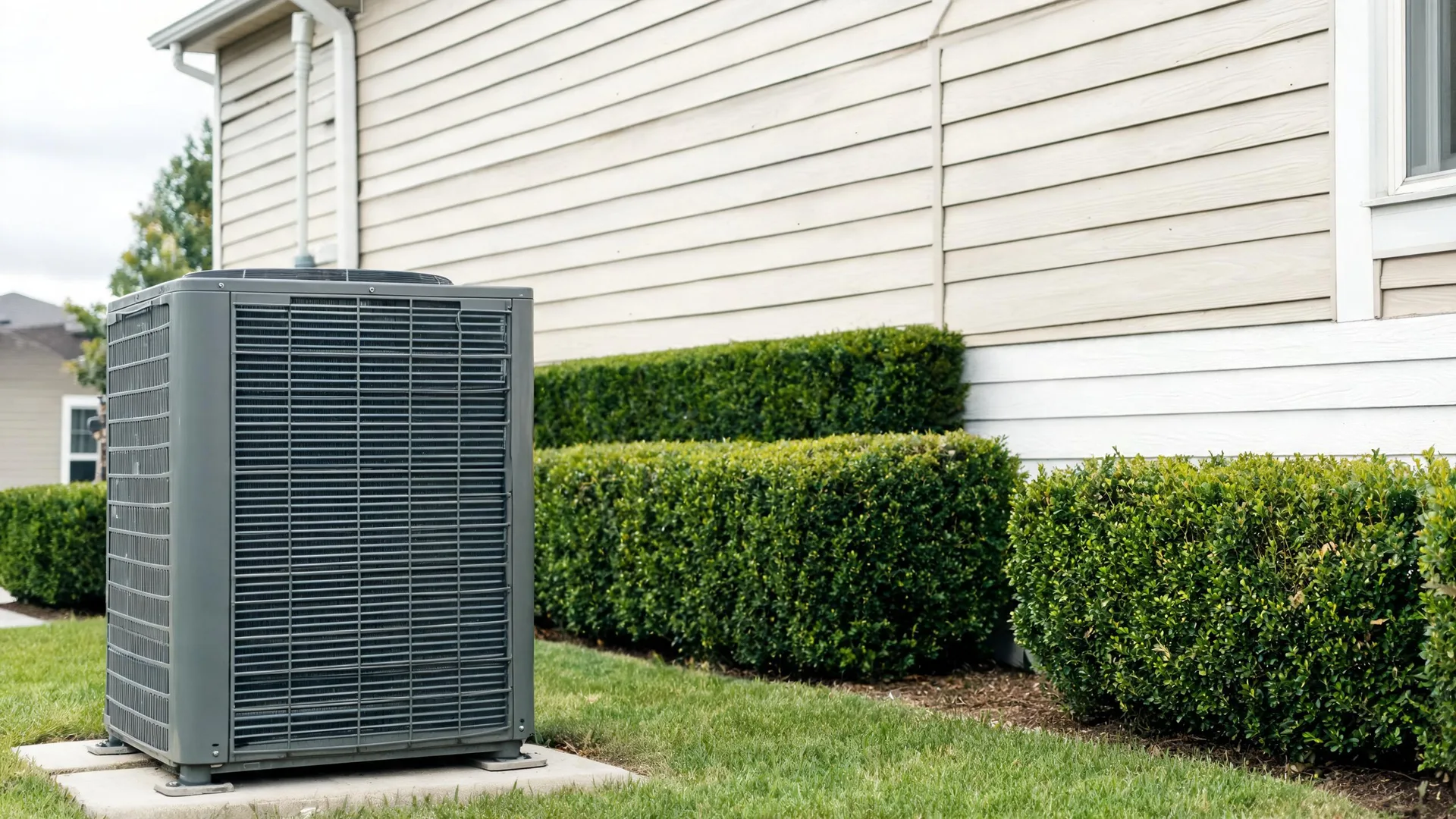
A residential heat pump outdoor unit mounted on a concrete pad next to a house with gray vinyl siding.

A small bend doesn't fix itself with time

A bent fin or a cracked blade doesn't stop a heat pump from running. It just makes it work harder to do the same job. A choked coil forces the system to pull harder to move the same air, and the compressor runs longer to make up for it. A fan blade thrown off balance wears its motor bearings down with every hour it spins. None of this shows up on the thermostat. The house still gets warm, the system still kicks on and off, right up until the part that was struggling finally gives out.

Refrigerant leaks don't announce themselves

A heat pump low on charge still blows air, just not as cold or as warm as it should. The compressor runs longer to make up for it, and that extra run time is what eventually burns it out. A leak usually shows up at a fitting, a coil joint, or a rubbed-through line, and it gets found by pressure testing, not by looking.
The reversing valve is what makes it a heat pump

The reversing valve switches the system between heating and cooling, a part a furnace or a straight AC unit doesn't have. When it sticks, the system can get stuck blowing cold air in heating mode or won't switch over at all. This valve tends to fail from wear, after years of switching back and forth each day.

Most of the time, trouble shows up as a change you can feel before you can name it. The air coming out of the vents is warm but not warm enough, or cool but not quite cool enough, and the system runs longer trying to close that gap. Short cycling is another one to watch for, where the unit kicks on, runs a couple minutes, then shuts off before the house has caught up. Ice on the outdoor coil in weather that shouldn't cause it usually means airflow is blocked or the charge is low. A hissing or gurgling sound near the lines can point to refrigerant escaping somewhere it shouldn't. And if the system is blowing the wrong temperature for the mode it's set to, heating when it should be cooling or the reverse, that's the reversing valve, not something to wait out.

Age is the first thing to weigh, but it isn't the only one. A compressor failure on an older heat pump is usually the end of the road, since a new compressor can cost close to what a new system would. A bad capacitor or a failed fan motor is a different story entirely, a straightforward swap that has nothing to do with how old the unit is. The pattern worth watching for is a system that needs a tech back out every season for something new. One repair doesn't mean much on its own. A string of them on the same unit usually means the rest of it is wearing out too, even if no single part has failed yet.