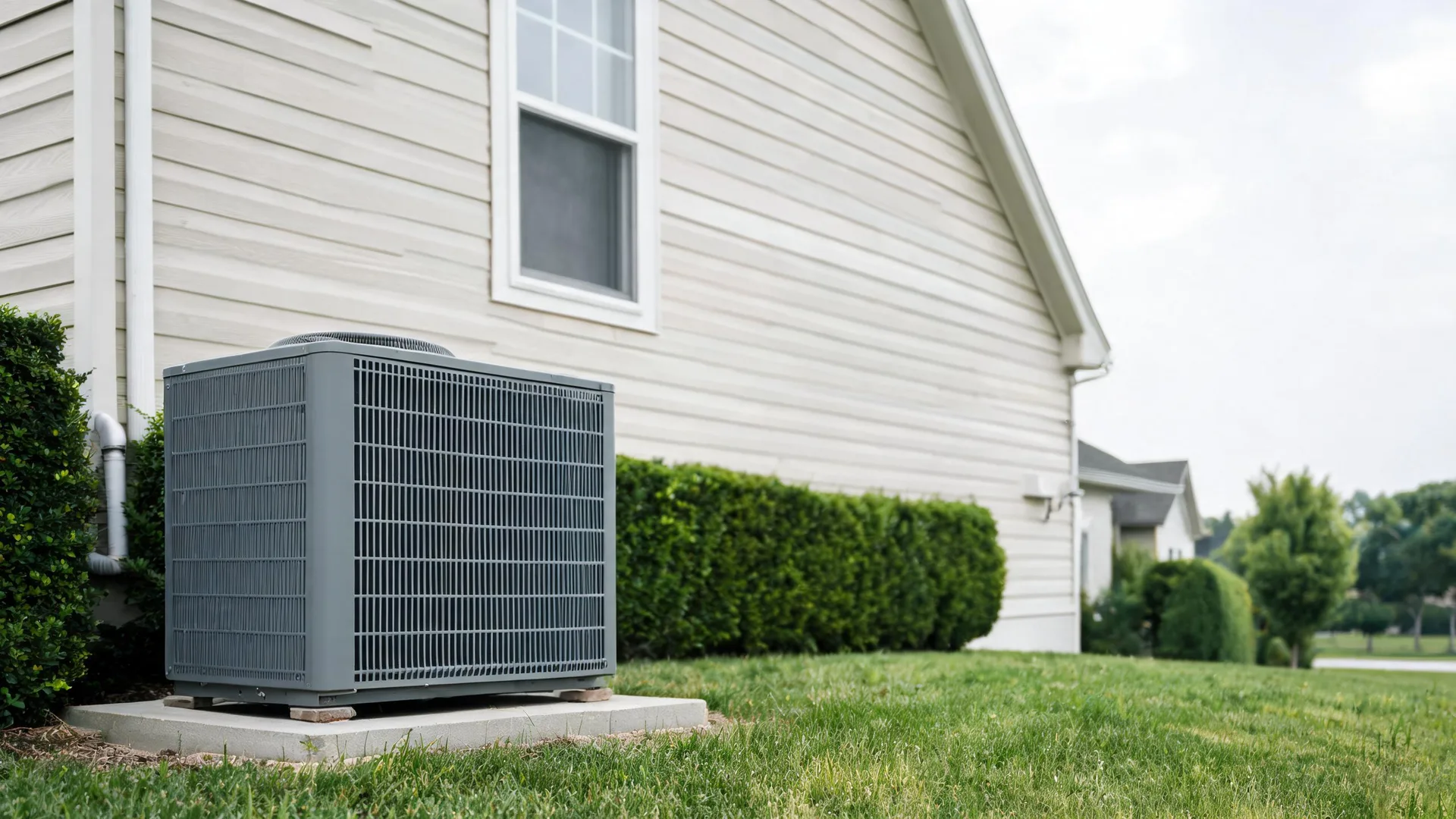
A large outdoor air-conditioning unit mounted beside a vinyl-sided house, surrounded by mulched garden beds and green shrubs.

Heat Pump Repair in Dillon, SC

Tell us about the job

Takes about a minute. No obligation.

RepairHeat PumpDillon County, SC
Step 1 of 2

What ZIP code is the job in?

Dillon County sees real storm damage

Dillon County logged 48 severe weather events between 2015 and 2024, among them damaging wind, hail, tornadoes, and a couple of tropical storms. A heat pump's outdoor unit sits right out in that weather, with no wall between it and the wind or hail.


A unit can take a hit and keep running

Wind-driven debris can bend the fins on a heat pump's coil or knock the cabinet out of square, and the unit will often keep running afterward, just working harder to move the same air. Nearly half of South Carolina households went at least a day without power in 2024, and a heat pump that sat through an outage like that is worth a look even if it switched back on fine.

5 months
November through March, your system heats
5 months
May through September, it cools
35°F
the average winter night it heats against
90°F
the average summer afternoon it cools against
Isometric line illustration of a cutaway single-story building showing interior rooms, ceiling ductwork, an indoor air handler, and an outdoor condenser unit connected by refrigerant lines.
Your system heats November through March and cools May through September.

NOAA nClimDiv, 1991–2020 normals

Half the homes in Dillon County were built in 1984 or earlier.

A heat pump's age usually tells you more than the house's age does, so check the unit's own data plate.

November and May are when a weak heat pump gets found out

Cooling runs May through September
Heat runs November through March
Power costs 14.23 cents a kWh statewide

After wind or hail comes through, walk out and look at the outdoor unit before deciding it's fine. Check the fins on the coil for anything bent flat or a cabinet that's not sitting square anymore. A branch or debris strike can do that without stopping the unit, and a contractor can run the coil fins back out and check the refrigerant charge in one visit. The same goes after a power outage that ran past a day. The unit coming back on isn't the same as it running the way it was before.

Get it checked after a storm

Storms hit hard here. If the outdoor unit took hail or debris, have it checked even if it still runs.

Find a contractor
A gray heat pump outdoor unit mounted on a concrete pad next to a residential house with lap siding and stone accents.

A small problem left running becomes a big one

A heat pump that's struggling doesn't shut itself off to protect its parts. It keeps running, trying to hit the setpoint, and whatever caused the strain keeps acting on it the whole time. A refrigerant leak gets worse under continued run time because the compressor keeps pumping what's left through the system, and a compressor low on charge runs hotter than it should. Bent coil fins restrict airflow across the coil, so the system works harder to move the same amount of air, and that extra load falls on the compressor and the fan motor. None of this shows up as the unit shutting down. It shows up later, as a compressor that's failed outright instead of one that needed a recharge and a coil comb.

Most failures start with the reversing valve or the defrost cycle

A heat pump has to switch directions to go from heating to cooling, and that job falls on the reversing valve. When it sticks, the unit can get stuck blowing cold air in heating mode or stop switching at all. The defrost cycle depends on a sensor reading the outdoor coil temperature correctly. If that sensor fails or the defrost board misreads it, frost builds up on the coil and blocks airflow instead of clearing on schedule.

The outdoor unit takes the wear the indoor one doesn't

The outdoor fan motor and compressor run in whatever the weather is doing, year round, while the indoor blower sits inside out of the elements. Capacitors that start the fan motor and compressor weaken with age and heat cycling, and a weak capacitor shows up as a unit that hums but won't start, or a fan that runs slow. Low refrigerant charge, whether from a slow leak or a fitting that was never quite right, makes the compressor run hotter than it should every single cycle until it fails outright.

Before calling anyone, go outside and look at the unit. Make sure nothing is blocking it, no leaves packed against the side, no ice or snow piled against the coil. Check the air filter inside, since a clogged one starves the system of airflow and can mimic a much bigger problem. Look at the outdoor fan and listen for it. If it's not spinning, or it's spinning but the unit never kicks into heating or cooling, that's worth telling the contractor exactly as you saw it. Check the thermostat batteries and the breaker for the unit before assuming the worst. None of this tells you what's actually wrong inside the system, but it rules out the easy stuff and gives whoever comes out a clearer starting point.

A compressor failure and a bad capacitor look the same from the thermostat, but they're not the same call. If the unit hums and won't start, or trips the breaker, get it looked at before deciding anything. A capacitor or a contactor is a small, contained fix. A compressor is the heart of the unit, and once it's gone, the cost of replacing just that part starts closing in on a new outdoor unit anyway, especially on an older system where the refrigerant it uses is getting harder to find. Age matters less than how the unit's been treated. A heat pump that's had its filter changed and its coils kept clear can outlast a newer one that sat through a few seasons ignored. Ask the contractor what's actually failed before asking what it costs to fix it. That answer tells you which kind of repair you're looking at.