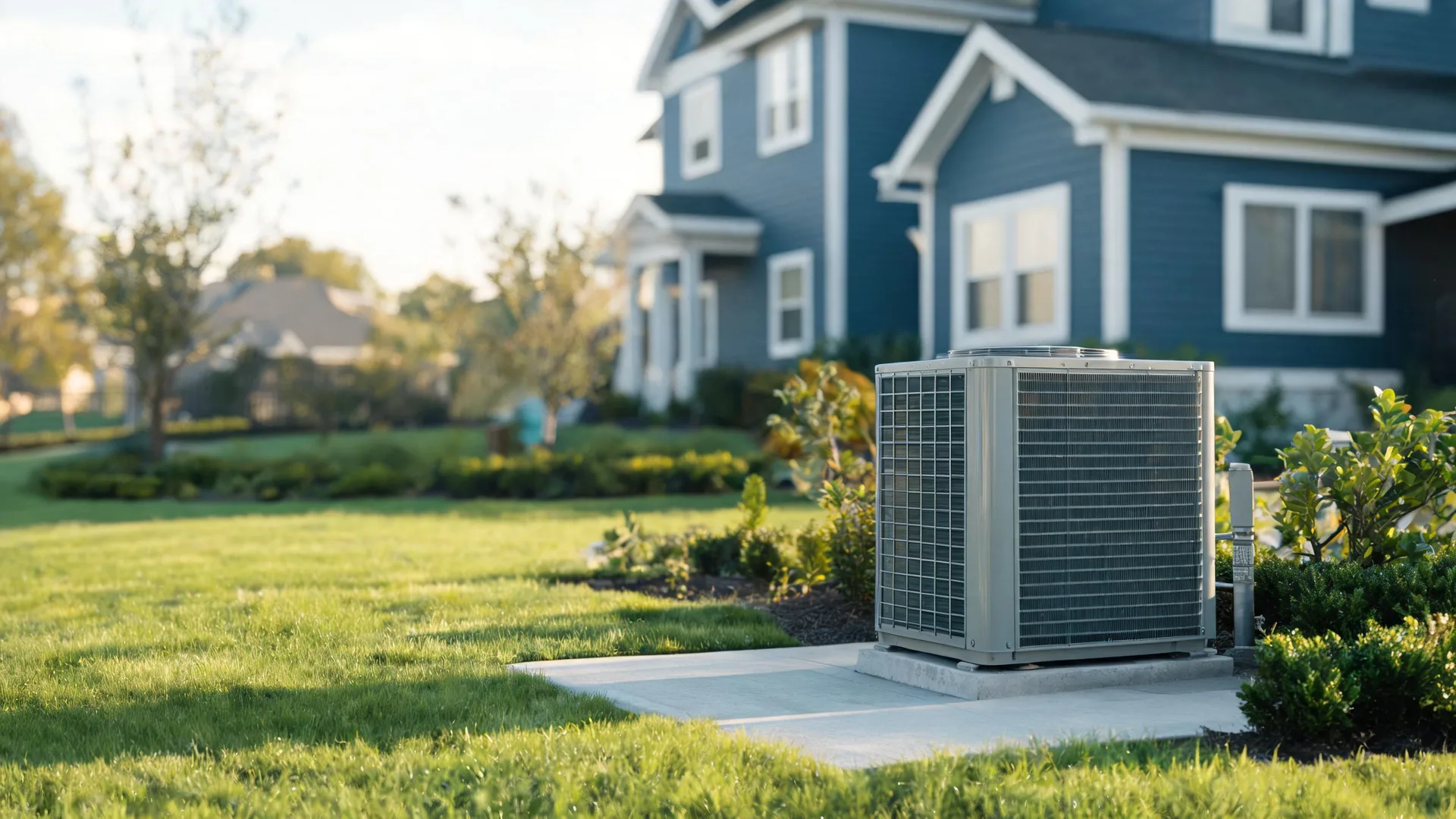
An outdoor heat pump unit mounted on a concrete pad in front of a single-story suburban house with beige siding.

Heat Pump Repair in Florence, SC

Tell us about the job

Takes about a minute. No obligation.

RepairHeat PumpFlorence County, SC
Step 1 of 2

What ZIP code is the job in?

A small fault strains the whole system

A heat pump low on refrigerant will still run, but the compressor works harder to move heat and starts pulling in more current than it should. Left alone, that heat builds up inside the compressor and can burn out the windings. What started as a slow leak turns into a compressor replacement.

Running it anyway wears out parts that were still fine

A failing capacitor makes the outdoor fan motor labor every time it tries to start. The motor itself was never the problem, but it takes the wear meant for the capacitor until it seizes too. Calling someone when you first hear the hum or see the fan struggle keeps the damage to the one part that actually failed.

5 months
November through March, your system heats
5 months
May through September, it cools
36°F
the average winter night it heats against
90°F
the average summer afternoon it cools against
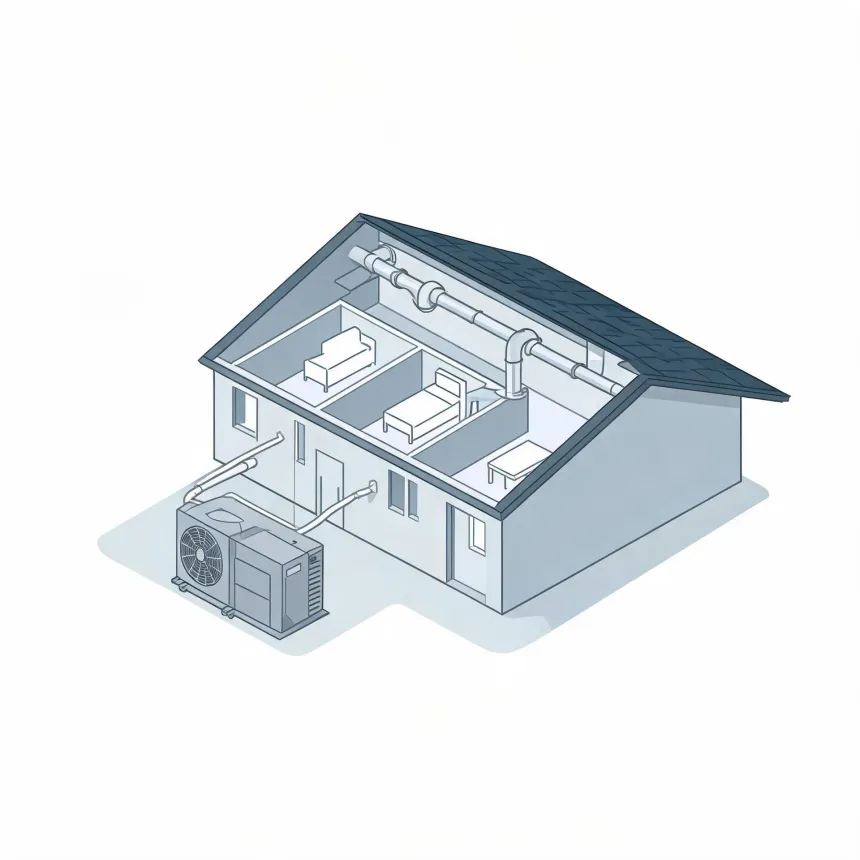
Isometric line illustration of a cutaway single-story house showing interior rooms with furniture and attic ductwork connected to an outdoor condenser unit beside the building.
Your system heats November through March and cools May through September.

NOAA nClimDiv, 1991–2020 normals

Florence County took damaging wind 97 times between 2015 and 2024.

A heat pump that rides out storms like that, then runs hard through the heat afterward, is the one most likely to show up with a worn part.

Half the homes in Florence County were built in 1986 or later, and the heat pump in one of them is usually worth fixing

Half the homes here were built by 1986
97 damaging wind events from 2015 to 2024
Power costs 14.23 cents a kWh statewide
Repairs show up fast once the season startsCooling starts in May here. A heat pump that limped through April tends to fail in the first hot weeks after.

A heat pump that needs attention usually tells you before it quits outright. Rooms stop holding an even temperature no matter how long the system runs. Air from the vents feels off, cooler than it should on heat or warmer than it should on cooling, which points to trouble moving refrigerant through the cycle. Listen for changes too. A clicking at startup that wasn't there before, a hum that means the fan motor is trying to spin and failing, a hard clunk when the system switches between heating and cooling. Short cycling, where the unit kicks on and off every few minutes instead of running a full cycle, usually means a control or sensor has lost track of what the system is doing. Ice on the outdoor coil outside of a normal defrost cycle means the heat exchange is already struggling.

After a storm, get the worn part found before it fails

That heat pump has been through the wind this county keeps getting, then straight into the heat. That's the kind of run that wears down one part at a time. Get it checked now and a tech can catch the part that's going before it takes the rest of the system with it.

Find a contractor
A man in a cap, gray shirt and brown work pants walks up steps toward a dark green front door, carrying a canvas tool bag beside a potted shrub.
A gray air-source heat pump mounted on a concrete pad next to a house with gray vinyl siding, surrounded by gravel and flanked by green shrubs and white hydrangea flowers.

Most likely still has years left in it

That repair makes the most sense when the unit still has years ahead of it. A heat pump installed new in a house built in the last few decades is usually still well within its working life. Get the failing part named and fixed, and let the rest of the system keep running.

The reversing valve is the part unique to this machine

A heat pump switches between heating and cooling by reversing the flow of refrigerant through a valve built just for that job. Over years of switching back and forth, the valve can stick in one position or fail to seat fully. When it does, the system may blow cold air when it should heat, or stop switching modes at all.

The outdoor coil takes the abuse

The outdoor coil gives up heat to the air in summer and pulls heat out of the air in winter, sitting outside through both. Dirt, leaves, and grass clippings cut down on airflow across it, and bent fins make that worse. A coil that can't exchange heat properly forces the compressor to run longer and harder to get the same result.

Before calling anyone, go outside and look at the unit. Clear away leaves, grass clippings, or anything piled against the outdoor coil, since blocked airflow alone can mimic a bigger failure. Check that the outdoor fan is spinning freely and not wobbling or grinding. Inside, pull the air filter and hold it to the light. If you can't see through it, replace it, since a clogged filter starves the whole system of airflow and can cause the exact symptoms that look like a failing part. Check the thermostat batteries and make sure it's set to the mode you expect. None of this fixes a bad capacitor or a stuck reversing valve, but it rules out the simple stuff before a tech has to.

A repair decision usually comes down to the one part that failed, not the system as a whole. If the compressor itself is sound and what's gone bad is a capacitor, a fan motor, a control board, or the reversing valve, fixing that one part is almost always the right call. Those parts fail on their own regardless of how old the rest of the system is. The compressor is the exception. It's the most expensive part to replace and the hardest to justify replacing on its own, so a compressor failure is the point where the conversation usually shifts to whether the whole unit still has enough life left to be worth it. Age matters less than what's actually broken. A heat pump that's had one part fail and gets that part fixed will usually keep running the way it always has.