A row of single-story houses, one of red brick and others with light siding and a covered porch, behind a mown lawn and a trimmed hedge, under large moss-draped tree branches and an overcast sky.

Heat Pump Repair in Georgetown, SC

Tell us about the job

Takes about a minute. No obligation.

RepairHeat PumpGeorgetown County, SC
Step 1 of 2

What ZIP code is the job in?

The reversing valve is often the first thing to go

A heat pump switches between heating and cooling by reversing refrigerant flow through a valve, and that valve works every single cycle, all year. When it sticks, the system gets stuck in one mode or stops switching cleanly, and you'll feel it blowing the wrong temperature air or running without really heating or cooling the room.

A failing defrost cycle means ice buildup outside

The outdoor unit pulls heat from the air even in cold weather, and frost forms on the coil as it does. A sensor and control board are supposed to trigger a defrost cycle to clear it. When that sensor or board fails, ice builds up on the coil and blocks airflow, and the unit has to work harder to do anything at all.

5 months
November through March, your system heats
6 months
May through October, it cools
38°F
the average winter night it heats against
89°F
the average summer afternoon it cools against
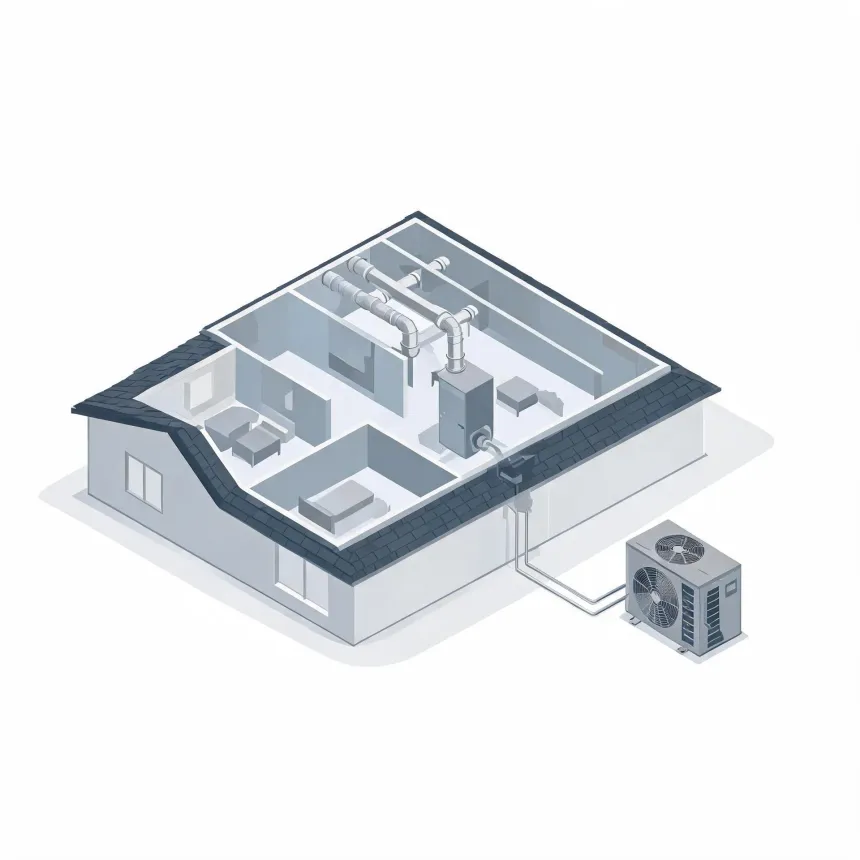
Isometric cutaway illustration of a single-story house showing interior rooms with ductwork, a furnace or air handler, and refrigerant lines running outside to a condenser unit on a pad.
Your system heats November through March and cools May through October.

NOAA nClimDiv, 1991–2020 normals

Half the homes in Georgetown County were built in 1993 or later.

A heat pump that age still has years in it, so a repair is usually the right call before anyone talks replacement.

Call early in November, and early in May

Cooling runs May through October
Heat runs November through March
Power costs 14.23 cents a kWh statewide
Built for storms78 severe weather events hit Georgetown County between 2015 and 2024

Before paying for a replacement, ask the contractor what's actually failing. A reversing valve or a defrost control board is a repair on its own, not a reason to replace the whole unit. If the system came in when the house was built, the install date is on the unit's nameplate, and you can check it against your own records. A heat pump from that era can still be running fine if it's been serviced along the way. Get the part diagnosed first, then decide.

Repair it

If your system came with a newer house, it likely has plenty of life left. Repair is usually the right call.

Find a contractor
A man in a cap, work shirt and tan pants, seen from behind, carries a canvas tool bag up concrete steps toward a dark green front door, with a potted shrub to the right.
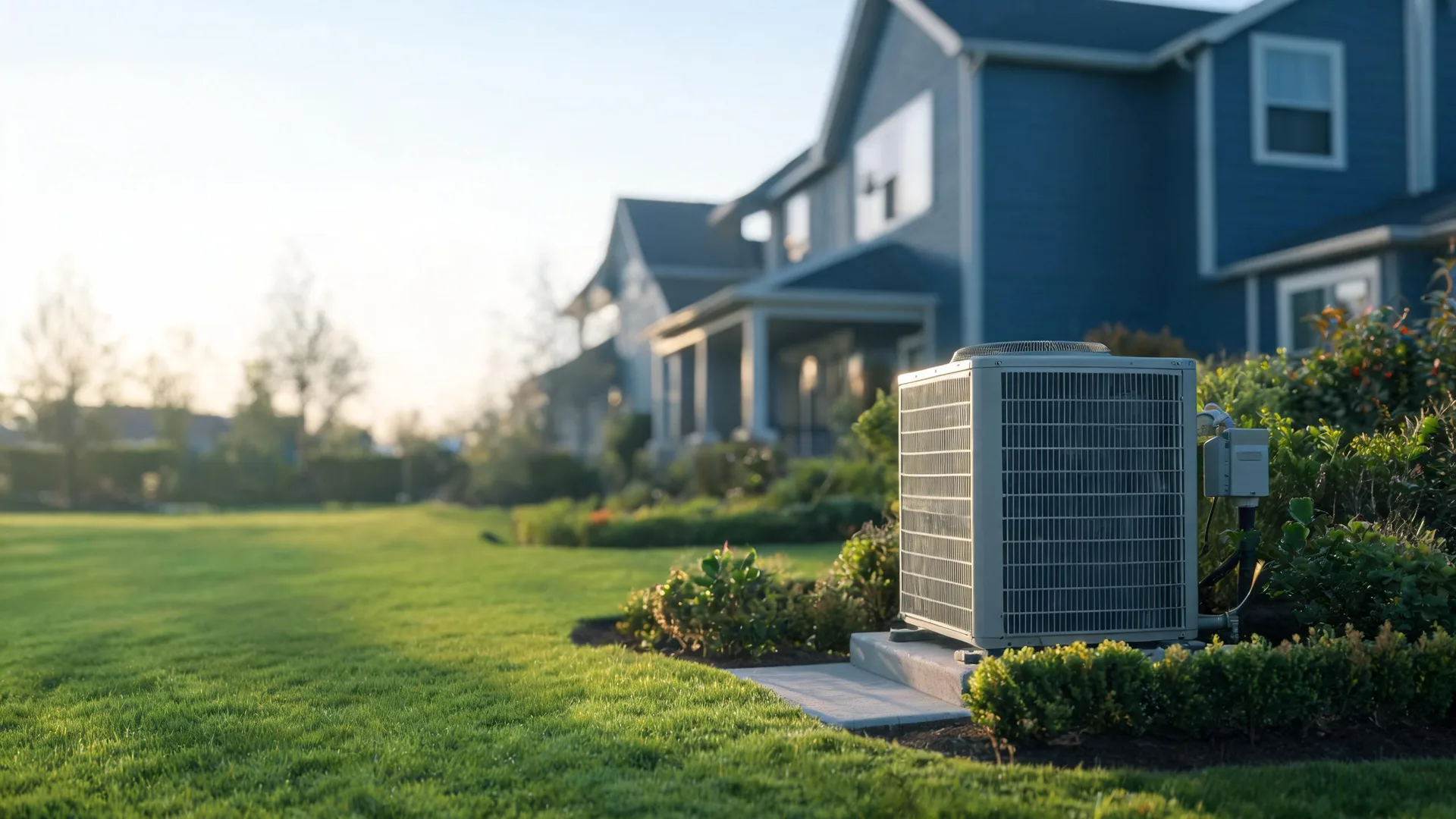
A white mini-split heat pump outdoor unit mounted on a concrete pad beside a gray-sided house, surrounded by gravel and green shrubs.

What to check before you call

Before anyone comes out, check the thermostat first. Make sure it's set to heat or cool as needed and not stuck in fan only. If it runs on batteries, swap them. Check both breakers, the one for the outdoor unit and the one for the air handler, since a tripped breaker on either side can look like a dead system. Walk outside and look at the unit. Ice outside of a normal defrost cycle, or leaves and debris packed around the coil, are both worth telling the contractor about before they arrive. Pull the air filter and hold it to the light. If you can't see through it, a clogged filter can choke off airflow and cause trouble that looks electrical but isn't. Feel the air at a few vents around the house. Weak airflow, or air blowing with no real heat or cool to it, is exactly the kind of thing to describe on the phone. None of this fixes a stuck reversing valve or a failed defrost board, but it rules out the simple stuff before anyone opens up the unit.

A weak capacitor can take the compressor with it

A capacitor that's starting to fail still lets the compressor run, just under strain. Keep running the system on a bad capacitor and the compressor draws more current than it should every time it starts. That heat and strain add up, and a small, simple part left bad long enough can damage the compressor itself.

A refrigerant leak gets worse, not better

Refrigerant doesn't get used up, so a low charge means it's leaking somewhere. Running the system low on charge forces the compressor to work harder to move heat, and it runs hotter than it's built for. Left alone, a small leak stays a small leak until the heat and pressure wear on the compressor itself.

Most heat pump trouble shows up as sound or feel before anything quits outright. A clicking that keeps repeating when the unit tries to start, instead of one click and a hum, usually points to a failing capacitor or contactor. A hissing or bubbling sound near the lines can mean refrigerant escaping. If the air coming from the vents is cool or lukewarm when it should be warm, the system may be stuck in the wrong mode or running low on charge. Short cycling, where the unit starts, stops, and starts again within a few minutes, puts a lot of wear on the compressor and is worth having looked at soon. Any of these left alone tends to take another part down with it.

A repair decision really comes down to the compressor. Every other part on a heat pump, the capacitor, the reversing valve, the defrost board, can be replaced on its own without touching the rest of the system. The compressor is different. It costs more than those parts by a wide margin, and a contractor may tell you straight that replacing it isn't worth doing on an older unit. So the real question isn't the age of the system, it's which part failed. A bad sensor or a stuck valve is a routine fix. A compressor that's seized or grinding is the one failure that changes the conversation.