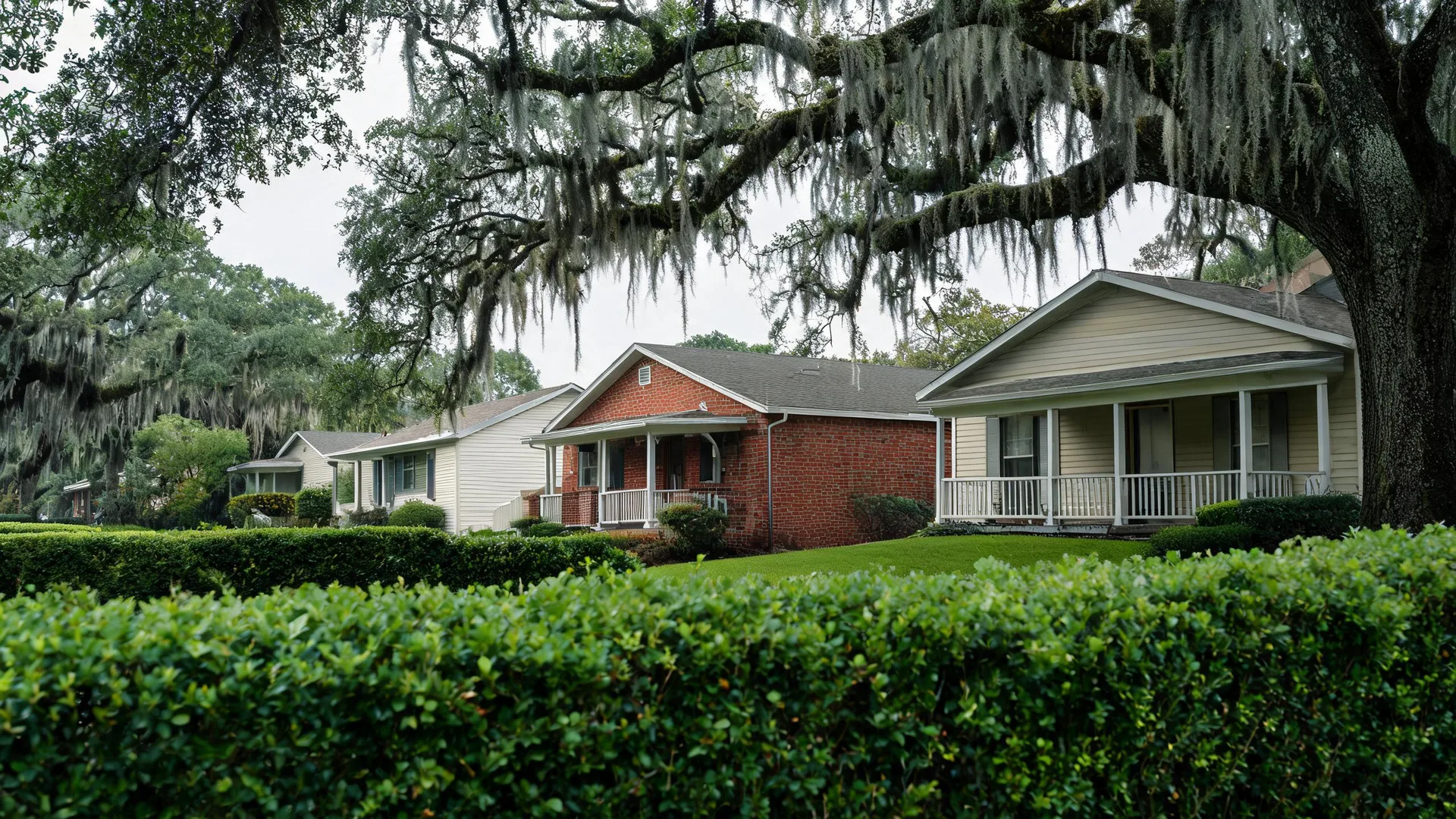





A row of single-story houses, one brick and others with light siding and covered porches, set behind a trimmed green hedge and lawn, under large oak branches draped with Spanish moss.

Heat Pump Repair in Goose Creek, SC

Tell us about the job

Takes about a minute. No obligation.

RepairHeat PumpBerkeley County, SC
Step 1 of 2

What ZIP code is the job in?

A heat pump that's struggling will keep trying to hit the temperature on the thermostat, and that's where the trouble starts. If the refrigerant charge is low, the compressor runs longer to make up for it, and that extra strain is what burns a compressor out early. If a coil is icing over, letting it run just packs more ice on, which blocks airflow further and can send liquid refrigerant back to the compressor, something it isn't built to handle. A failing capacitor makes the motor it serves draw more current than it should, and that heat adds up over hours, not minutes. None of these get better with time. The machine doesn't know it's hurting itself, it just keeps doing what the thermostat tells it to do.

5 months
November through March, your system heats
6 months
May through October, it cools
38°F
the average winter night it heats against
91°F
the average summer afternoon it cools against
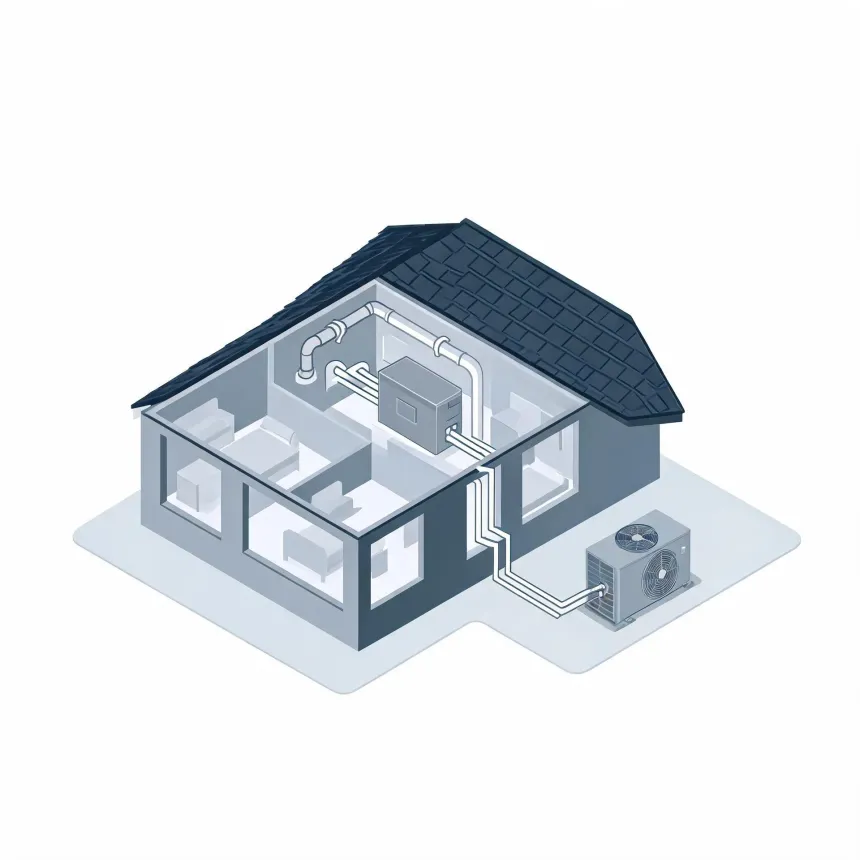
Isometric cutaway illustration of a gray house showing interior rooms, a central air handler with ducts in the attic, and refrigerant lines running to an outdoor condenser unit beside the building.
Your system heats November through March and cools May through October.

NOAA nClimDiv, 1991–2020 normals

A heat pump that blows air that doesn't feel warm isn't necessarily broken, it may just be in defrost mode.

But if that lukewarm air sticks around for more than a few minutes, something is keeping the system from switching back to heating.

November is when a weak heat pump here gets found out

Cooling runs May through October
Heat runs November through March
146 damaging wind events from 2015 to 2024
A newer county's heat pumpsHalf the homes in Berkeley County were built in 2002 or later.

Berkeley County has seen 240 severe weather events over the past ten years, and damaging wind caused most of them. Hail and tornadoes account for the rest. Hail dents fan blades and coil fins on the outdoor unit, and wind-driven debris can do the same even when the system keeps running afterward. If yours took a hit like that and still seems to work, it's worth having someone check the coil and fan before the damage shows up as a bigger failure. Power cuts matter too. A heat pump that sat off in the cold for a day or more is worth a look before you trust it to carry the house through the next storm.

Get it looked at early

Problems tend to show up in the first weeks of the season, when the load hits a part that was already weak.

Find a contractor
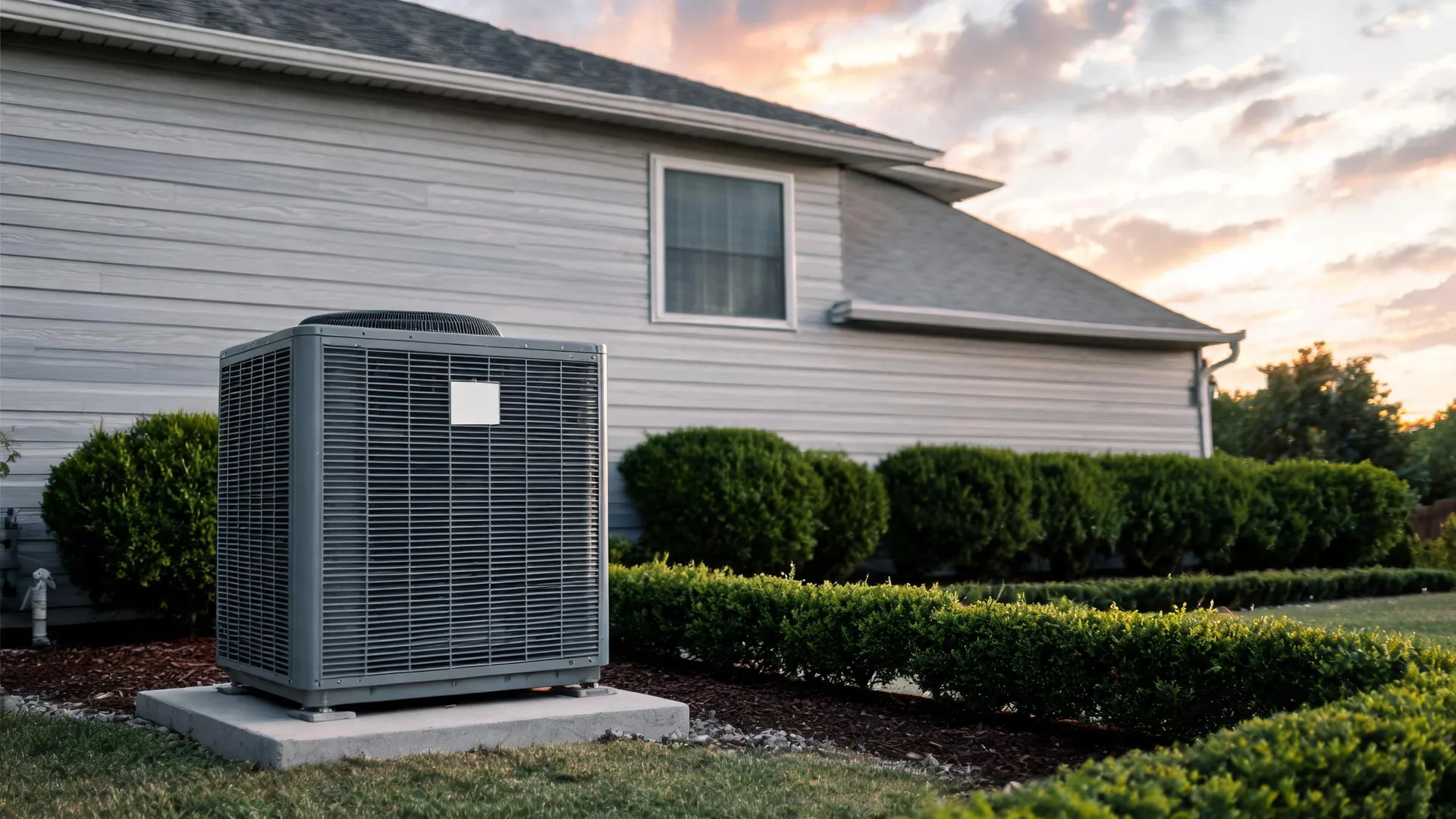
A gray heat pump outdoor unit mounted on a concrete pad next to the stone-accented exterior wall of a house.

Repair still makes sense on a system this age

That points to a repair call over a replacement call. A heat pump that's a few years old doesn't need to be replaced just because something on it failed. Parts are easy to get, and a bad compressor or board is usually one fix, not a reason to start over. If your system came with the house, that's the first thing worth telling whoever comes out to look at it.

What the tech checks first

A diagnostic starts with pressures and temperatures, not guesswork. Gauges on the refrigerant lines show whether the charge is right, and a clamp meter on the compressor and fan motors shows whether they're drawing current the way they should. Low pressure points one direction, a stuck reversing valve points another, and the readings narrow it down before any part gets replaced.
Why it starts outside

The outdoor unit gets checked before anything inside does, since that's where a heat pump does the work of moving heat in either direction. A tech will look at the coil for dirt or damage, the fan blade for a wobble or a hit, and the defrost control to see if it's cycling on schedule. A problem that looks like a thermostat issue inside often traces back to something stuck or failing out there.

Before you call anyone, cut power to the system at the breaker and look at the outdoor unit. Leaves, pine straw or a cover pressed against the coil will choke airflow and make the whole system struggle, and that one's free to fix. Check the air filter inside too. A filter packed with dust starves the system the same way a blocked coil does, just from the other end. If the outdoor fan isn't spinning at all, don't keep cycling the thermostat trying to force it, that's a sign for a tech, not a DIY fix. Look at the thermostat setting itself and make sure it's actually calling for heat and the batteries aren't dying, it sounds obvious but it's the most common false alarm there is. If you see ice built up past what a normal defrost cycle would leave, note how long it's been there before you mention it on the call, that detail helps whoever comes out.

A heat pump has a few parts that fail often and a couple that almost never do. Capacitors, contactors, fan motors and the defrost board wear out from regular cycling, and swapping one is a normal repair that gets the system back to work. The compressor and the reversing valve are a different matter. Those are built to last the life of the unit, and when one of them fails, the repair starts costing enough to make a new outdoor unit worth a look instead. A compressor that's otherwise sound shouldn't get replaced just because the system has some years on it. What matters is which part actually failed, not how long the unit's been running.