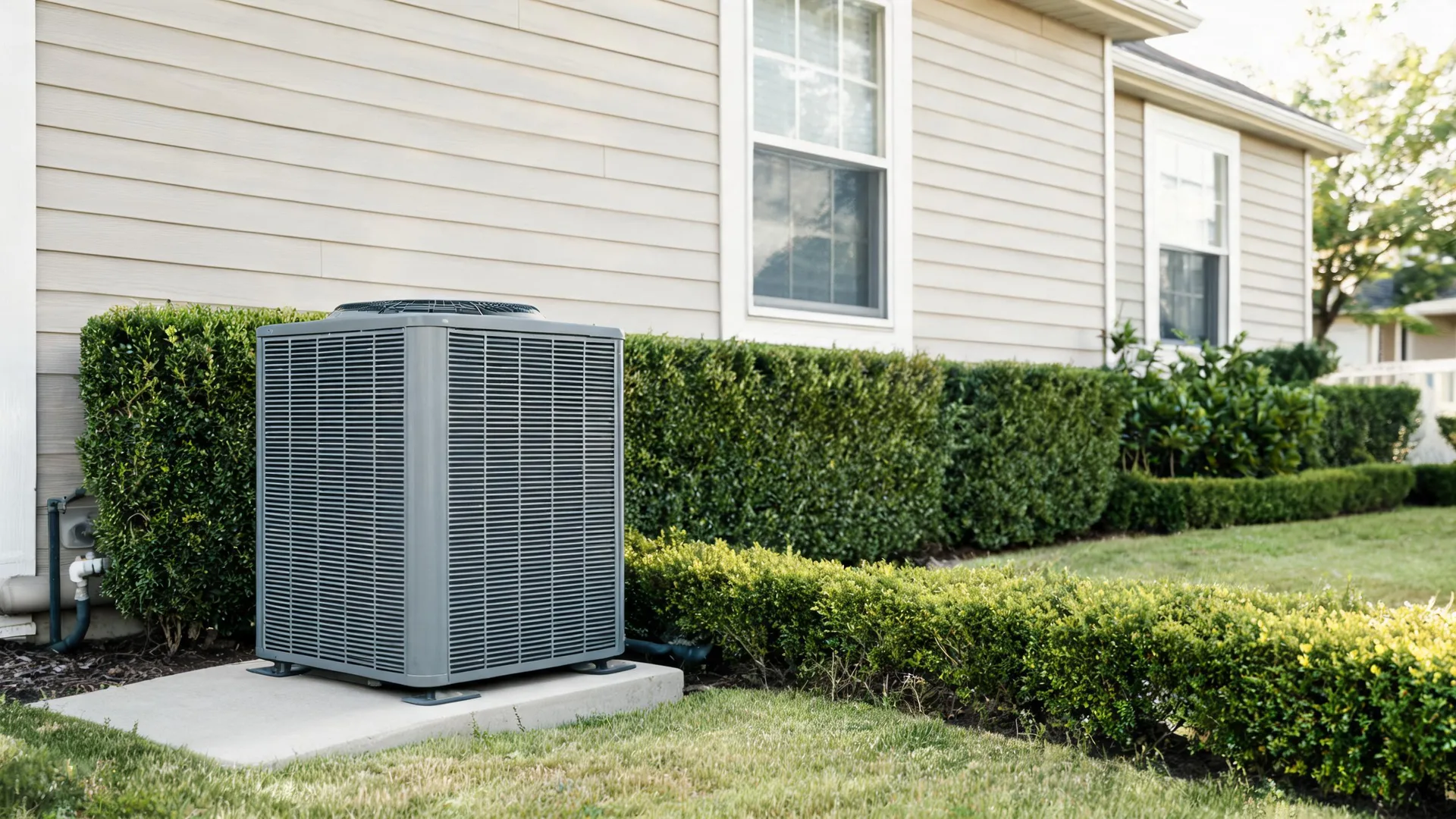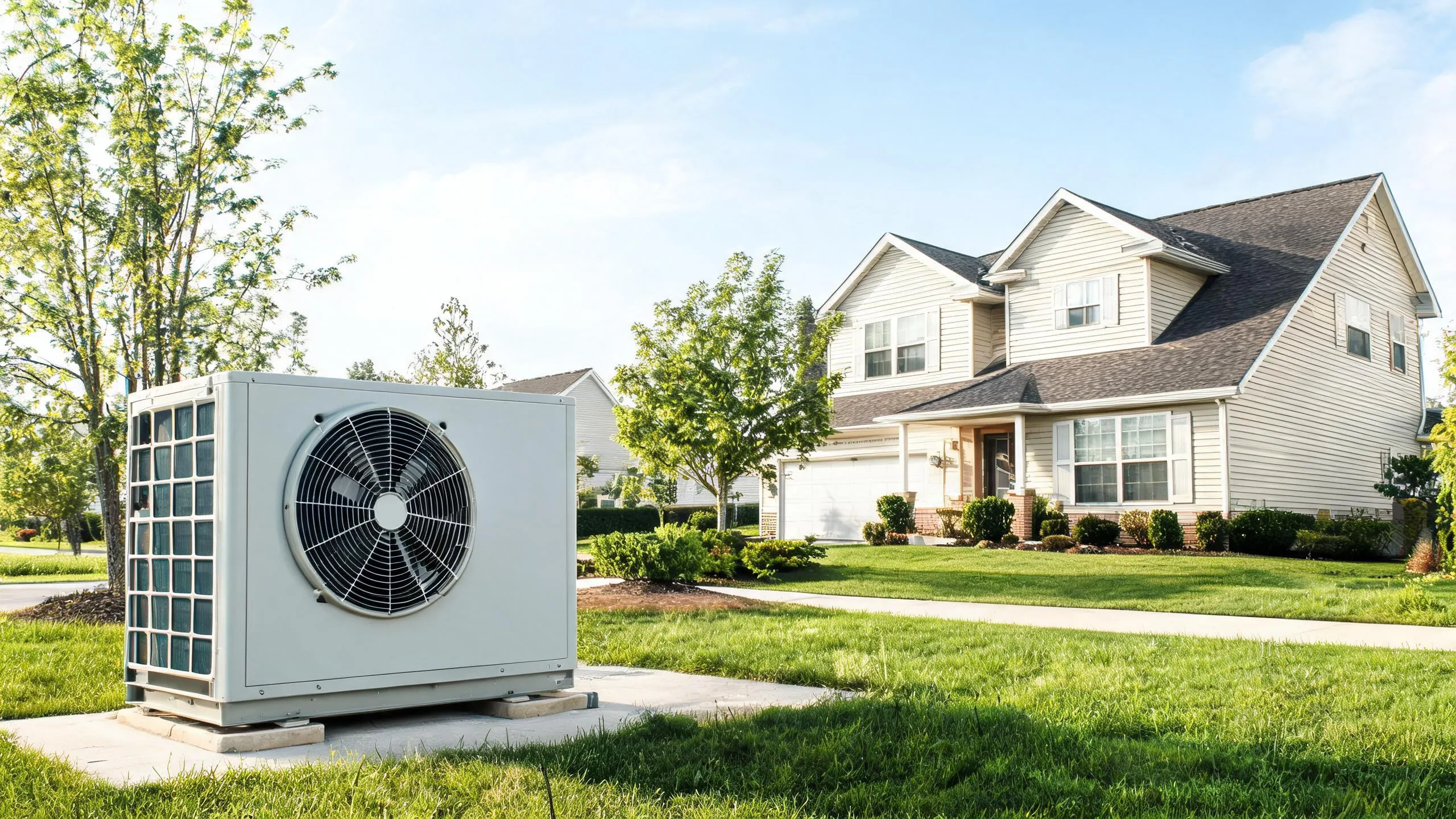
An outdoor heat pump unit mounted on a concrete pad in front of a two-story suburban house with a landscaped lawn.

Heat Pump Repair in Greenwood, SC

Tell us about the job

Takes about a minute. No obligation.

RepairHeat PumpGreenwood County, SC
Step 1 of 2

What ZIP code is the job in?

Finding the actual fault

A tech checks refrigerant pressures, the reversing valve, the defrost board and the contactor before touching anything. A stuck reversing valve keeps the system blowing cold air when it should be heating. A bad defrost sensor lets frost build up on the outdoor coil. A weak capacitor keeps the outdoor fan from starting at all. The visit is about narrowing down which one it is, not guessing.


What it means for the repair

Once the cause is clear, the tech can say whether it's a straightforward part swap or something bigger. A bad capacitor or sensor is usually a quick fix. A failing compressor is a different conversation, and worth having honestly if the system has some age on it.

5 months
November through March, your system heats
5 months
May through September, it cools
35°F
the average winter night it heats against
90°F
the average summer afternoon it cools against
Isometric cutaway illustration of a single-story house with a dark gabled roof, showing interior rooms with ductwork leading to an indoor air handler and an outdoor condenser unit connected by lines on the ground outside.
Your system heats November through March and cools May through September.

NOAA nClimDiv, 1991–2020 normals

The reversing valve is what lets a heat pump switch between heating and cooling, and it's one of the first things to wear out.

When it sticks, the system keeps running in the wrong mode no matter what the thermostat says.

November and May are when Greenwood heat pumps show what's been wearing all along

Cooling runs May through September
Heat runs November through March
Power costs 14.23 cents a kWh statewide
An old house and a new one break the same wayHalf the homes in Greenwood County were built in 1977 or earlier, half in 1977 or later. Age doesn't change what's usually wrong with a heat pump.

Greenwood County has logged 69 severe weather events between 2015 and 2024, and damaging wind caused most of them. The outdoor unit sits outside with nothing between it and a falling branch or wind-driven debris. Hail has hit the county too in that same stretch, enough that a dented cabinet or bent fins aren't rare here. None of that always stops a heat pump from running. A unit can take a hit and keep cycling for months before the coil damage or a loosened connection shows up as a real failure. If yours took weather in the last few years, that history is worth mentioning when a tech comes out, even if nothing seems wrong yet.

Get it looked at early

Problems tend to show up in the first weeks of the season, when the load hits a part that was already weak.

Find a contractor
A man in a dark long-sleeve shirt and tan pants, seen from behind, carries a canvas tool bag up wooden porch steps toward a dark green front door of a shingled house.
A gray heat pump outdoor unit mounted on a concrete pad next to a residential house with lap siding and stone accents.

Running through a problem rarely fixes it

A heat pump that's struggling doesn't fail all at once. It fails a little more every hour it keeps running. A reversing valve that's starting to stick gets worse with every cycle it's forced through. A compressor low on refrigerant runs hotter than it should, and that heat breaks down the oil that's supposed to protect it. Frost that isn't clearing off the outdoor coil chokes off airflow, so the system works harder to move the same amount of heat, and that extra strain lands on the compressor. None of this looks like a sudden stop. The system still runs, still blows air, while whatever was already weak gets pushed closer to the edge. Left alone long enough, one bad part can take others down with it.

What you can check yourself

Look at the thermostat first. Make sure it's set to heat and the temperature is actually above room temperature. Check the breaker if the system isn't responding at all. Look at the outdoor unit for ice buildup, or for leaves and debris packed against the coil. Check that the air filter isn't clogged, since a dirty filter chokes airflow the same way frost does. Walk around the outdoor unit and clear anything stacked against it so air can move through.

What to leave alone

Don't chip or pry ice off the coil, and don't spray it with water. Don't take the access panel off the outdoor unit or touch the wiring inside it. If the system is tripping the breaker repeatedly, stop resetting it and leave it off until a tech looks at it. Running a unit that's already struggling, or forcing it back on again and again, tends to turn a small problem into a bigger one.

Most of the time, the first sign isn't that the system stops. It's that it starts acting strange. Air coming out of the vents feels cool when it should be warm. The outdoor unit runs constantly without the house ever feeling right. Some homeowners hear it before they feel anything, a clicking at startup, a hum that doesn't turn into the fan actually spinning, a rattle that wasn't there last season. Short cycling is another one. The system kicks on, runs a few minutes, shuts off, then starts again. Ice on the outdoor unit that doesn't melt off between cycles is worth paying attention to as well. None of these mean the same thing every time, but all of them mean something is already wearing, not something that might start wearing later.

A heat pump doesn't tell you its age by how it looks. What matters is how it's been running and what it takes to keep it running. A system that needs a capacitor or a sensor replaced is still a system with plenty of life left in the compressor and the coils, and that's worth fixing every time. A system that's lost its charge more than once, or one where the compressor itself is the problem, is a harder call. A compressor is expensive to replace on its own, and putting one into an old outdoor unit means the rest of that unit still has to hold up afterward. The honest question isn't how old the system is. It's whether the part that failed is one piece of a system that's otherwise sound, or a sign that the whole unit is wearing out at once.