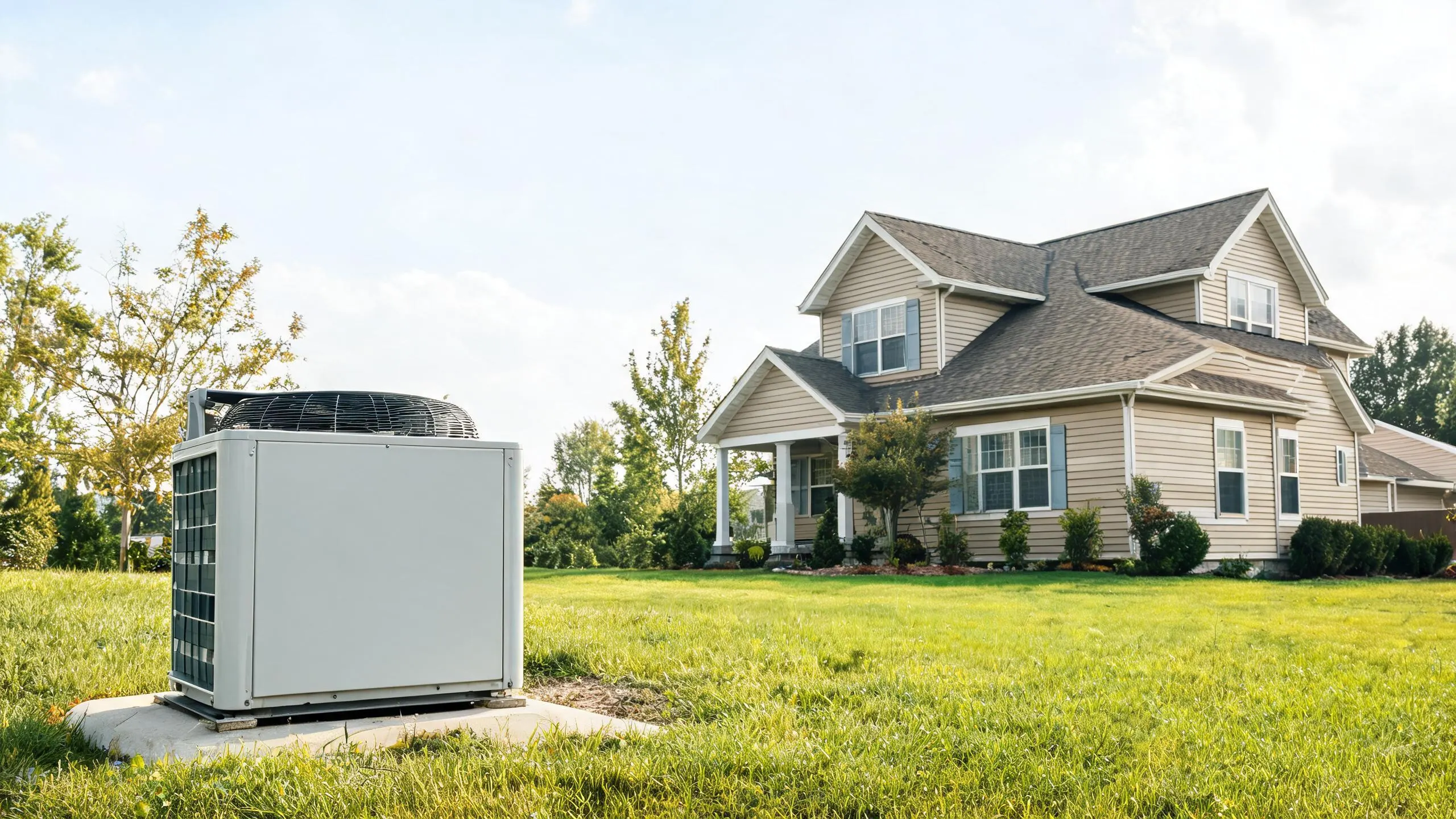






An outdoor HVAC condenser unit on a concrete pad in front of a two-story suburban house.

Heat Pump Repair in Hardeeville, SC

Tell us about the job

Takes about a minute. No obligation.

RepairHeat PumpJasper County, SC
Step 1 of 2

What ZIP code is the job in?

Before you call anyone, check the thermostat is set to heat or cool and the temperature is actually past the setpoint. Go outside and look at the outdoor unit. If the coil is covered in ice, switch the system off and let it thaw before anyone touches it, since running it iced up can damage the compressor. Check that nothing is blocking airflow around the outdoor unit, no leaves, no shrubs grown in close, nothing piled against the side. Inside, pull the air filter and hold it up to a light. If you can't see through it, that alone can starve the system of airflow and cause a lot of what people call about. Check that every supply vent in the house is open and not blocked by furniture or rugs. None of this fixes a bad compressor or a refrigerant leak, but it rules out the easy stuff first.

5 months
November through March, your system heats
6 months
May through October, it cools
40°F
the average winter night it heats against
90°F
the average summer afternoon it cools against
Isometric grayscale illustration of a cutaway two-story house showing interior ductwork, an indoor air handler unit, and an outdoor condenser unit on a pad beside the building.
Your system heats November through March and cools May through October.

NOAA nClimDiv, 1991–2020 normals

Half the homes in Hardeeville and the rest of Jasper County were built in 2003 or later.

A heat pump that came with a newer house has usually got plenty of life left in it, and a repair is the right call before anyone talks replacement.

Wind hits Jasper County hard, and your heat pump feels every storm

206 damaging wind events from 2015 to 2024
Power costs 14.23 cents a kWh statewide
Climate zone 2A
Heat pump problems start with November's first cold snapHomes here run heat from November through March, and October is the month to catch a weak system before it has to work.

A technician starts outside at the unit itself, checking the reading at the thermostat against what the system is actually doing. From there it's the refrigerant pressures, the electrical readings at the compressor and fan motor, and the condition of the coil itself. Low refrigerant shows up as reduced heating or cooling along with ice on the coil, and it always means a leak somewhere that has to be found, not just topped off. A failing capacitor or contactor will make the outdoor fan or compressor hesitate to start, hum, or not start at all. The reversing valve gets checked too, since that's the part that lets the system switch between heating and cooling, and when it sticks the unit gets stuck blowing the wrong temperature air. Whatever the readings show points to one part, not a guess.

Get the repair done, not a replacement quote

If your heat pump came with a newer build here, it's got years left in it. Fixing what's wrong now is the straightforward call.

Find a contractor
A dark gray heat pump unit mounted on a concrete pad next to a house with gray siding and a stone veneer wall.

Every storm leaves something behind

Jasper County saw damaging wind 206 times between 2015 and 2024. Each storm puts the outdoor unit through something, debris against the coil, a branch down close by, a power cut that stops it mid-cycle. If your heat pump has been running rough since a storm, or the trouble started around the time the power came back on, say so when you call. It narrows down what the technician checks first and gets the right part fixed instead of guessed at.

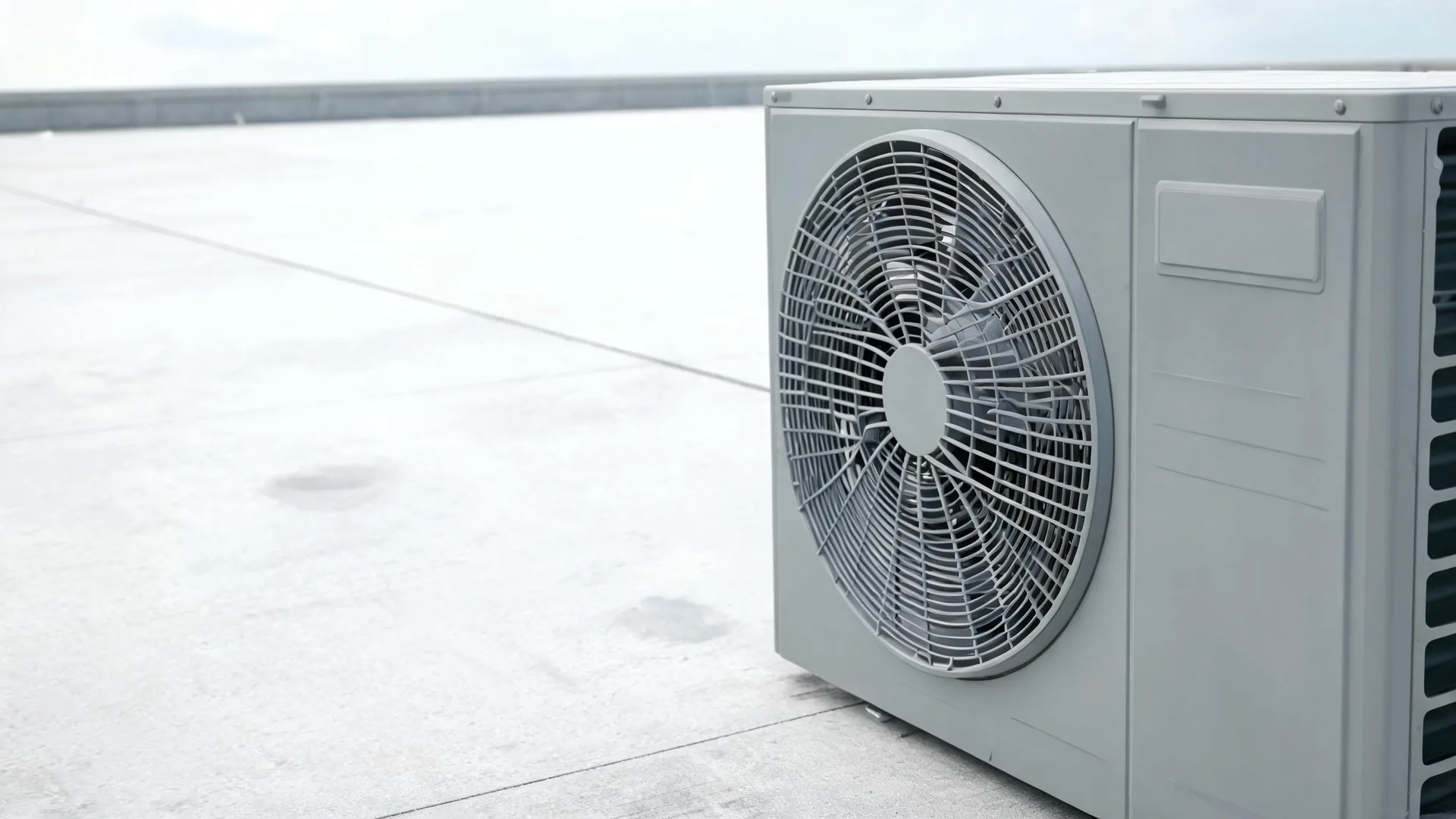
The outdoor unit takes the abuse

The compressor and fan motor sit outside through every freeze and every heat wave. That is where most heat pump failures start. Bearings wear in the fan motor. Compressor windings degrade over years of cycling on and off. Coil fins get bent or caked with dirt until the coil can't shed heat properly. A run capacitor weakens slowly, giving the fan or compressor a harder time starting each cycle until one day it doesn't start at all.
What that means for a repair call

Most of what fails can be replaced on its own. A capacitor, a contactor, a fan motor, even the reversing valve. A refrigerant leak takes longer, since the leak itself has to be found and sealed before the charge goes back in. The compressor is the one part that usually means a bigger decision. A compressor failure often points to a system near the end of its run, and that changes the conversation from repair to replacement.

Most heat pump trouble shows up as a change you can feel or hear before anyone opens the cabinet. Air coming from the vents that is cool when it should be warm, or warm when it should be cool, usually points to the reversing valve. A unit that runs and runs without ever reaching the set temperature is losing the fight against something, often a refrigerant leak or a coil too dirty to shed heat. Short cycling, where the system kicks on and off every few minutes, wears on the compressor and is worth catching early. Listen for it too. A hum from the outdoor unit with no fan movement, or a hard clunk at startup, usually means a capacitor or contactor is going. Ice on the outdoor coil when the system is supposed to be heating is never normal and means something needs a look.

A heat pump has fewer big-ticket parts than people expect, and that works in your favor when something breaks. A capacitor, a contactor, a fan motor, these get replaced on their own without touching the rest of the system, and the unit goes back to running like nothing happened. The compressor is different. It's the one part that's expensive enough and sealed deep enough that a failure there gets weighed against the age and condition of everything else. If the compressor is still good, almost anything else wrong with the system is worth fixing. A unit that's kept its refrigerant charge, cycles normally, and has a compressor pulling steady amps has most of its life still ahead of it, no matter how old the cabinet looks. What changes the math isn't one repair, it's a pattern of them stacking up close together, since that usually means the system as a whole is wearing out at once, not just the one part in front of you.