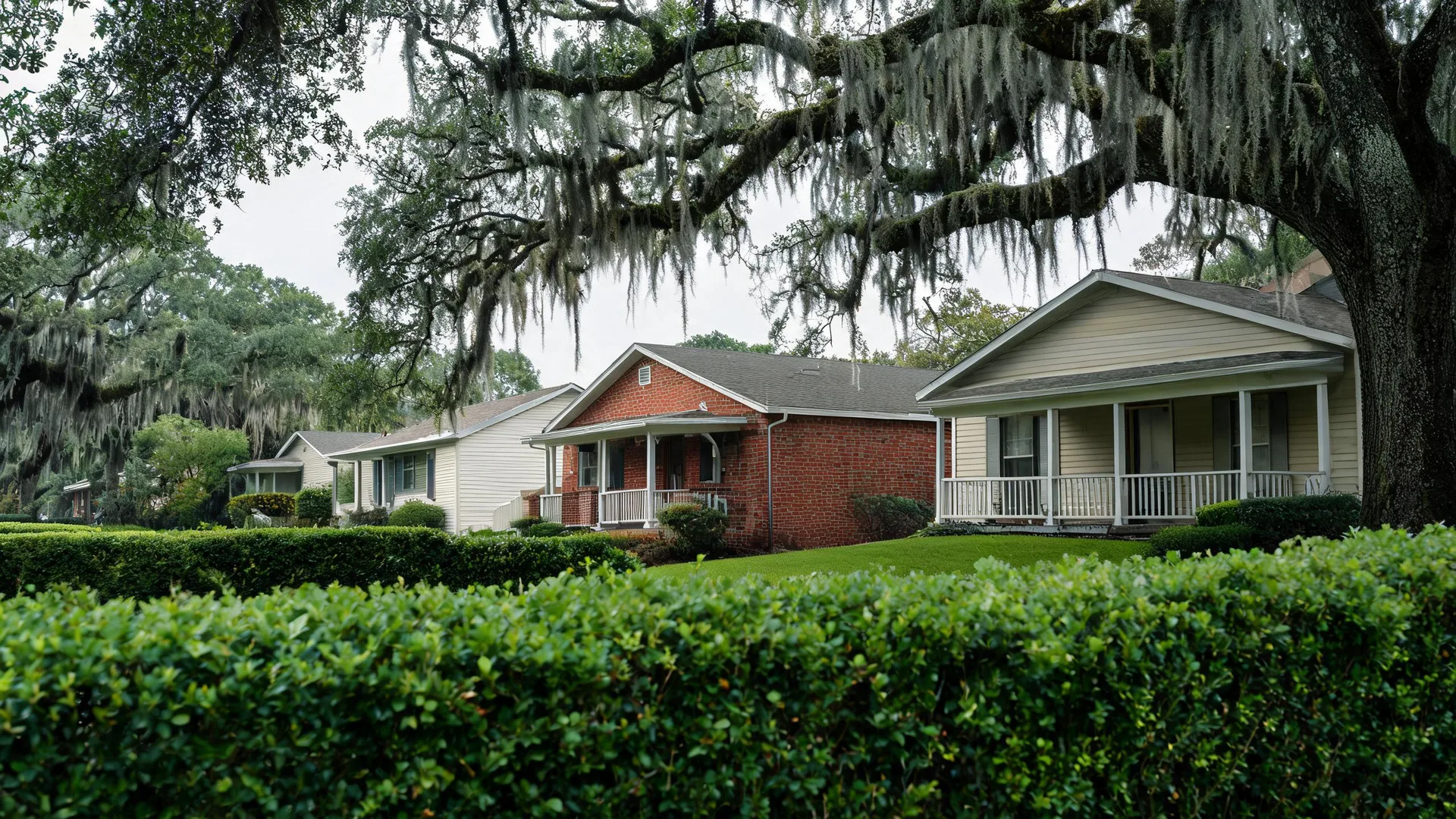




A row of single-story houses, one brick and others with light siding and covered porches, set behind a trimmed green hedge and lawn, under large oak branches draped with Spanish moss.

Heat Pump Repair in Hartsville, SC

Tell us about the job

Takes about a minute. No obligation.

RepairHeat PumpDarlington County, SC
Step 1 of 2

What ZIP code is the job in?

A heat pump that's struggling will often keep trying anyway, and that's where the real damage starts. If the refrigerant charge is low, the compressor still runs, but it runs hotter than it should, and heat is what kills a compressor over time. If a capacitor is failing, the outdoor fan can stall out while the compressor keeps pulling current, and that strain wears it down fast. Ice on the outdoor coil is the same story. The system may still blow air, but it's working against a coil that can't do its job, so it runs longer and harder to get nowhere. None of these fix themselves by running more. Shutting it down and having someone look at it stops the damage before it reaches the compressor.

5 months
November through March, your system heats
5 months
May through September, it cools
35°F
the average winter night it heats against
90°F
the average summer afternoon it cools against
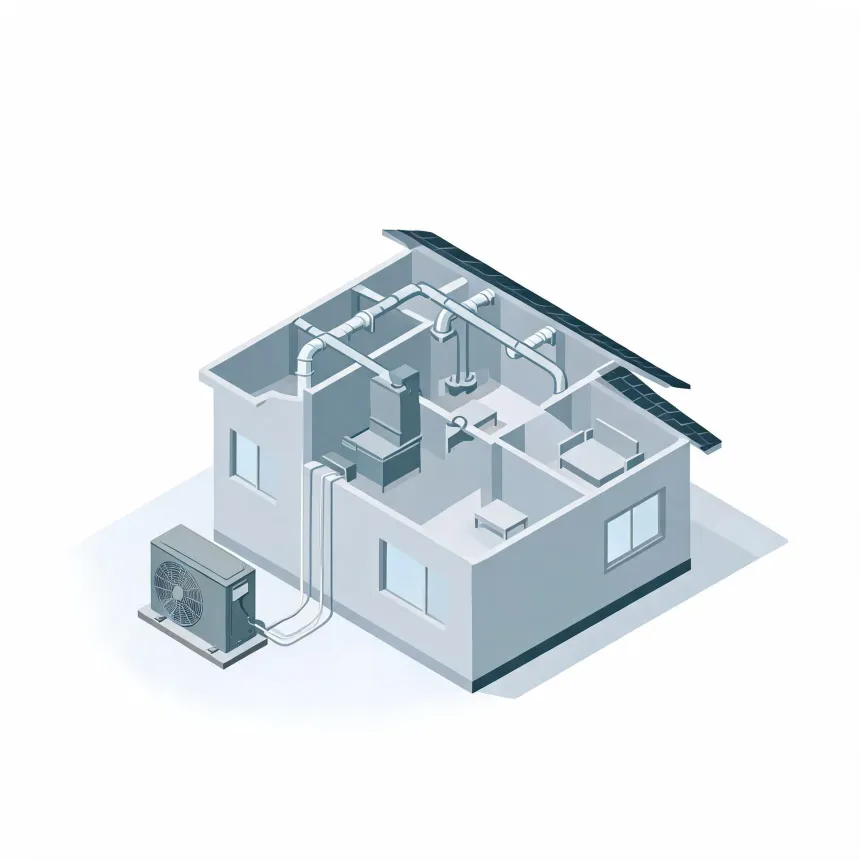
Isometric cutaway illustration of a single-story house showing interior ductwork, an air handler and rooms, with an outdoor condenser unit connected by refrigerant lines on a plain white background.
Your system heats November through March and cools May through September.

NOAA nClimDiv, 1991–2020 normals

Darlington County took damaging wind 129 times between 2015 and 2024.

A heat pump that runs through storms and outages year after year needs a real diagnosis when it starts acting up, not a guess.

Half the homes here are older, and that's the usual reason a heat pump acts up

Half the homes here were built by 1984
129 damaging wind events from 2015 to 2024
Power costs 14.23 cents a kWh statewide

October is worth watching. Heat here doesn't come on in earnest until November, so October is the last easy chance to find a weak heat pump before it has to carry the house. A unit that was short on refrigerant or running on a tired capacitor all summer doesn't get better sitting idle. It gets asked to reverse itself and produce heat, often during the first cold snap, often right when a storm knocks the power out and back on. That first hard call is when a marginal part gives out. Getting it looked at in October means finding that out on a mild afternoon instead of a cold night.

Your heat pump may have already taken the hit that's showing up now

Wind hit this county 129 times in the last ten years, hail another 18. A heat pump can take that kind of hit and keep running, with a bent fin or a dented panel that looks minor. If yours came through a storm, have it checked even if it still runs fine today.

Find a contractor
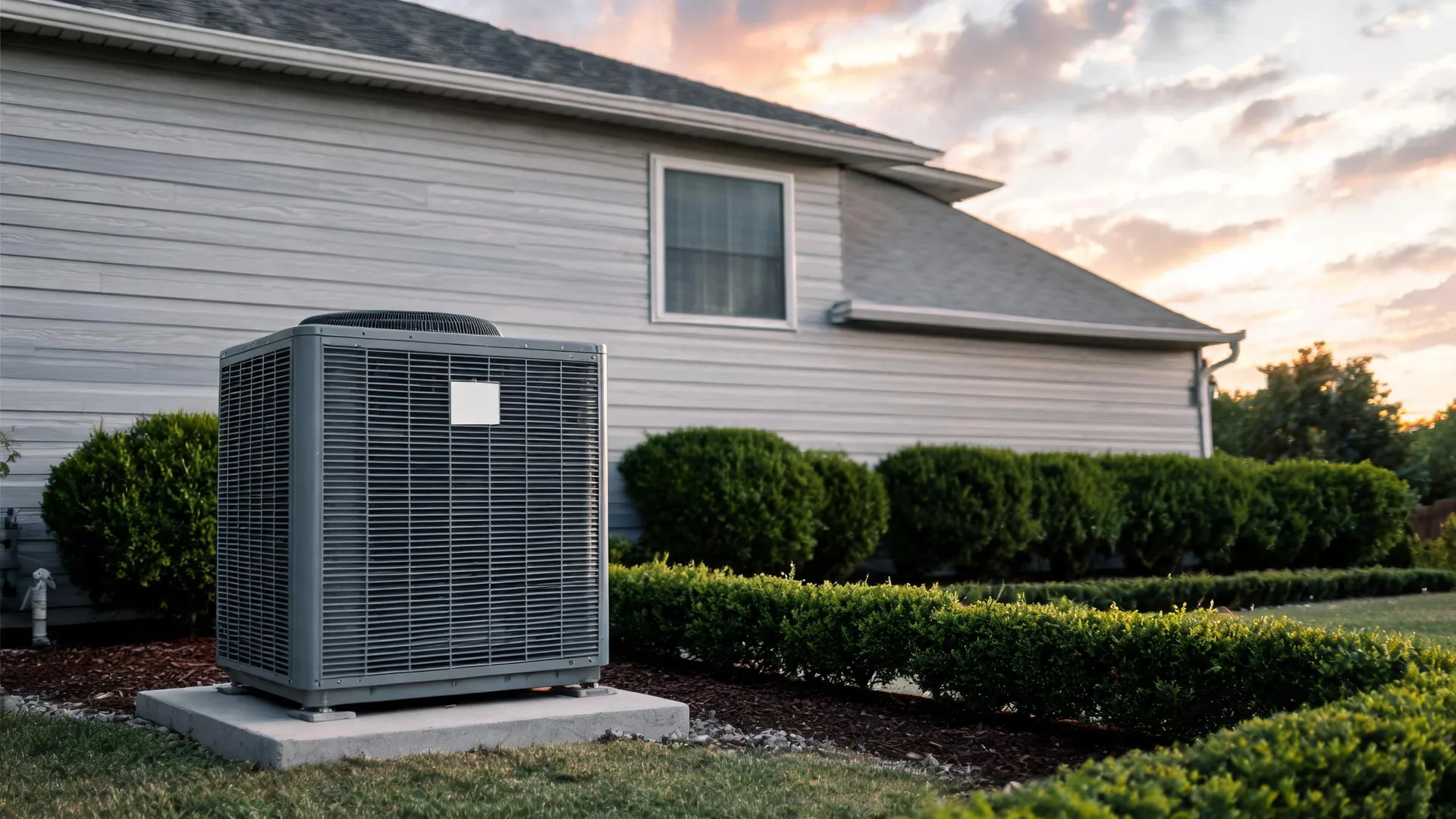
A gray heat pump outdoor unit mounted on a concrete pad next to the stone-accented exterior wall of a house.

This heat pump doesn't get a quiet year

Storm season doesn't skip a year here, and neither does your heat pump's workload. It runs through the wind events, through the power blinking off and back on, through whatever the outage did to the compressor on restart. That adds up faster than it would on a system that only had mild weather to deal with. If something's off with it now, a real diagnosis will tell you whether it's a loose connection from a hard restart or something wind-related that's been building for a while. Either way, find out before it fails outright.

What you can check from inside

Go to the thermostat first. Set it to heat or cool, whichever matches the problem, and move the setpoint well past room temperature. Listen for the outdoor unit to kick on within a minute or so. Check the air filter while you're at it. A filter clogged with dust chokes airflow across the indoor coil, and a heat pump reads that as a reason to run longer and harder than it should. If the filter is grey and matted, swap it before you decide anything else is wrong.
What you can check from outside

Walk out to the outdoor unit and look before you touch anything. Ice anywhere on the coil or the refrigerant lines means stop and call, not scrape it off and wait. Check that the fan on top isn't blocked by leaves, a fallen branch, or anything grown up against the cabinet. Listen for the fan spinning freely versus humming without turning, that last one points to a failing capacitor and means the unit should be shut off rather than left running.

A lot of heat pump failures trace back to the same handful of parts. The capacitor is one. It gives the compressor and fan motor the jolt they need to start, and it weakens with age and heat until one day it can't deliver that jolt anymore. The reversing valve is another. It's what switches the system between heating and cooling, and if it sticks, the unit can blow cold air when you've asked for heat. Low refrigerant is almost never the gas running out. It means there's a leak somewhere in the lines or coil, and the system will keep losing charge until that leak gets found and sealed. Outdoor coils fail differently. They get coated in dirt or grown in by grass and shrubs until the unit can't shed heat properly, and that strain shows up elsewhere first, usually as longer run times or ice that won't clear.

Once a heat pump is actually broken, the question is just whether what's wrong is worth fixing. A capacitor, a contactor, a run of refrigerant line with a leak in it, those are normal repairs on a system that's otherwise sound, and fixing them buys back the years the compressor has left. A failed compressor is a different conversation, because the compressor is most of what the unit cost, and a system that's lost its compressor once has usually shown other signs of age already. The honest way to look at it is whether the rest of the system is holding up around the part that failed. If the coil is clean, the refrigerant lines are intact, and this is the first real repair it's needed, fix the part. If a tech is finding a second or third problem in as many years, that pattern matters more than any single repair does.