White two-story houses with wraparound porches and Spanish moss-draped oak trees photographed along a residential street at night.

Heat Pump Repair in Lancaster, SC

Tell us about the job

Takes about a minute. No obligation.

RepairHeat PumpLancaster County, SC
Step 1 of 2

What ZIP code is the job in?

Check the thermostat and the breaker first

Make sure the thermostat is set to heat or cool as needed and the setpoint is actually past the current room temperature. Then check the breaker panel for the heat pump and the air handler. A tripped breaker or a thermostat bumped into the wrong mode causes a surprising number of no-heat and no-cool calls.


Look at the outdoor unit and the filter

Walk outside and see if the outdoor unit is iced over, buried in leaves, or blocked by anything on top of it or around the sides. Then pull the air filter and hold it up to the light. A clogged filter starves the system of airflow and can cause the indoor coil to freeze, which looks like a bigger problem than it is.

5 months
November through March, your system heats
5 months
May through September, it cools
33°F
the average winter night it heats against
89°F
the average summer afternoon it cools against
Isometric cutaway illustration of a small house showing ducted air distribution, an indoor air handler, and an outdoor condenser unit connected by lines, with a sofa and bed in the rooms.
Your system heats November through March and cools May through September.

NOAA nClimDiv, 1991–2020 normals

Your heat pump switches over in October and starts carrying the cold by November.

A weak part usually holds through fall and fails the first hard night it has to work.

Lancaster sees its share of storms, but your heat pump is likely down for the same reason one would fail anywhere

133 damaging wind events from 2015 to 2024
46 hail events from 2015 to 2024
Power costs 14.23 cents a kWh statewide
A newer county means newer heat pumpsHalf the homes in Lancaster County were built in 2000 or later.

Age is the first thing worth weighing. A heat pump that is still fairly young and otherwise sound is usually worth fixing, even if the repair is not cheap, because one failed part does not mean the rest of the system is going. A unit that is old and has needed attention more than once is a different case. At that point you are paying to keep patching a system that is on its way out anyway. The compressor matters most here. A failed compressor is expensive to replace on its own, and on an older unit it often makes more sense to put that money toward a new system than toward saving the old one. A failed capacitor or contactor, on the other hand, is a small, ordinary repair and tells you nothing bad about the rest of the unit.

A newer system is usually worth fixing

If your heat pump came with the house, there's a good chance it's still within its working life. That's the case for repair over replacement, especially for an ordinary part like a capacitor or contactor. Get it looked at before deciding it's done.

Find a contractor
A man in a cap, dark work jacket and tan pants climbs porch steps toward a green front door, carrying a worn tool bag in his right hand, with a potted shrub beside the entry.
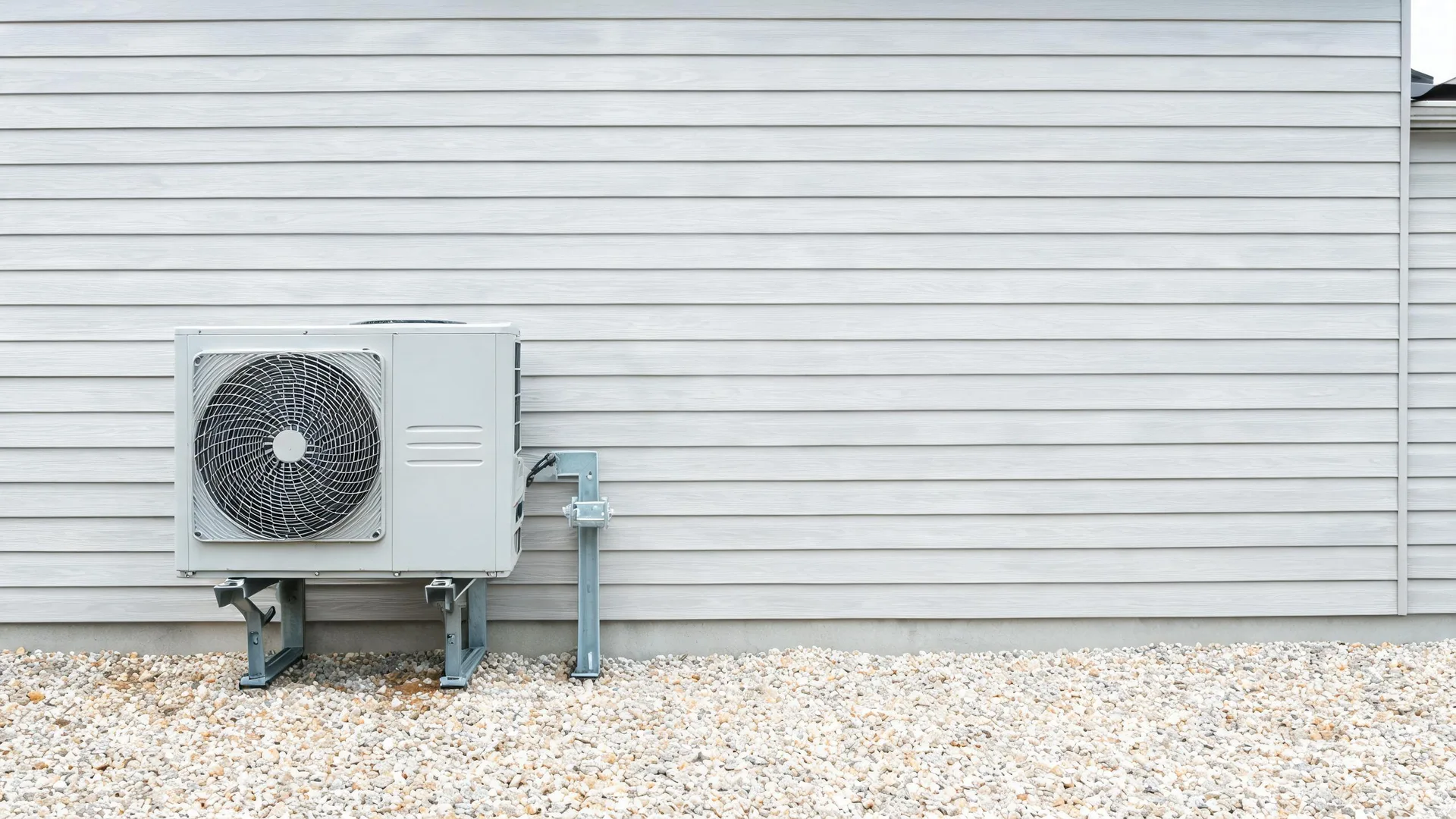
A residential heat pump outdoor unit mounted on a concrete pad next to a house with gray vinyl siding.

It runs every day of the year, in both directions

A heat pump runs in both directions, all year, so it never gets a season off the way a furnace does. That steady work wears on a short list of parts. The reversing valve switches it between heat and cool. The contactor takes the electrical hit every time the outdoor unit cycles on. The capacitor gets the compressor and fan motors started. You notice the signs before you know the cause. Air from the vents feels cool when it should feel warm. The unit runs constantly and the house never catches up to the setpoint. Ice builds up on the outdoor coil. It clicks or hums when it tries to start and doesn't. Short cycling, where it kicks on and off every few minutes, usually points to the contactor or capacitor giving out. A unit that runs nonstop and still can't keep up points more toward low refrigerant or a reversing valve stuck partway. None of these get better by waiting.

Most failures start with something electrical

The capacitor and the contactor take the brunt of daily cycling, and they're the parts most likely to give out. A capacitor weakens over time until it can't kick the compressor or fan motor into motion. A contactor's contacts pit and burn from the electrical load each time the unit cycles on, until one day they don't close. Both are small, defined repairs, and neither one means trouble for the rest of the system.

The bigger failures are mechanical

A reversing valve that sticks halfway means the system can't fully commit to heating or cooling, so it runs but doesn't deliver. A compressor that fails is a different order of problem, since it's the part that actually moves refrigerant, and a failed one usually means the unit is done rather than repaired. Low refrigerant from a slow leak shows up the same way low airflow does, so a tech has to check both before calling it one or the other.

A heat pump that's icing over or struggling to keep up will keep drawing on the same strained part until that part gives out completely. Ice on the outdoor coil blocks the airflow the unit needs to defrost itself, so the ice builds on top of ice while the compressor keeps working against it. A reversing valve stuck partway still gets asked to run every cycle, and each cycle wears it further toward stuck altogether. Low refrigerant means the compressor is pumping harder than it should to move what's left, and that extra strain is exactly what shortens a compressor's life. None of these fix themselves by running longer. The system doesn't rest and recover between cycles, it just keeps logging the same bad conditions until something stops working outright instead of partway.

A diagnostic visit starts with gauges, not guesses. A tech connects them to the service ports and reads the refrigerant pressure on both sides, because that tells them more than the symptoms alone ever could. From there it's a process of elimination. The capacitor gets tested with a meter rather than looked at, since a weak one can look perfectly fine. The contactor gets checked for pitted or burned contacts. The thermostat gets run through a call for heat and a call for cool, watching how the reversing valve responds when it's told to switch. If the outdoor coil was iced over, the tech wants to know why before thawing it, because the ice is a symptom and not the problem itself. The goal is finding the one part actually causing the trouble, not replacing parts until something works.