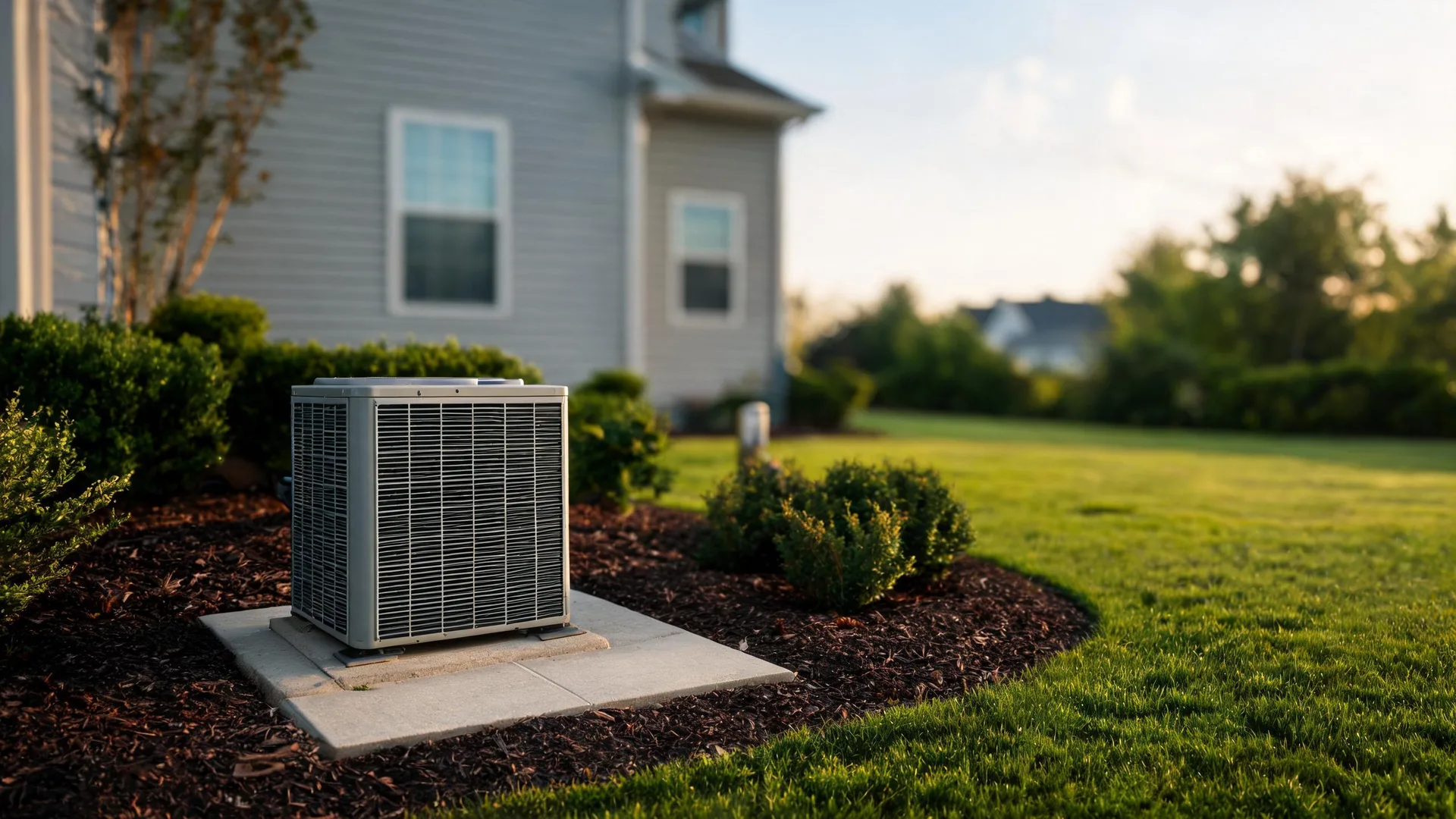
An outdoor air conditioning condenser unit mounted on a concrete pad next to a residential house at sunset.

Heat Pump Repair in Manning, SC

Tell us about the job

Takes about a minute. No obligation.

RepairHeat PumpClarendon County, SC
Step 1 of 2

What ZIP code is the job in?

The tech checks before touching anything

A diagnostic visit starts with questions. What the heat pump is doing, when it started, whether it's blowing cold air in heat mode or not cycling at all. Then comes the refrigerant pressures, the电 electrical readings at the compressor and condenser fan, and a look at the reversing valve, since that's the part that decides whether the system heats or cools. Most of what's wrong shows up in these readings before any panel comes off.

The diagnosis tells you what the repair involves

A failed capacitor or contactor is a straightforward swap. A reversing valve stuck in one position, a low charge from a slow leak, or a failing defrost control board means more time and a bigger decision about whether to repair or replace. The diagnostic visit is what turns a guess into an actual answer, so you know what you're paying for before any repair starts.

5 months
November through March, your system heats
5 months
May through September, it cools
37°F
the average winter night it heats against
91°F
the average summer afternoon it cools against
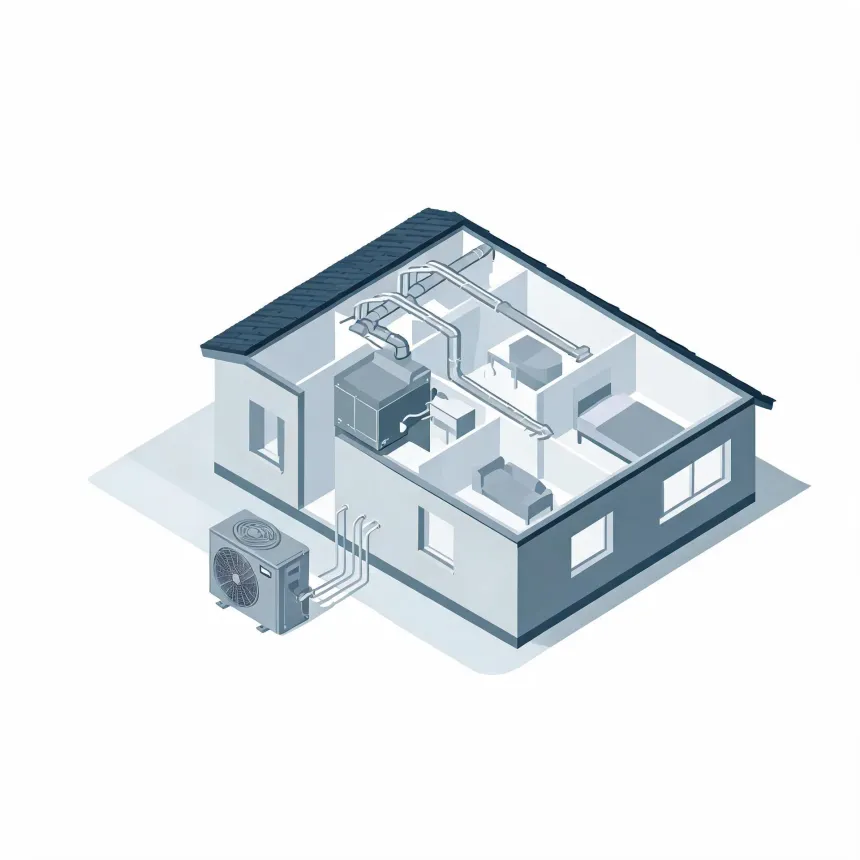
Isometric cutaway illustration of a single-story house showing interior rooms with ductwork, an indoor air handler unit, and an outdoor condenser unit connected by lines along the exterior wall.
Your system heats November through March and cools May through September.

NOAA nClimDiv, 1991–2020 normals

Heat pumps in Manning run from November through March, and again May through September.

A weak part usually fails in October or April, right when the system switches jobs and the load hits it hard.

Half these homes are older, but that's not what wears out a heat pump

Half the homes here were built by 1990
98 damaging wind events from 2015 to 2024
Power costs 14.23 cents a kWh statewide

Manning puts heat pumps to work most of the year, call for the repair

Clarendon County has taken damaging wind 98 times between 2015 and 2024. That kind of weather strains a heat pump that already runs long stretches of the year. Get it diagnosed properly so you know what's actually wrong before any repair starts.

Find a contractor
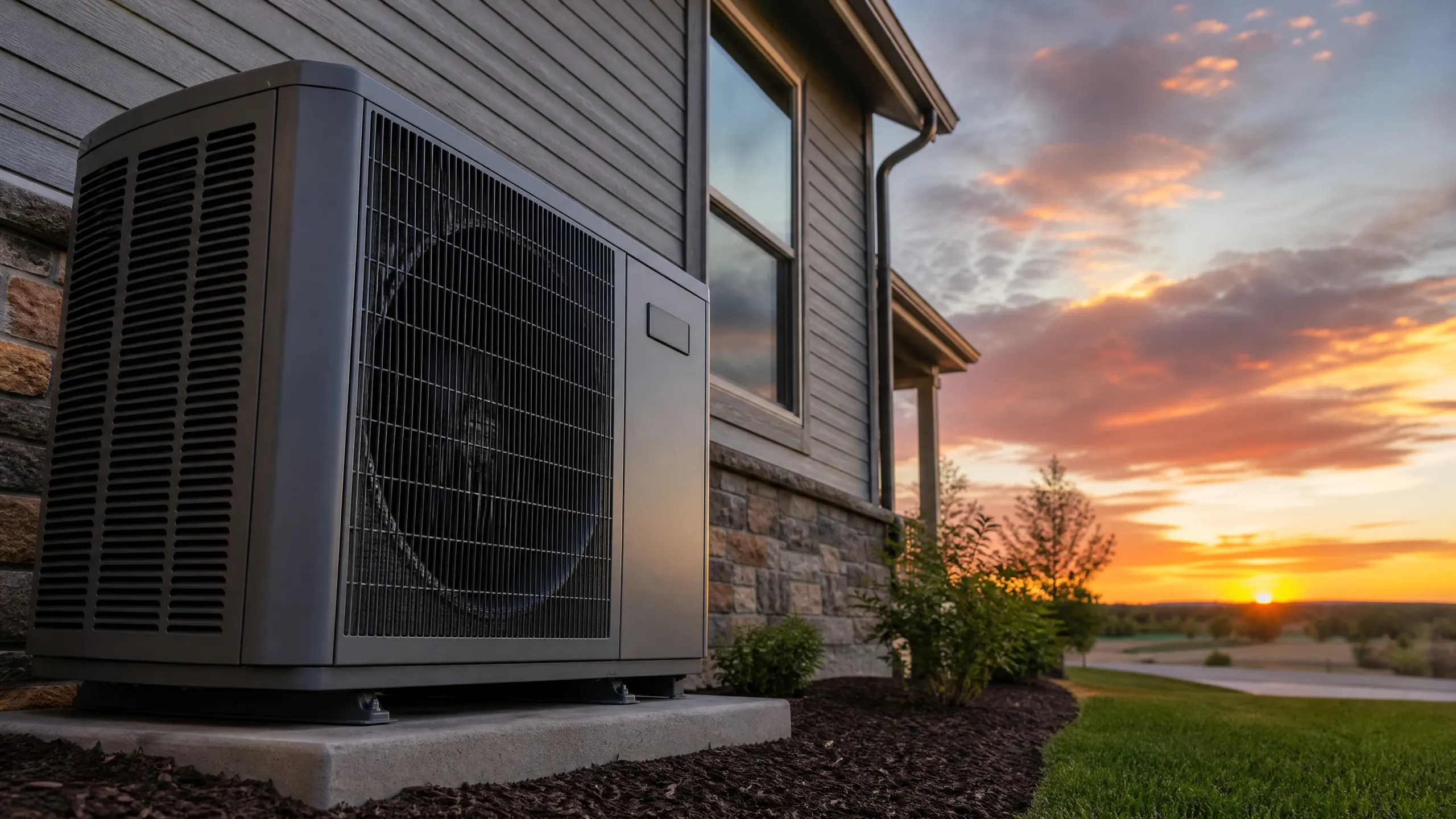
A dark gray heat pump unit mounted on a concrete pad next to a house with gray siding and a stone veneer wall.

Small problems don't stay small

A heat pump that's struggling doesn't fail all at once. Weak airflow from a dirty coil or a clogged filter makes the system run longer to hit the same temperature. That longer runtime loads up the compressor, which is the one part you don't want working harder than it has to. A refrigerant leak behaves the same way. The charge gets lower, the system keeps running to compensate, and the compressor pumps harder with less refrigerant to cool it. Left alone, that's how a slow leak turns into a failed compressor. A reversing valve that's starting to stick is another one. It might still switch most of the time, but every cycle it struggles on adds wear to the valve and strain on the compressor pushing against it. None of these get better by running longer. The system doesn't rest and heal, it just keeps stressing the same weak point until that part gives out completely.

What you'll notice first

Air coming out of the vents that isn't as warm as it should be, or in summer, not as cool. The system cycling on and off more than it used to, or running long stretches without reaching the temperature on the thermostat. A unit outside that's iced over when it shouldn't be, or one that's making a new noise, a clicking, a buzzing, a hard clunk when it switches between heating and cooling. Any of these means something inside is already struggling.

What it means for the repair

Short cycling and ice on the outdoor unit usually point to airflow or charge, something a tech checks early in the visit. A hard clunk when the system switches modes points straight at the reversing valve. Weak heat with the outdoor fan running fine suggests the compressor itself is losing strength. Noticing which of these is happening, and when it started, is exactly what lets the diagnosis move fast instead of starting from zero.

There are a few things worth checking before a tech ever comes out. Look at the thermostat first. Make sure it's set to heat or cool as intended, and not sitting on a schedule hold someone set months ago and forgot about. Go to the outdoor unit and check that nothing is blocking it, no leaves packed against the coil, no bush grown in close, no ice built up around the base. Inside, pull the filter and hold it up to a light. If you can't see through it, that's airflow the system isn't getting, and it might be the whole problem right there. Check that every supply vent in the house is open and not blocked by furniture or rugs. None of this calls for tools or taking anything apart, and if the system still isn't heating or cooling right after all that, you've at least ruled out the easy stuff before anyone touches the equipment.

The easy call is a part like a capacitor or contactor. It's quick to swap and the rest of the system is fine behind it. The harder call is the compressor. Once a compressor is weak, parts and labor to replace it start to rival putting in a new system, and a new system comes with a warranty while a repaired one doesn't. What matters isn't how old the heat pump is, it's what shape the rest of it is in. A system that's kept up well can be worth repairing even after a lot of years. One that's already had other parts fail is telling you something different, and a tech will usually say so straight. If the reversing valve just went and the compressor is still strong, fixing it makes sense. If the compressor itself is struggling, putting more money into that system is a bet against the next failure, not a fix for the last one.