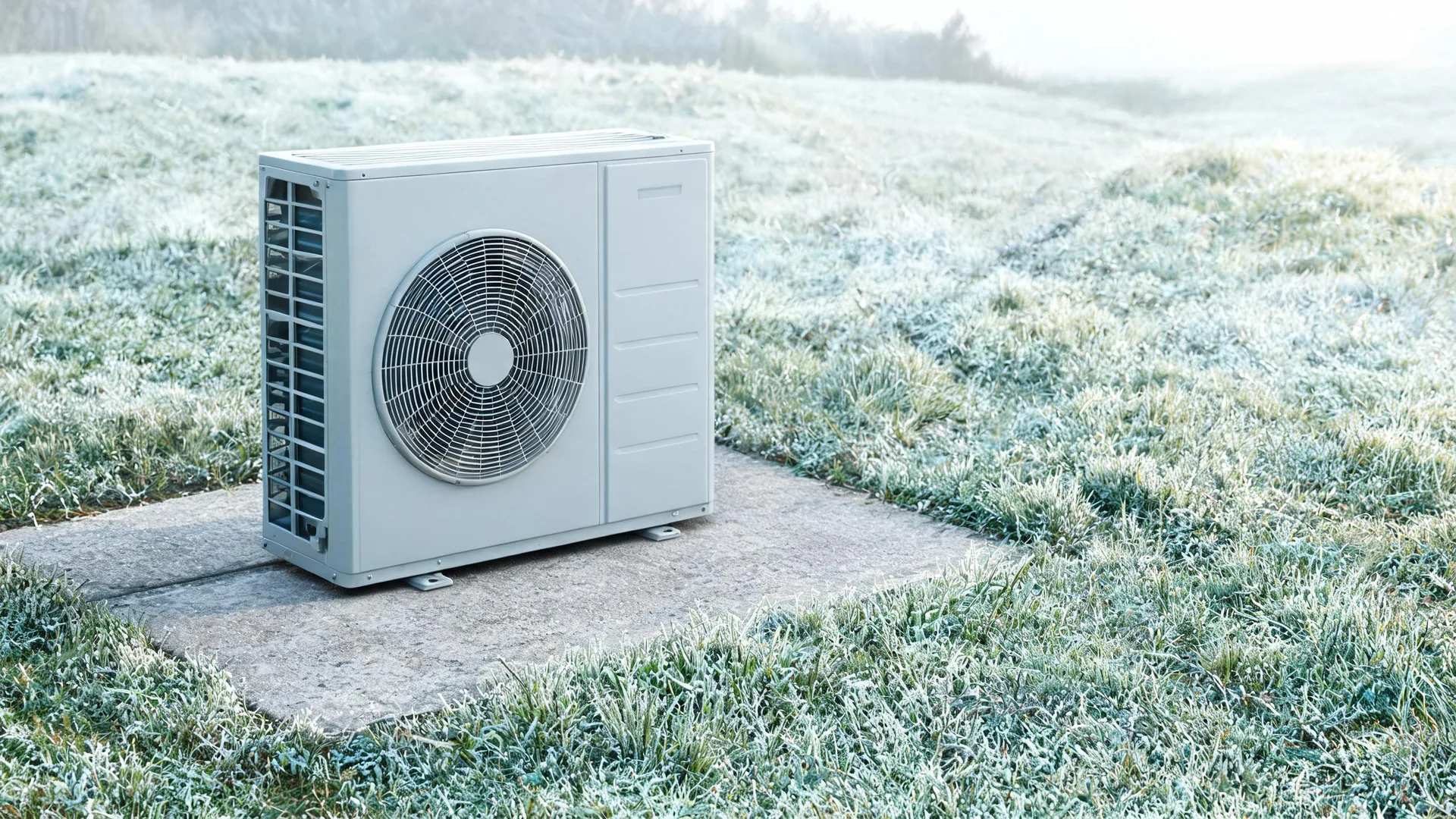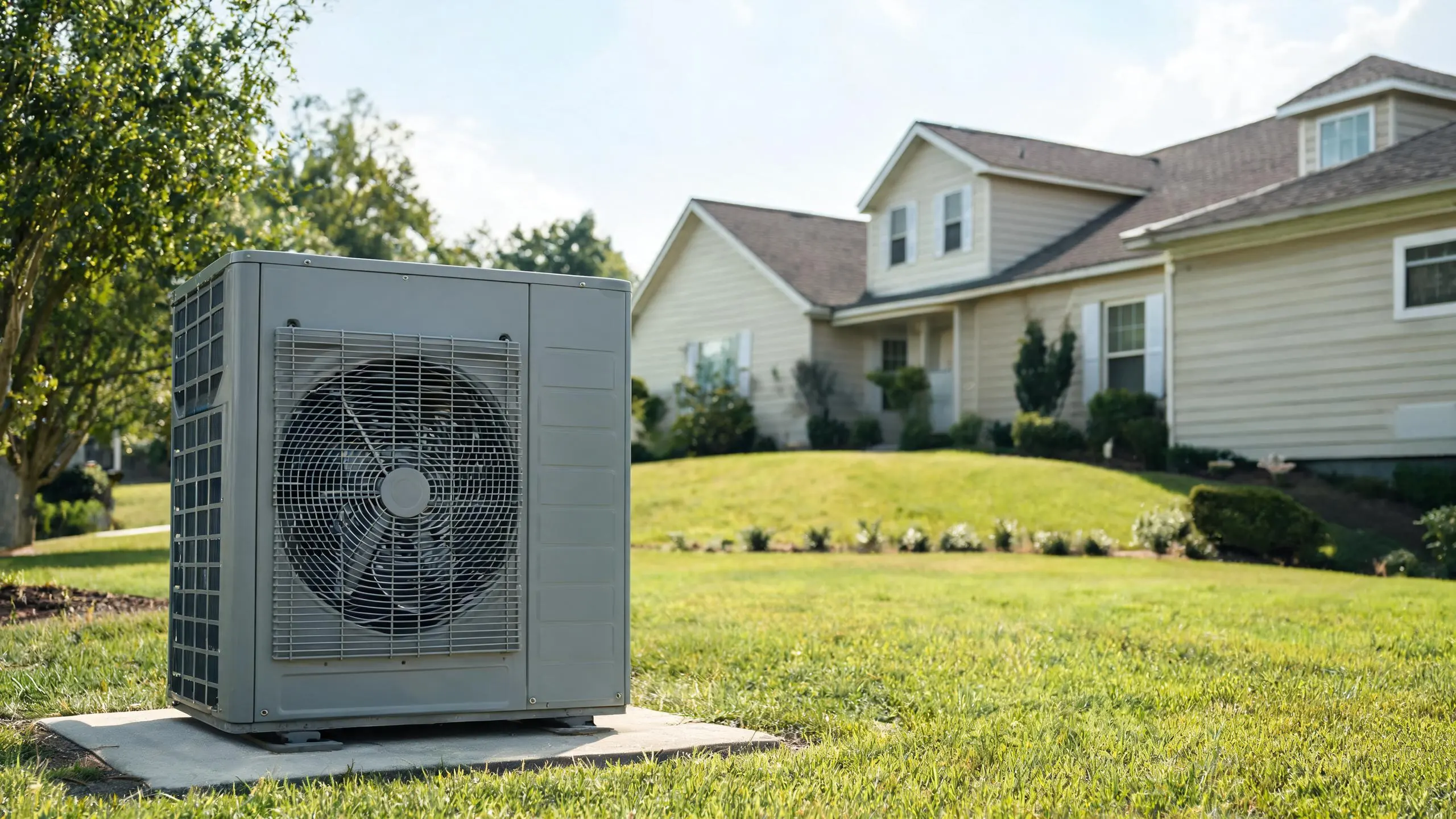
A gray outdoor HVAC condenser unit mounted on a concrete pad in the front yard of a two-story suburban house.

Heat Pump Repair in Saluda, SC

Tell us about the job

Takes about a minute. No obligation.

RepairHeat PumpSaluda County, SC
Step 1 of 2

What ZIP code is the job in?

Storms here come often and come hard

Saluda County logged 103 severe weather events between 2015 and 2024, with damaging wind the most common of them. A heat pump's outdoor unit sits through all of it, exposed to wind-driven debris that an indoor furnace never has to face.


Running fine today doesn't mean it's fine

Bent fins, a cracked fan blade or hail dents on the cabinet don't always stop a heat pump from turning on. If your unit took a hit in a storm, the fact that it still runs is not proof it came through undamaged.

5 months
November through March, your system heats
5 months
May through September, it cools
35°F
the average winter night it heats against
91°F
the average summer afternoon it cools against
Isometric line illustration of a cutaway single-story house showing interior rooms with furniture and ceiling ductwork, connected to an outdoor condenser unit on the ground outside the left wall.
Your system heats November through March and cools May through September.

NOAA nClimDiv, 1991–2020 normals

Half the homes in Saluda County were built in 1987 or earlier, half later.

A heat pump's age tracks what it's been through more than the year on the house, so check the unit itself before guessing its condition from either one.

November turns on the heat here, and that's when a weak heat pump shows it

Cooling runs May through September
Heat runs November through March
Power costs 14.23 cents a kWh statewide

Ask for that check before the first cold night, not after. A contractor can look over a storm-hit unit in a few minutes. Bent fins, a cracked fan blade or a coil packed with debris don't always show up as a strange noise or a warm house right away. Hail dents on the top panel are easy to see from the ground, but the damage that matters is often on the coil or the fan, where you can't tell by looking. A unit that took a hit months ago can keep running fine until a cold snap finally makes it work hard.

Get it checked after a storm

Storms hit hard here. If the outdoor unit took hail or debris, have it checked even if it still runs.

Find a contractor
A man in a cap, gray work shirt and brown pants, seen from behind, steps up porch stairs toward a dark green front door while carrying a canvas tool bag, with a potted shrub beside the entry.
A gray air-source heat pump mounted on a concrete pad next to a house with gray vinyl siding, surrounded by gravel and flanked by green shrubs and white hydrangea flowers.

What to check before you call

Before calling anyone, go outside and look at the outdoor unit. Check that nothing is blocking it. No leaves packed against the coil, no branch resting on the cabinet, no grass clippings matted into the fins. Clear whatever you find. Inside, pull the air filter and hold it up to a light. If you can't see through it, swap it or clean it. Walk the house and check that no vents or registers are closed off or blocked by furniture or rugs. If the thermostat runs on batteries, check those too, and make sure it's set to heat and set above the room temperature so the system actually has a reason to run. If the outdoor unit is caked in ice beyond a light morning frost, leave it alone. Most heat pumps clear that on their own, and chipping at the coil can bend a fin or split a line. Air from the vents that feels cool rather than warm isn't always a problem either. A heat pump moves cooler air than a furnace does, especially on a cold morning. Write down anything that stood out, a smell at startup, a noise that wasn't there before, a room that won't warm up. That's what a contractor needs to hear first.

A warm house doesn't mean a healthy system

A heat pump can keep running while it struggles. A failing capacitor lets the outdoor fan limp along instead of stopping it outright. Refrigerant leaking out slowly still leaves you with some heat, just less of it and a harder-working unit. If it takes longer to reach the set temperature than it used to, that's the sign, not whether the house eventually warms up.

Listen for what changed, not just what's loud

A click when the outdoor unit kicks on is normal. A hard clunk, a grinding sound, or a hum with no fan movement is not. Short cycling, where the system shuts off and restarts every few minutes instead of running a full stretch, points to a limit switch or a sensor problem rather than something you can see from outside.

A refrigerant leak doesn't stay the same size. Oil travels with refrigerant, so as the charge drops, the compressor starts running low on lubrication too, and that's what actually shortens its life. A weak capacitor that lets the outdoor fan limp along makes the compressor run hotter than it's built for, every cycle, until it trips a safety switch or fails outright. Ice on the coil from a system that can't defrost properly blocks airflow further, which makes the unit run longer to do less, which pulls more ice. None of this shows up as the system refusing to run. It shows up as a repair that would have been a part and a service call turning into a compressor replacement.

A heat pump that needs a compressor or a reversing valve is usually not worth fixing on its own. Those parts cost enough that replacing the whole system often lands close to the same price, and the rest of the unit is wearing out on the same schedule anyway. A capacitor, a contactor, a blower motor or a control board is a different story. Those fail on their own, on units of any age, and swapping one doesn't tell you anything bad about the rest of the system. The real question is whether this repair is the first one or the latest in a string of them. A unit that keeps needing a service call is telling you something a single repair bill can't.