




A low-angle view along a red brick wall with shrubs at its base, facing a mown grass lawn with a single-story light-colored house and pine trees under an overcast sky.

Heat Pump Repair in Seneca, SC

Tell us about the job

Takes about a minute. No obligation.

RepairHeat PumpOconee County, SC
Step 1 of 2

What ZIP code is the job in?

Oconee County has logged 136 severe weather events between 2015 and 2024, most of it damaging wind, with hail and a few tornadoes mixed in. A heat pump's outdoor unit sits right out in that weather, with coil fins and a fan exposed to whatever blows through. Hail dents fins and bends the housing. Wind-driven debris does the same, or worse. The unit can keep running after either one and still be losing efficiency or straining the fan motor. If a storm has come through since it was last looked at, that is worth knowing about even if it still blows warm air.

7 months
October through April, your system heats
5 months
May through September, it cools
33°F
the average winter night it heats against
87°F
the average summer afternoon it cools against
Isometric cutaway illustration of a small house showing interior rooms with furniture, an indoor air handler with ductwork, and lines running to an outdoor condenser unit beside the building.
Your system heats October through April and cools May through September.

NOAA nClimDiv, 1991–2020 normals

Winter here barely asks anything of your heat pump, with overnight lows only averaging 33°F across December, January and February.

A heat pump that hasn't had to work hard is usually still in good shape underneath, so fixing what's wrong now is almost always worth it.

September and May are when a weak heat pump quits

Cooling runs May through September
Heat runs October through April
92 damaging wind events from 2015 to 2024

Half the houses in Oconee County were built in 1990 or later. If yours is one of them, your heat pump is probably not old enough to be the reason it's acting up. Something specific failed. A capacitor, a contactor, a low charge, a sensor out of place. That's a repair, not a reason to replace the unit. Mobile homes make up a fifth of the housing here, and the heat pump on one works the same way as on any other, so the same logic holds. Worth having someone look at what actually broke before anyone talks about a new system.

After a storm, have the outdoor unit checked, even if it still runs

If a storm has come through since your outdoor unit was last looked at, that's worth checking, even if it's still running. Hail dents the fins. Wind-driven debris bends the housing or catches in the fan. None of that always stops a heat pump cold, but it can mean a strained motor or a coil that's losing efficiency without you knowing it.

Find a contractor
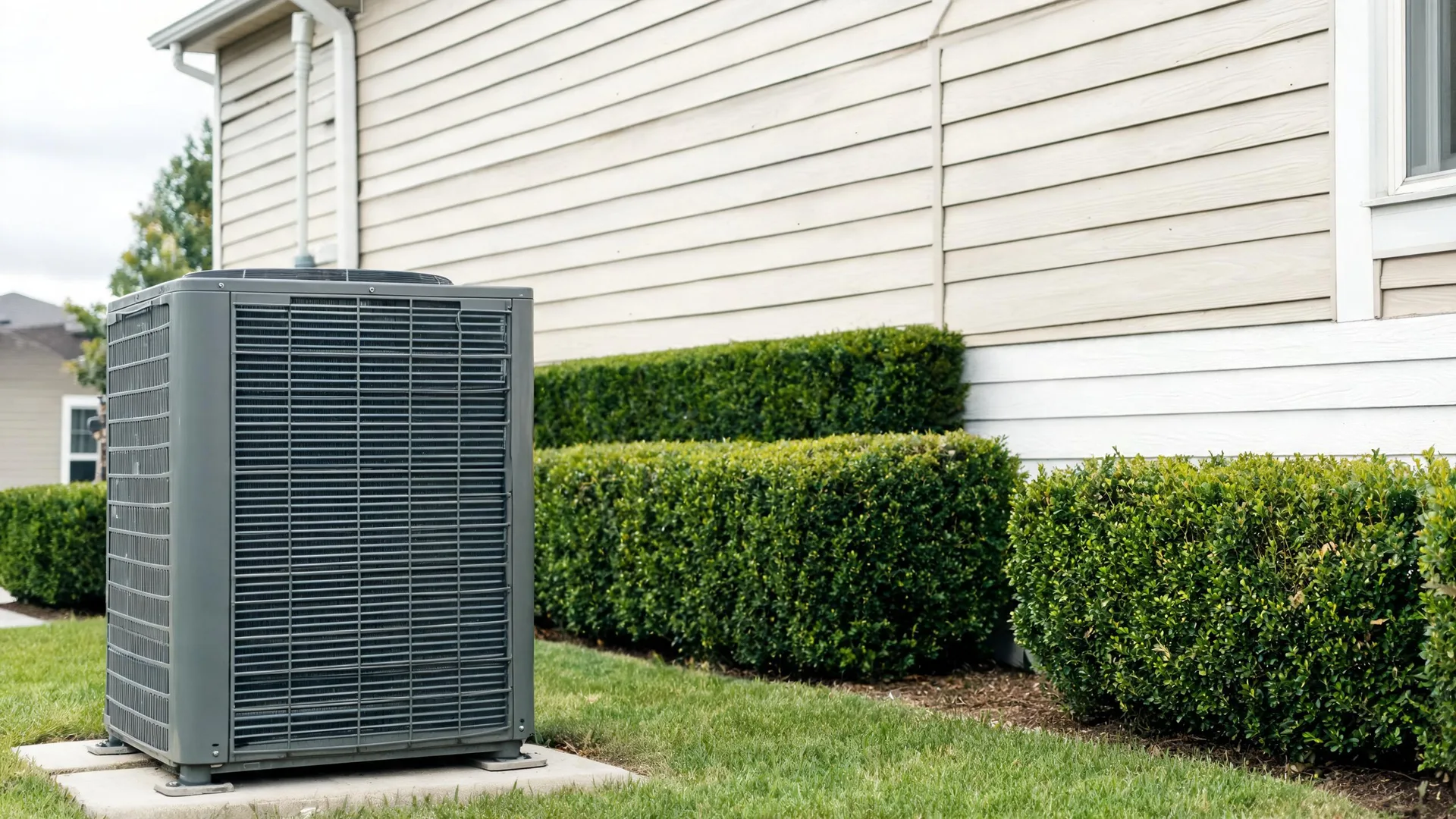
A residential heat pump outdoor unit mounted on a concrete pad next to a house with gray vinyl siding.

Running while something's wrong wears it out faster

A heat pump that's struggling doesn't get worse by sitting there. It gets worse by running while something is already wrong. Low refrigerant is the clearest case. The evaporator coil gets too cold and frost builds on it, and that frost blocks the airflow the compressor needs. Keep it running and liquid refrigerant starts heading back toward a compressor built to handle gas, not liquid. A weak capacitor wears the same way. It still starts the motor, just barely, drawing more current each time, and that extra heat breaks down the windings faster than a clean start would. Blocked airflow does something similar. A dirty coil or closed vents make the system push harder for the same amount of heat, and a compressor working harder runs hotter for longer than it should. None of this looks urgent from inside the house. The air keeps coming, just not quite enough of it, so it's easy to wait. But a struggling part that's still running is wearing out faster than one that's been shut off. That's the reason to get it looked at once something seems off, instead of waiting to see how far it goes.

It's not heating or cooling right, before it quits

A heat pump in trouble usually complains before it gives out. It blows air that's not quite warm enough in the cold months, or not quite cool enough when it's hot. It runs longer than it used to, cycling on and on without shutting off. Sometimes one room falls behind the rest of the house. These are signs the system is struggling to move heat, not a sign it's about to be fine tomorrow.
Sounds and smells mean something specific

A clicking at startup that doesn't resolve into a run cycle points to a failing contactor or capacitor. A hard buzz from the outdoor unit can mean the fan motor is seizing up. A burning smell means wiring or a motor winding is overheating, and that one needs attention right away, not next week. Ice on the outdoor coil in a season when it shouldn't be there usually means refrigerant is low or airflow is blocked somewhere in the system.

Before anyone comes out, there's a few things worth checking yourself. Look at the air filter first. A filter clogged with dust chokes off airflow and can make the whole system struggle, and it's the one thing on this list you can actually fix yourself. Go outside and look at the unit. Clear away leaves, mulch, or anything piled against the cabinet, since the coil needs open air around it to work at all. Check the thermostat batteries if it has any, and make sure it's actually set to call for heat or cool rather than sitting in some other mode by accident. Walk around inside and see if the breaker for the air handler or the outdoor unit has tripped. None of this fixes a bad capacitor or a refrigerant leak, but it rules out the simple stuff before anyone's charged for a service call.

A repair is worth doing when the failed part is separate from the rest of the system, which is most of the time. A capacitor doesn't take the compressor with it when it goes. A failed contactor doesn't mean the coil is next. Replacement starts to make sense when the compressor itself is the problem, since that's the part that can't be swapped out on its own without the cost rivaling a new unit. It also makes sense when the same system keeps failing in different ways, one thing fixed this year and another next year, which usually means it's wearing out generally rather than suffering one bad part. Short of that, let whoever diagnoses it tell you what actually failed before you think about anything bigger.