White two-story houses with wraparound porches and Spanish moss-draped oak trees photographed along a residential street at night.

Heat Pump Repair in Spartanburg, SC

Tell us about the job

Takes about a minute. No obligation.

RepairHeat PumpSpartanburg County, SC
Step 1 of 2

What ZIP code is the job in?

A small problem can become a bigger one

A heat pump low on refrigerant will keep running, and the compressor will keep trying to move a charge that isn't there. That strain is what turns a slow leak into a failed compressor, and a compressor failure takes the whole system down with it.


The signs are worth acting on early

Ice on the outdoor unit, a system that runs constantly without reaching the set temperature, or air that has gone lukewarm all point to something that will not correct itself. Shutting the system down and getting it looked at stops the damage from spreading to parts that were never the original problem.

7 months
October through April, your system heats
5 months
May through September, it cools
33°F
the average winter night it heats against
88°F
the average summer afternoon it cools against
Isometric cutaway illustration of a house showing attic ductwork, an indoor air handler, furnished rooms, and an outdoor condenser unit connected by lines along the exterior wall.
Your system heats October through April and cools May through September.

NOAA nClimDiv, 1991–2020 normals

Half the homes in Spartanburg County were built in 1990 or later.

A heat pump that came with a newer Spartanburg County home still has years left in it, and that's usually a repair, not a replacement.

October asks the most of a heat pump that limped through September

Cooling runs May through September
Heat runs October through April
125 damaging wind events from 2015 to 2024

Spartanburg County gets its share of hail and damaging wind, but a heat pump here fails for the same reasons it fails anywhere else. A capacitor weakens. A contactor pits. The refrigerant charge drops a little every year until the system can't keep up. None of that has anything to do with the storms that pass through. If a tree limb or hail took out the outdoor unit, that's a visible, one-time thing, and it's obvious when it happened. Most calls aren't that. Most of the time the unit is just old enough, or run hard enough, that something ordinary gave out.

Repair it

If your system came with a newer house, it likely has plenty of life left. Repair is usually the right call.

Find a contractor
A man in a cap, dark shirt and tan work pants walks up porch steps toward a green front door, carrying a worn canvas tool bag, with a potted shrub beside the entry.
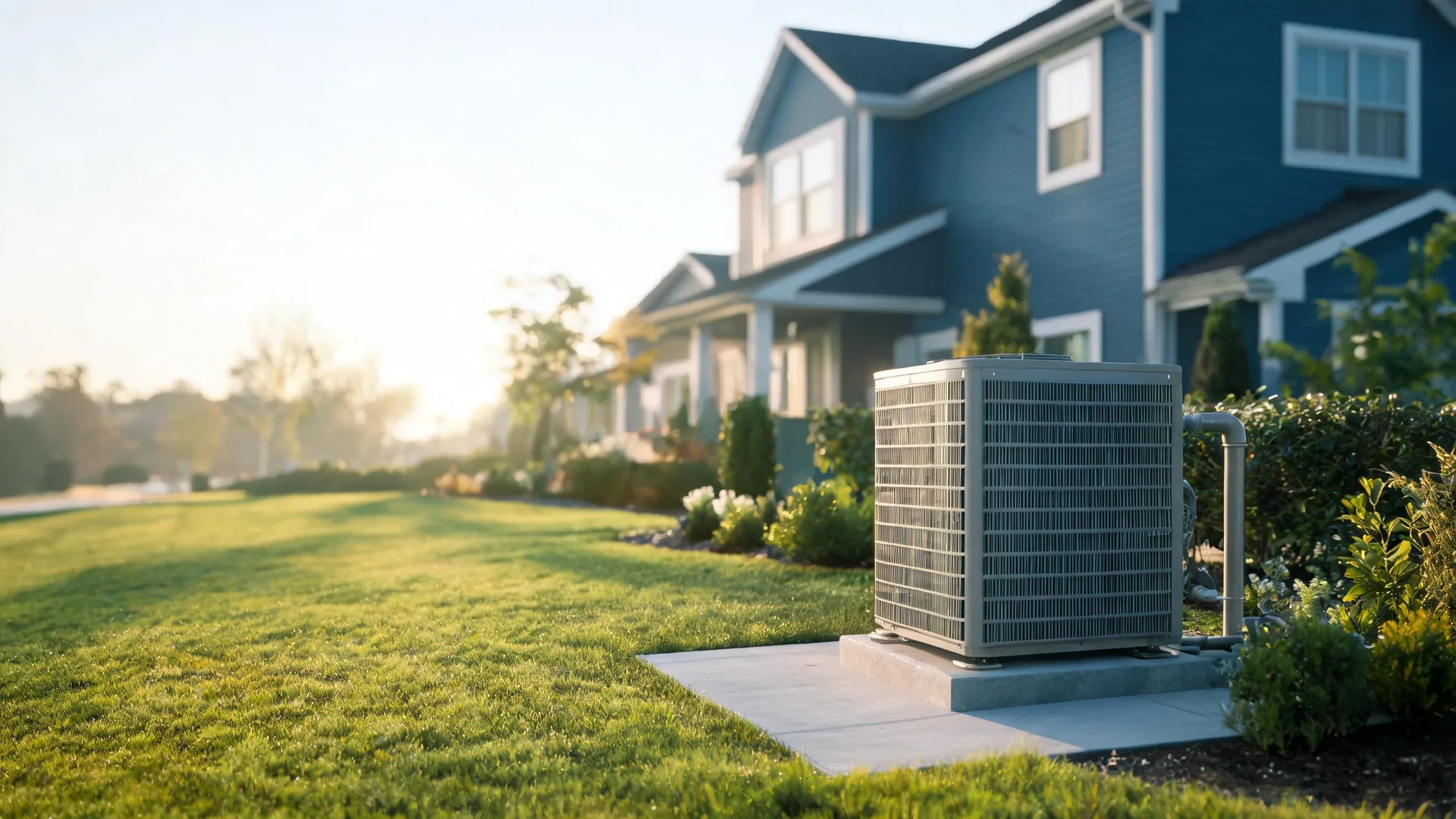
A gray air-source heat pump mounted on a concrete pad next to a house with gray vinyl siding, surrounded by gravel and flanked by green shrubs and white hydrangea flowers.

The system usually tells you before it quits

A heat pump that's struggling doesn't usually just stop. It tells you first. The outside unit runs and runs without the house ever feeling right, warm air in winter or cool air in summer never quite arriving. Short cycles, where it kicks on and off every few minutes instead of running a normal stretch, point to a different problem than a system that runs nonstop and can't keep up. Ice forming on the outdoor coil in heating mode is normal for short stretches during defrost, but ice that stays or builds up means something's wrong with the defrost cycle or the charge. A hissing or bubbling sound near the lines is worth noting, since that's often refrigerant escaping from a leak rather than normal operation. Any burning smell from the air handler, or a breaker that trips more than once, means it's time to shut the system off and get it looked at rather than reset and wait.

The capacitor and contactor wear out on their own schedule

The capacitor holds the charge that gets the compressor and fan motors started, and it weakens over years of cycling on and off until it can't deliver that kick anymore. The contactor is the switch that sends power to the outdoor unit, and its contacts pit a little more every time they close. Neither failure has anything to do with how well the rest of the system was built or installed.

Refrigerant doesn't get used up, it leaks out

A heat pump is sealed at the factory and isn't supposed to need more refrigerant, ever. If the charge is low, there's a leak somewhere in the lines or the coil, usually small enough that it takes months or years to add up to a real problem. Topping it off without finding the leak just means the same call again later.

A heat pump that won't repair cleanly is one where the compressor itself is failing, not a part around it. The compressor is sealed inside the unit and isn't meant to be opened or rebuilt in the field, so when it's the one failing, there's no small fix to make. Listen for a hard start that ends in a hum and a click instead of the system kicking on, or a unit that trips its breaker repeatedly. Those point at the compressor itself, not at a capacitor or a contactor feeding it. A failing compressor is also the one failure that tends to show up only after the system has already put in a lot of years, which is worth knowing before anyone talks about fixing versus replacing it.

A diagnostic call starts outside, at the unit itself. A tech checks the capacitor and contactor first, since those fail often and are quick to test. Gauges go on the lines to check refrigerant pressure against what the system is supposed to be running. Amp readings on the compressor and fan motors show whether something is drawing too much power or straining to start. Inside, the tech checks the air handler and the thermostat's call for heat or cool, since a problem that looks like the outdoor unit sometimes traces back there instead. None of this takes guesswork once the readings are in front of someone who knows what they should say.