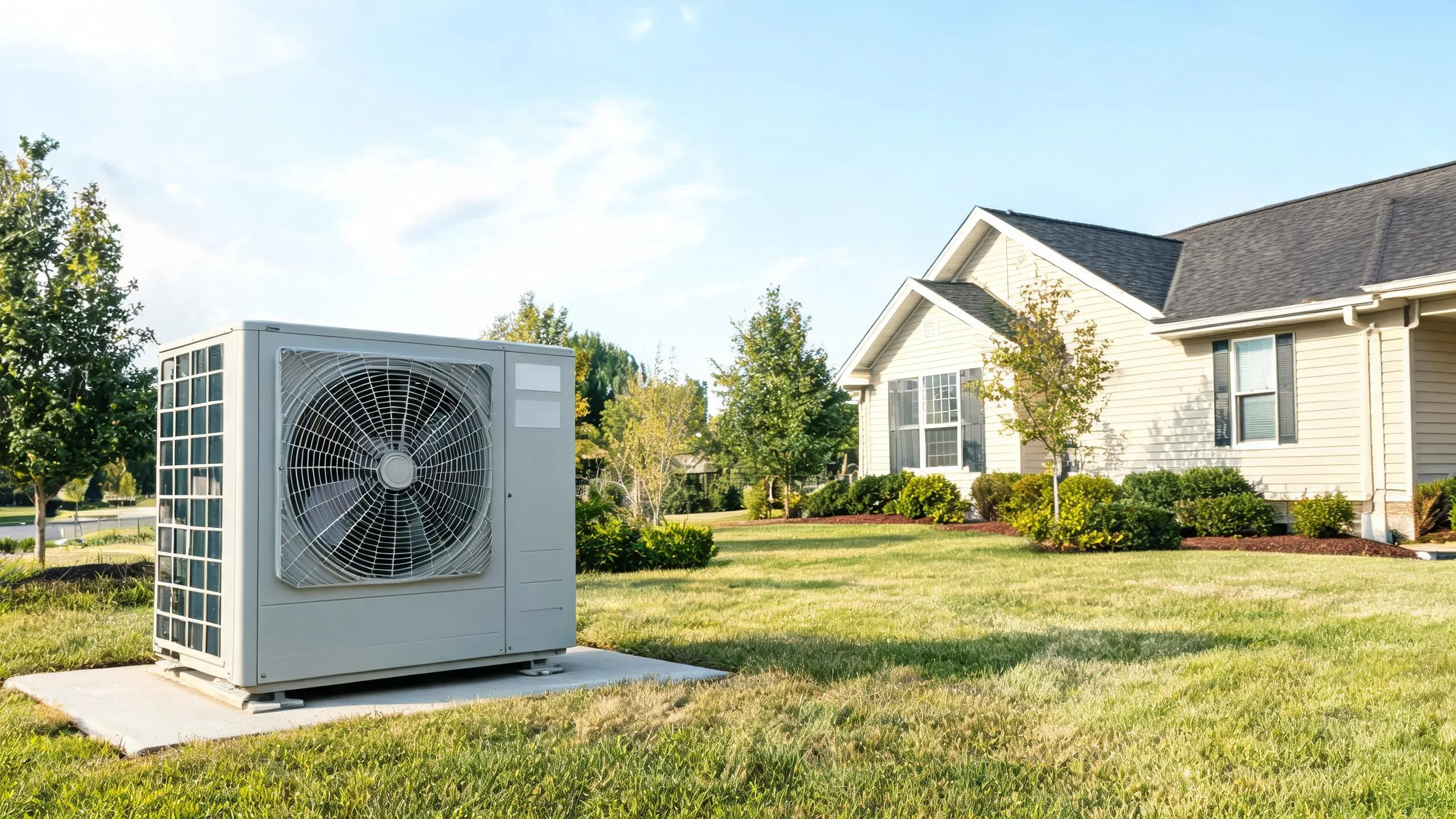
A grey heat pump outdoor unit mounted on a concrete pad in a suburban backyard, with a single-storey house visible behind it.

Heat Pump Repair in Sumter, SC

Tell us about the job

Takes about a minute. No obligation.

RepairHeat PumpSumter County, SC
Step 1 of 2

What ZIP code is the job in?

The reversing valve is often the culprit

A heat pump has to switch between heating and cooling, and the reversing valve is what makes that happen. When it sticks, the system can get stuck blowing cold air in heating mode or just run without really changing temperature at all. It's one of the few parts unique to a heat pump, and it takes a trained eye to tell a stuck valve from a refrigerant problem.


A failing part rarely stays isolated

A weak capacitor makes the fan motor work harder than it should, and a motor that strains like that burns out sooner. Low refrigerant charge from a slow leak does the same thing to the compressor. Letting a small issue sit usually means a bigger repair later, so it's worth having a technician look at odd noises or weak airflow before the system stops working altogether.

5 months
November through March, your system heats
5 months
May through September, it cools
36°F
the average winter night it heats against
90°F
the average summer afternoon it cools against
Isometric line illustration of a cutaway house showing interior rooms with furniture, ceiling ductwork connected to an indoor air handler, and refrigerant lines running to an outdoor condenser unit on a pad.
Your system heats November through March and cools May through September.

NOAA nClimDiv, 1991–2020 normals

A weak capacitor forces the compressor to start under strain every time the heat pump cycles on.

A compressor pushed like that cycle after cycle tends to fail for good, instead of just struggling.

November and May are when a weak heat pump gets found out

Cooling runs May through September
Heat runs November through March
182 damaging wind events from 2015 to 2024

Half the homes in Sumter County were built in 1987 or later. If yours is one of them, the heat pump giving you trouble is likely still well within its working life, and a repair is usually the right call rather than a replacement. That's true whether it's a site-built house or one of the manufactured homes that make up about a fifth of the housing stock here. A reversing valve, a capacitor, a low charge, these are all things a technician can fix on a system that still has years ahead of it. Worth finding out what's actually wrong before you assume the worst.

Sumter County sees more than its share of storms. Have the unit checked after one.

Sumter County logged 235 severe weather events between 2015 and 2024, with damaging wind the most common. Hail and flying debris can damage an outdoor heat pump unit without stopping it outright. If yours has been through a storm and you've noticed odd noises or weak airflow since, get it looked at rather than waiting for it to fail.

Find a contractor
A dark gray heat pump unit mounted on a concrete pad next to a house with gray siding and a stone veneer wall.

What a diagnostic visit actually covers

A technician starts outside at the unit itself. They check refrigerant pressure first, then the temperature split between the air going in and the air coming out. That split tells them whether the system is actually moving heat the way it should. On the electrical side, they check the capacitor's output against what it's rated for and check the compressor's amp draw against its rating plate. A compressor pulling more current than it should is straining even if it's still running fine. Inside, they'll check the blower wheel for dust buildup, check the coil for ice or dirt, and pull the filter to see what kind of airflow the system has actually been getting. If the complaint points to the reversing valve, they'll test it directly. That means applying voltage and listening for the valve to shift, not guessing from symptoms alone. Most of this gets done without opening the sealed refrigerant system. That part stays closed until everything else has been ruled out.

Short cycling wears out the parts that start it

A heat pump that shuts off a couple minutes after starting, then kicks back on, is usually fighting a bad sensor, a dirty coil, or low refrigerant. Each short cycle puts a hard start on the compressor, and repeated hard starts are what take a compressor down for good.

Ice on the outdoor unit in heating mode means something failed

Some frost in cold weather is normal, and the system clears it on its own through a defrost cycle. Ice that stays, or builds up thick, means the defrost control, a sensor, or the reversing valve isn't doing its job.

Before calling anyone, check the thermostat first. Make sure it's set to heat or cool as intended and the temperature is actually set past room temperature, since a setting bumped by accident looks exactly like a broken system. Next, look at the outdoor unit. If it's covered in leaves, ice, or debris, or if something is blocking airflow around it, clearing that space can be enough to fix the problem outright. Check your air filter too. A filter clogged with dust chokes off airflow, and a heat pump starved for air will struggle to heat or cool no matter what else is working right. Last, check the circuit breaker. A heat pump that won't start at all sometimes just needs a tripped breaker reset, though if it trips again right away, that's a sign to stop and call someone rather than resetting it over and over.

A heat pump that's otherwise sound is almost always worth repairing. The compressor is the expensive part, and it's built to outlast the capacitors, sensors and valves around it, which fail first and get replaced on their own without touching the compressor at all. What changes the math is a compressor that's already going. Grinding or rattling from the outdoor unit, or a system that runs constantly without ever reaching temperature, points to the compressor itself, and that's a harder repair to justify on an older system. A technician checking refrigerant pressures and electrical draw can usually tell you which kind of problem you've got before any work starts, which is worth knowing before you decide anything.