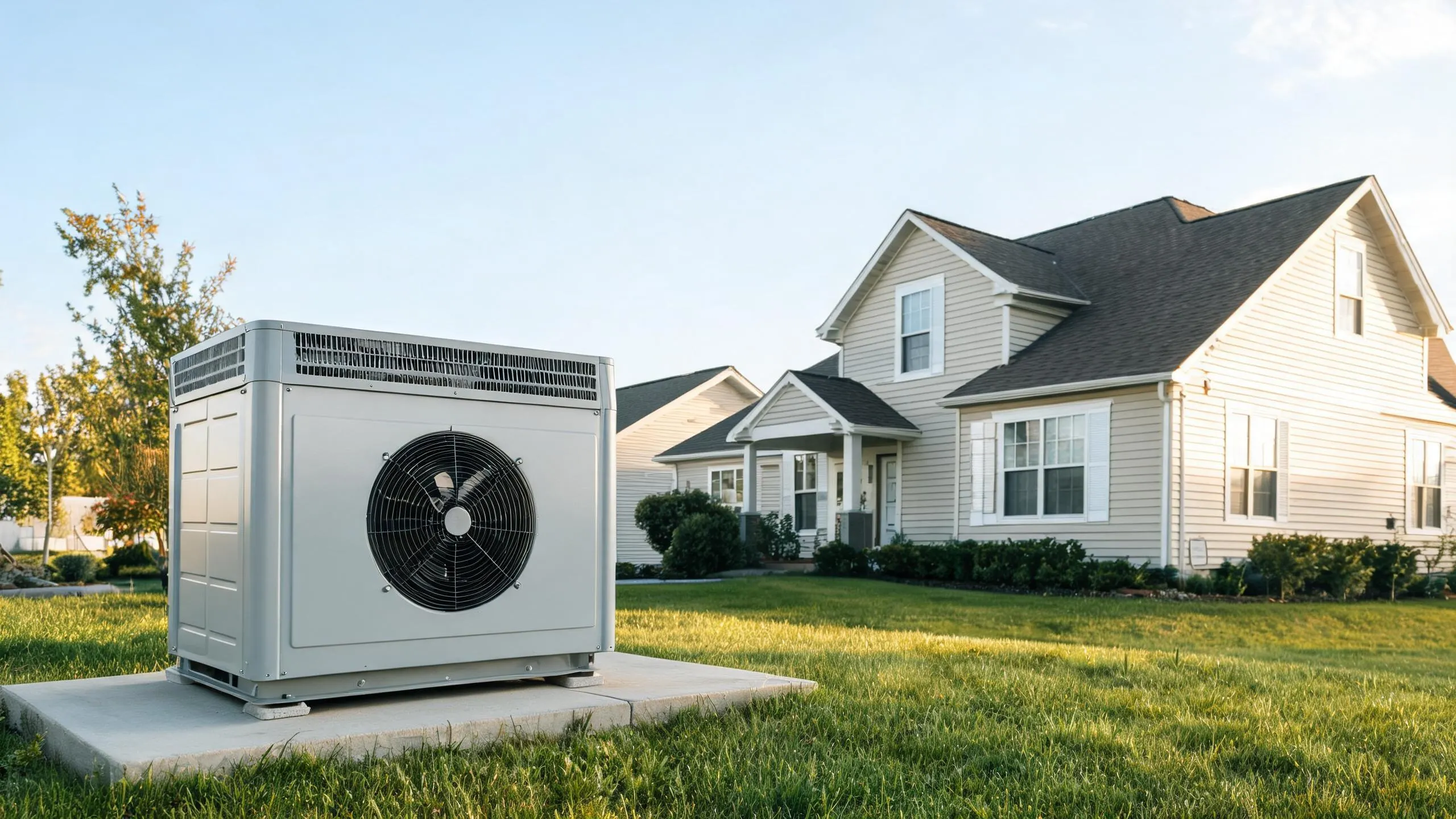






An outdoor heat pump unit mounted on a concrete pad in the front yard of a gray suburban house.

Heat Pump Repair in Walterboro, SC

Tell us about the job

Takes about a minute. No obligation.

RepairHeat PumpColleton County, SC
Step 1 of 2

What ZIP code is the job in?

A heat pump that needs a repair now and then is still worth fixing. What changes the math is the age of the compressor and how often you're calling someone out. A refrigerant leak, a bad capacitor, a failed reversing valve, these are fixable, and fixing them brings the system back to normal. What's harder to justify is sinking money into a compressor that's on its way out, since that's the most expensive part in the unit and a sign the whole system is nearing the end of its life. If a contractor tells you the compressor is failing, ask them straight whether a repair is a real fix or just a delay. The other thing worth watching is how the system is running day to day, not just whether it's broken. A heat pump that short cycles, or that runs constantly without getting the house to temperature, is struggling even when nothing has technically failed yet.

5 months
November through March, your system heats
6 months
May through October, it cools
38°F
the average winter night it heats against
90°F
the average summer afternoon it cools against
Isometric line illustration of a cutaway house showing interior rooms with furniture, ceiling ductwork under a dark shingled roof, and an outdoor condenser unit connected by lines on the right.
Your system heats November through March and cools May through October.

NOAA nClimDiv, 1991–2020 normals

Colleton County took damaging wind 561 times between 2015 and 2024.

A heat pump out here gets pushed by storms, not just heat, so storm strain is worth ruling out before anything else.

Half these homes are older, but that's not why your heat pump is down

Half the homes here were built by 1987
561 damaging wind events from 2015 to 2024
Power costs 14.23 cents a kWh statewide

October is worth paying attention to here. That's the month before heat first gets switched on for real, and it's also the month a weak part tends to announce itself. A heat pump that struggled through storm season in the summer doesn't rest in between, it just sits with whatever damage it took until it's asked to switch modes and run again. If yours has been short cycling or running long without catching up to the thermostat, that's worth a look before November rather than after the first cold night. Waiting until heat is actually needed means waiting in a house that's already cold.

Get it diagnosed properly

Your heat pump works hard here, and that's usually what's behind the problem. Have it diagnosed properly so the fix lasts.

Find a contractor
A man in a cap, dark shirt and olive pants climbs porch steps toward a dark green paneled door, carrying a worn canvas duffel bag, with a potted shrub beside the entry.
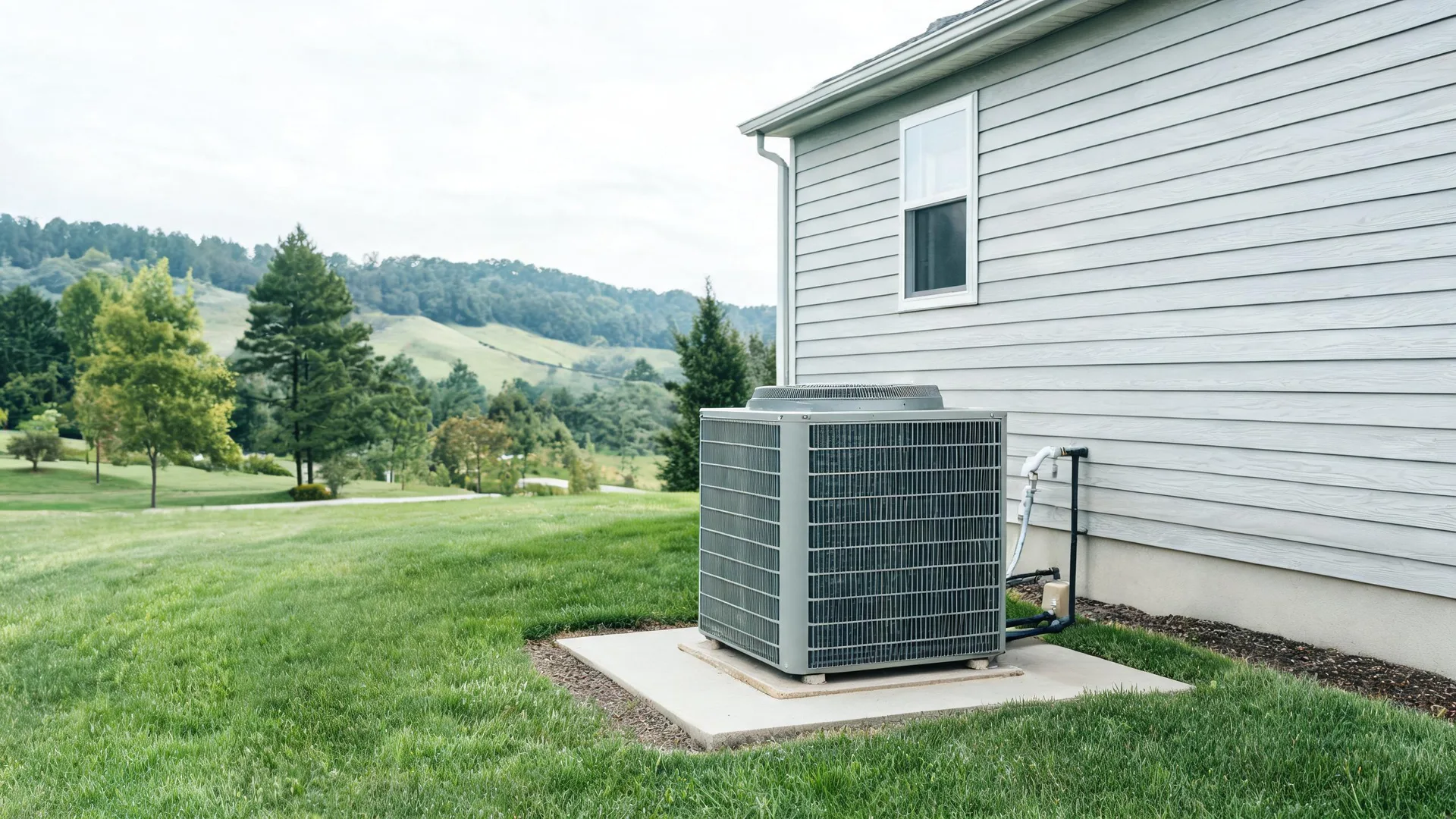
A gray outdoor HVAC unit mounted on a concrete pad beside a house with gray lap siding and a stone foundation.

Rule out the storm before you rule out the age

The outdoor unit sits exposed to whatever comes through, and wind is part of its workload here as much as heat is. If the system has been repaired more than once since summer, ask whoever comes out to check the cabinet, the fan blade and the refrigerant lines for storm damage before they look at anything else. A bent fan blade or a line knocked loose can cause the same short cycling or weak output as a worn part, and treating it as wear when it's storm damage means the real cause never gets fixed.

Blowing air that isn't the right temperature

A heat pump in heat mode should feel warm at the vent, not cool or barely lukewarm. Air that feels wrong for the mode it's in points to low refrigerant, a stuck reversing valve, or a compressor that isn't pulling its weight. It's one of the clearest signs something's off, because you feel it right away standing near the vent.
Noises that weren't there before

A hum or a whir while it runs is normal. A clanking, grinding, or buzzing that starts up is the unit telling you a part has worked loose, a motor bearing is wearing out, or a fan blade is hitting something it shouldn't. Noise usually shows up before a full breakdown does, so it's worth getting someone to listen to it rather than waiting for it to go quiet on its own.

Before you call anyone, check the thermostat first. Make sure it's set to the right mode and a temperature that actually calls for heat or cool, since a setting bumped by accident looks exactly like a broken system. Next, go to the breaker box and look for a tripped switch, both for the indoor air handler and the outdoor unit. Outside, look at the unit itself. Clear away leaves, pine straw or anything piled against the cabinet, since blocked airflow around the coil can cause a lot of the same symptoms as a real failure. Check the air filter too. A filter clogged with dust chokes airflow and can make a heat pump run long or blow weak air even when every part inside is fine. If you've done all that and the problem is still there, it's time to get someone out to look at it.

A diagnostic visit starts outside at the unit itself, not inside at the thermostat. A tech checks refrigerant pressure, looks at the reversing valve, and watches how the compressor and fan behave when the system switches between heat and cool. They'll pull the access panel and check capacitors and electrical connections, since a weak capacitor can mimic other problems that seem to come from inside the house. Airflow gets checked too, both at the return and at the coil, because restricted airflow strains the compressor even when the compressor itself is fine. If the system has been repaired before, a good tech asks what was done and when, since a part that keeps failing is usually a symptom of something going wrong upstream of it. The visit should end with a straight answer on what's wrong, what it takes to fix it, and whether that fix is worth it given the age of the unit.