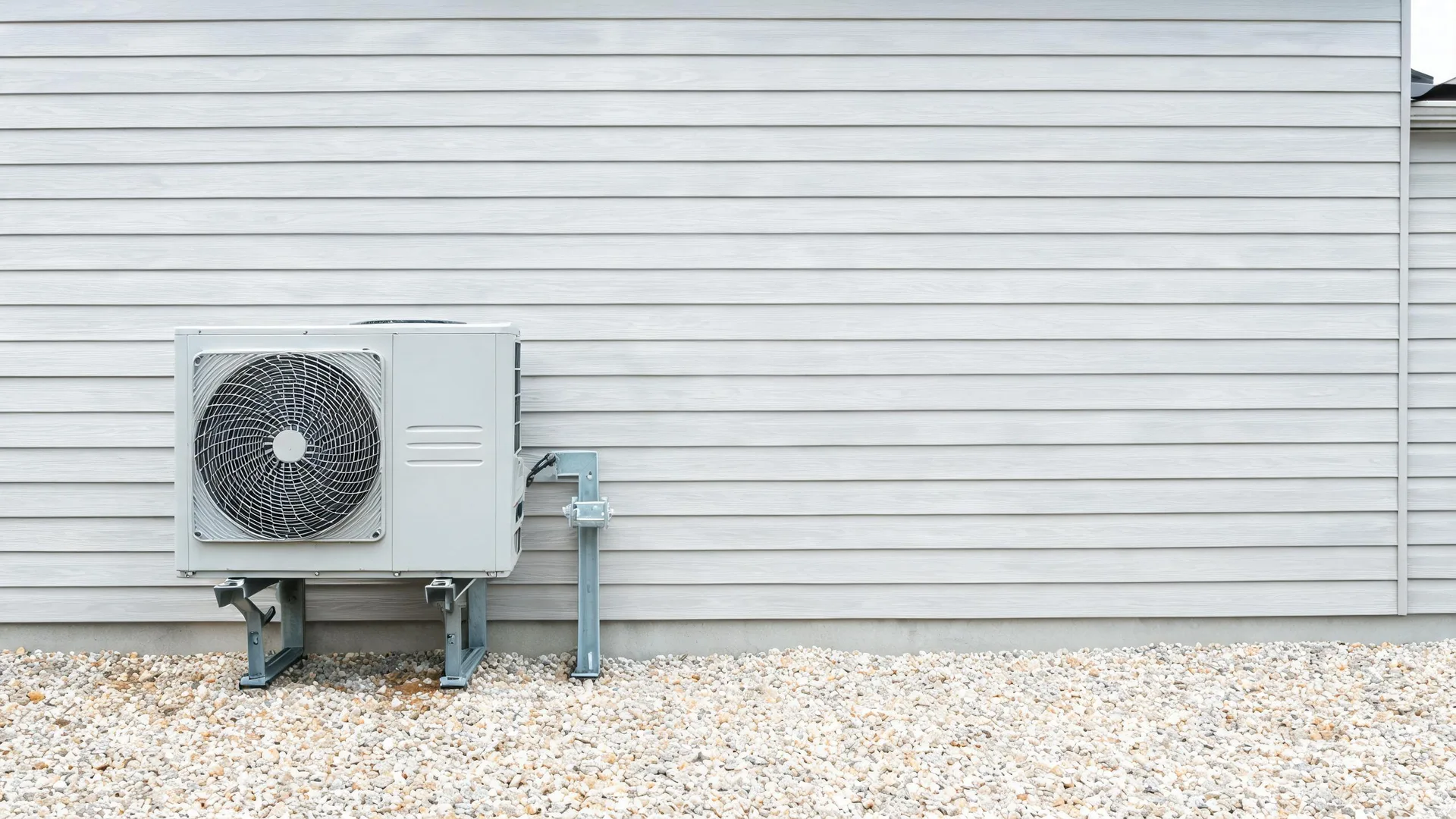
A grey air-source heat pump outdoor unit mounted on a concrete pad next to a modern white-rendered residential house.

Heat Pump Repair in Winnsboro, SC

Tell us about the job

Takes about a minute. No obligation.

RepairHeat PumpFairfield County, SC
Step 1 of 2

What ZIP code is the job in?

The reversing valve gets stuck

A heat pump switches between heating and cooling with a reversing valve, and that valve is the part most likely to fail. It can stick in one position, so the system blows cold air when it should heat, or it hums without actually switching over. Once that valve sticks, the whole unit is working against itself.


Frost means something isn't right

Some frost on the outdoor coil in cold weather is normal, and the unit should melt it off on its own through a defrost cycle. If ice keeps building up instead, the defrost control board, a sensor, or the reversing valve itself may be the cause. Left alone, that ice blocks airflow across the coil and the system has to work harder to do anything.

5 months
November through March, your system heats
5 months
May through September, it cools
34°F
the average winter night it heats against
90°F
the average summer afternoon it cools against
Isometric line illustration of a cutaway house showing interior rooms with furniture, a furnace or air handler with overhead ductwork, and an outdoor condenser unit connected by lines outside the wall.
Your system heats November through March and cools May through September.

NOAA nClimDiv, 1991–2020 normals

Heat here turns on in November.

October is the month to get a heat pump looked at, before the cold puts weight on a weak part.

Half the homes here were built by 1984, and that's not a problem for this repair

Half the homes here were built by 1984
131 damaging wind events from 2015 to 2024
Power costs 14.23 cents a kWh statewide

Fairfield County has had damaging wind 131 times between 2015 and 2024. That's a county problem, not a heat pump problem. Wind can knock out power, and a heat pump that loses power mid cycle usually just needs to be switched back on once service returns. It doesn't need a reset code or a visit for that. What actually wears out in a heat pump here is the same as anywhere else. A stuck reversing valve. A defrost control board that's stopped doing its job. A capacitor going weak. Nothing about the wind in this county changes what breaks or how it gets fixed.

Get it looked at early

Problems tend to show up in the first weeks of the season, when the load hits a part that was already weak.

Find a contractor
A man in a cap, dark work jacket and tan pants climbs porch steps toward a green front door, carrying a worn tool bag in his right hand, with a potted shrub beside the entry.
A residential heat pump outdoor unit mounted on a concrete pad next to a house with gray vinyl siding.

A small problem now is a bigger one later

A weak part rarely fails all at once. A capacitor starts out holding a little less charge than it should, and the compressor draws harder to get moving on every cycle. The motor windings take that extra heat each time it starts, and weeks of that adds up. A reversing valve that's starting to stick will still complete the switch most of the time, just slower, with more hesitation in the hum before it catches. Ice on the coil works the same way. A little frost melts off fine, but if the defrost cycle stops clearing it all the way, the next cycle starts from a worse spot, and the one after that worse still. The system keeps running because that's what it's built to do, not because nothing's wrong. By the time it won't start at all, the part behind it was usually giving warning for days.

Warm air that isn't warm enough

A heat pump in heating mode should put out air that feels warm at the vent, not just a little better than room temperature. If the air moving is barely warm, the system may be stuck running the backup heat strips instead of the compressor, or the charge is low. Either way it's working harder to do less.

Short cycling is a symptom, not quirk

A heat pump that shuts off a few minutes after starting, then kicks back on, is shutting down because something trips a safety switch. Could be airflow blocked by a dirty filter, could be a pressure problem from a refrigerant leak. It won't fix itself by running more.

Before anyone comes out, check the filter. A clogged filter starves the system of airflow and can trip the same safety switch that causes short cycling, and it's the one thing on this list anyone can fix on their own. Next, look at the outdoor unit. Clear away leaves, mulch, or anything piled against it, since the outdoor coil needs air moving through it to do its job in either mode. Check that nothing is blocking the vents or returns inside the house too. Then check the thermostat batteries if it uses them, and make sure it's actually set to heat and not fan only. None of this fixes a stuck reversing valve or a bad capacitor, but it rules out the simple stuff first.

A diagnostic visit starts outside at the unit itself, not with a clipboard of questions. A tech checks the refrigerant pressure on both the high and low side, because that number tells them if the charge is right or if there's a leak somewhere in the line. They'll pull the electrical cover and test the capacitor under load, since a capacitor can read fine sitting still and still fail the moment the compressor asks it to work. The reversing valve gets checked by feel as much as anything, listening for how it sounds when it switches and whether the coil actually gets cold or hot like it should. Inside, they'll check the air temperature at the vent against the air coming back in, because that difference says more about how the system is actually performing than any single part reading does. None of this takes guesswork once the gauges are on, but every step has to happen in order, because a wrong reading early on can send the whole diagnosis the wrong way.