Low-angle view across a lawn with pine straw in the foreground toward a single-story brick house with a dark shingled roof and covered porch, beside a large moss-draped oak and pine trees under an overcast sky.

Heat Pump Repair in Lexington, SC

Tell us about the job

Takes about a minute. No obligation.

RepairHeat PumpLexington County, SC
Step 1 of 2

What ZIP code is the job in?

Check the thermostat and the breaker first

Make sure the thermostat is set to heat or cool and not sitting in a mode it got bumped into. Check the breaker panel for the outdoor unit and the air handler, since a tripped breaker will shut the whole system down and looks like a bigger problem than it is. Look at the outdoor unit itself and clear away any leaves, dirt or ice blocking the coil, because airflow across that coil is what lets the system move heat at all.

What you find tells the tech what to bring

If the outdoor fan isn't turning but the unit is getting power, that points to a capacitor or motor problem. If the indoor unit blows air that never changes temperature, that's different from the whole system doing nothing, and it usually means a refrigerant or valve issue rather than an electrical one. Telling the tech what you saw, whether the outdoor unit is running at all, whether you hear it click and stop, whether ice has built up on the coil, means less guessing and a faster diagnosis once they're on site.

5 months
November through March, your system heats
5 months
May through September, it cools
36°F
the average winter night it heats against
91°F
the average summer afternoon it cools against
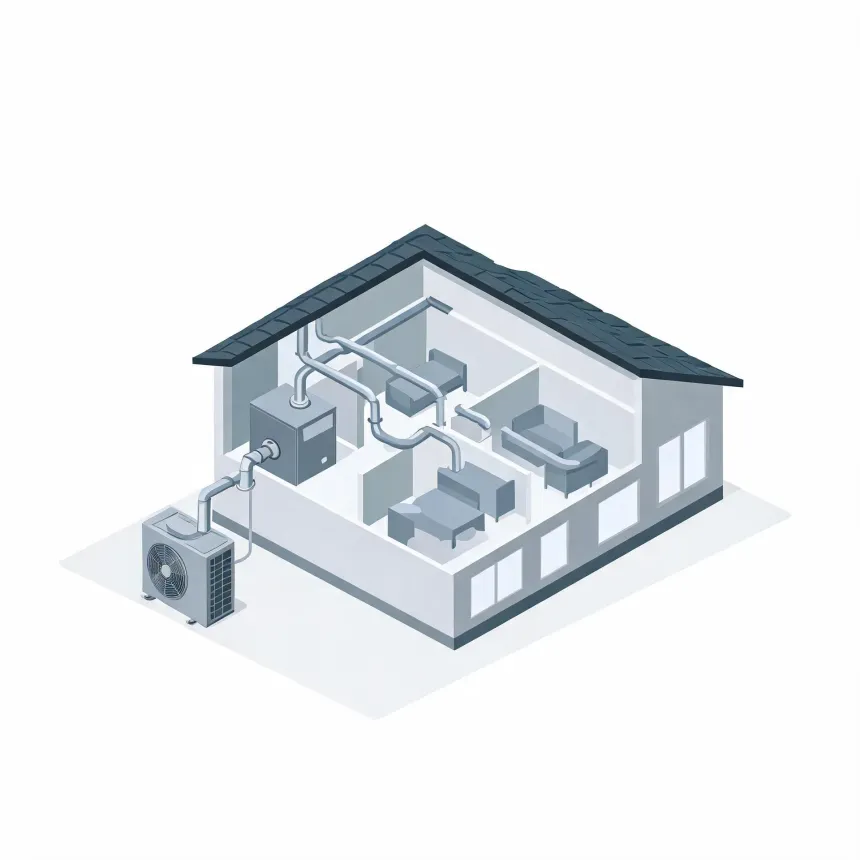
Isometric cutaway illustration of a single-story house showing an indoor air handler, branching ductwork through rooms with furniture, and an outdoor condenser unit connected by a line outside the wall.
Your system heats November through March and cools May through September.

NOAA nClimDiv, 1991–2020 normals

Heat here switches on in November, after the system has sat on cooling or idle since September.

The first cold snap is when a weak igniter or a failing blower motor finally gets tested, so October is the time to get it looked at.

Lexington's storms and power outages put a heat pump through more than most, and that's usually why it needs a repair

325 damaging wind events from 2015 to 2024
74 hail events from 2015 to 2024
Power costs 14.23 cents a kWh statewide
Half the homes in Lexington County were built in 1993 or laterA heat pump in one of them has plenty of working life left to repair.

Lexington County logged 434 severe weather events between 2015 and 2024, and damaging wind was behind most of them. The outdoor unit sits right where that wind and hail land. Hail dents coil fins and bends the cabinet in ways you can't always see from a glance. A heat pump can take a hit like that and keep running for months before it shows up as a refrigerant leak or a noise that wasn't there before. If a storm has come through and the outdoor unit took wind-blown debris or hail, it's worth having someone look at the coil and the cabinet even if the system still heats and cools fine right now.

Get the outdoor unit checked before storm wear turns into a breakdown

Wind and hail damage don't always show up right away. If the system's been running fine, a check now can catch a dented coil or a strained part before it fails on the next cold morning or hot afternoon.

Find a contractor
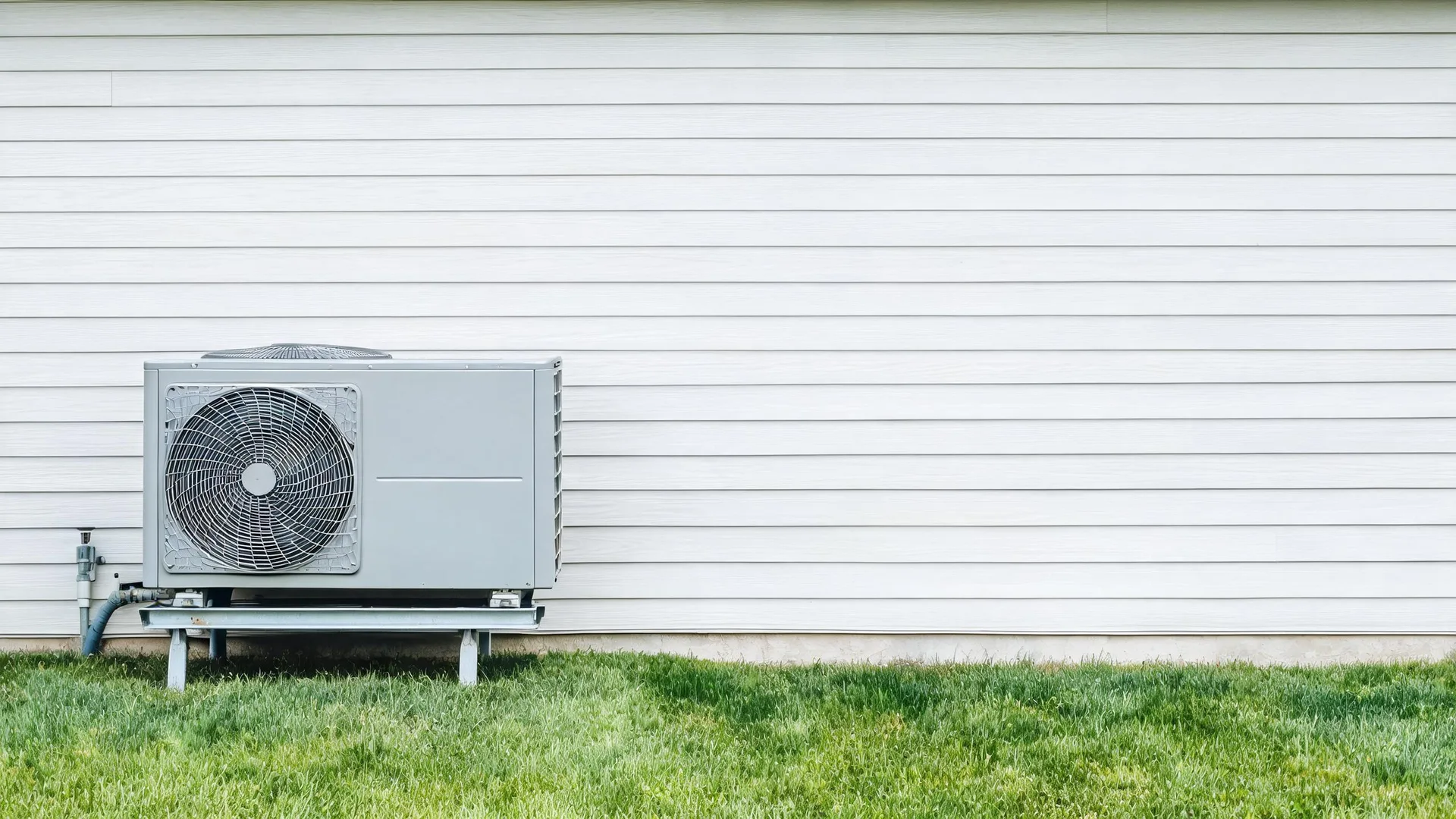
A white mini-split heat pump outdoor unit mounted on a concrete pad beside a gray-sided house, surrounded by gravel and green shrubs.

The sound it makes today is the part that fails tomorrow

A heat pump doesn't get a season off. It runs for heat, then runs again for cooling a few months later, and the compressor inside is doing the same work either direction. Most of what fails shows up first as a sound or a smell, not a breakdown. A squeal from the outdoor fan motor means the bearing is going. A burning smell from the air handler means something electrical is overheating, maybe a motor winding, maybe a connection at the contactor. A clicking that repeats, the system trying to start and failing, points to a capacitor that can no longer deliver the jolt the compressor needs. None of these fix themselves. A sound that shows up on a mild day gets worse on the day you need the system most.

A weak run doesn't stay weak

A compressor straining against low refrigerant or a failing capacitor pulls more current to do the same job. Left alone, that strain turns into a tripped breaker or a burned-out motor instead of a simple part swap.

Ice is a sign, not the problem

A reversing valve stuck in the wrong position or a dirty coil can let frost build up on the outdoor unit. Running the system through that ice packs it in tighter and blocks airflow completely, instead of letting a tech clear it and find what caused it.

Most heat pump failures trace back to a handful of parts. The capacitor that kicks the compressor and fan motors into motion weakens over time and eventually can't deliver the jolt they need to start. The reversing valve, which switches the system between heating and cooling, can stick from corrosion or a bad solenoid and leave you stuck in one mode. Refrigerant doesn't get used up, so if the charge is low, it's leaking from a joint or a coil somewhere, and the system will keep running while it does less work. Contactors pit and burn from years of making and breaking the circuit until they stop closing reliably. A failing defrost control board will leave frost on the outdoor coil to keep building instead of clearing it on schedule. Most of these show themselves as the system running longer than it used to, or not quite getting the house to temperature, long before they cause a full breakdown.

A diagnostic visit starts outside, at the unit itself. A tech will check the pressures on both the suction and liquid lines, because that tells them whether the charge is right and whether the compressor is moving refrigerant the way it should. They'll check the capacitor's output against what it's rated for, since a capacitor can still run a motor weakly right up until it can't. Amp draw on the compressor and fan motor gets checked too, because a motor pulling more current than it should is a motor heading toward failure. Inside, they'll look at the air handler for a frozen coil, a clogged filter, or a blower wheel caked with dust, any of which chokes off airflow the same way. They'll also run the system through a heating and cooling cycle to watch the reversing valve switch, since a valve that hesitates or doesn't fully seat shows up right there. By the time they're done, they know which part is failing and why, not just that something is.