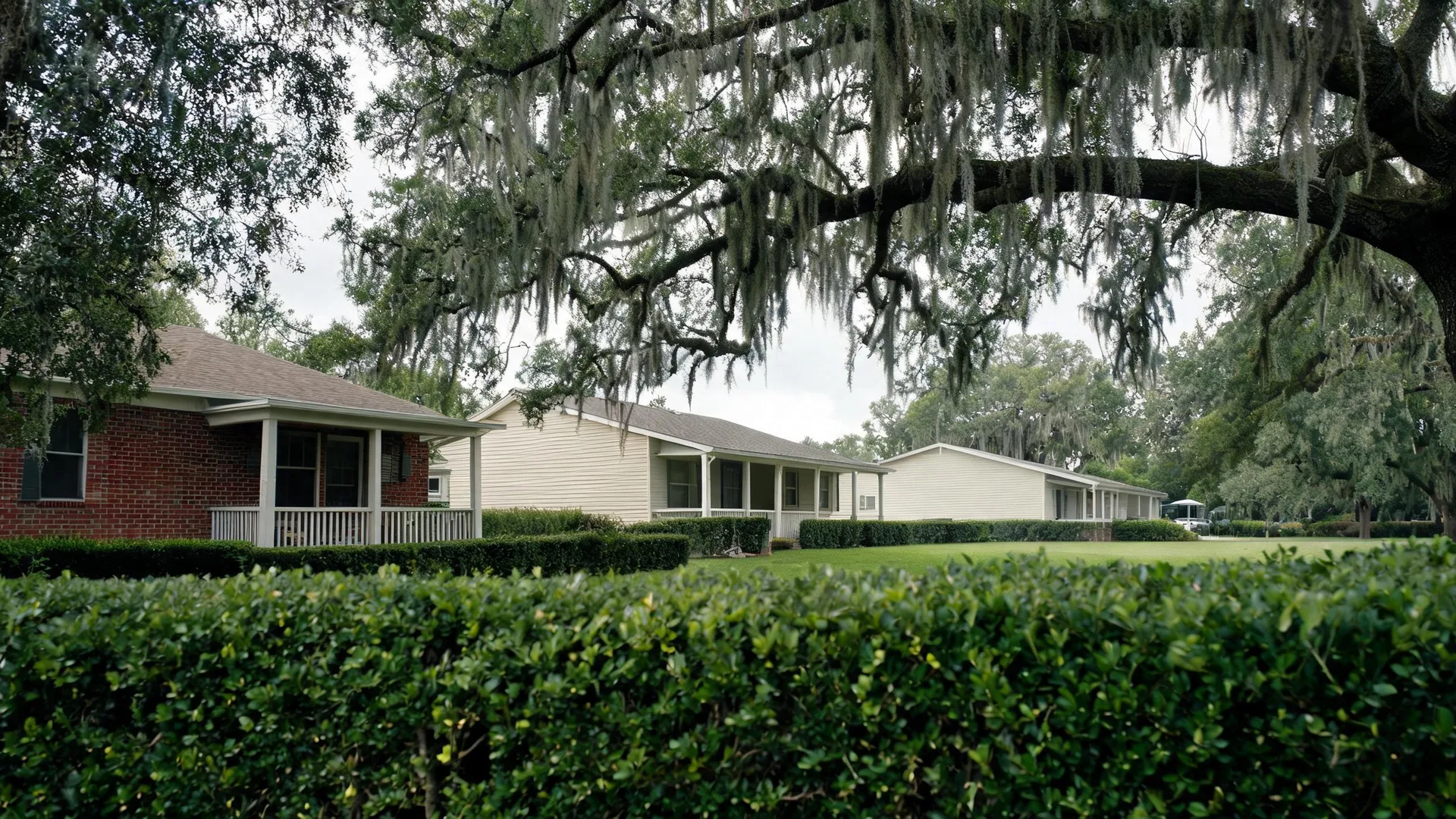
Single-story buildings with pale siding and one brick section with a covered porch stand behind a trimmed hedge and lawn, under a large moss-draped oak branch.

Heat Pump Repair in Rock Hill, SC

Tell us about the job

Takes about a minute. No obligation.

RepairHeat PumpYork County, SC
Step 1 of 2

What ZIP code is the job in?

Warm air in winter means it's stuck in cooling mode

A heat pump has a reversing valve that switches it between heating and cooling. When that valve sticks, the system keeps blowing cold air even though the thermostat is set to heat. If the air at the vents feels no warmer than the room, that valve or its solenoid is worth having checked before the weather gets worse.


Ice on the outdoor unit isn't always a problem, until it doesn't melt

Heat pumps frost up in cold weather and run a defrost cycle to clear it. That's normal. What's not normal is ice that stays thick or never melts back, which points to a failed defrost control, a low refrigerant charge, or a fan that's not moving air the way it should. Left alone, that ice blocks airflow and the system has to work harder to do anything at all.

7 months
October through April, your system heats
5 months
May through September, it cools
33°F
the average winter night it heats against
89°F
the average summer afternoon it cools against
Isometric line illustration of a cutaway house showing interior rooms with furniture, ceiling ductwork connected to an indoor air handler, and refrigerant lines running to an outdoor condenser unit on a pad.
Your system heats October through April and cools May through September.

NOAA nClimDiv, 1991–2020 normals

Half the homes in York County were built in 2000 or later.

A heat pump that came with a house built in the last couple decades usually hasn't hit the end of its working life, so repair is worth a call before replacement.

Wind and hail hit York County often. It's still a reversing valve, a sensor, or a control board, same as anywhere else.

78 damaging wind events from 2015 to 2024
34 hail events from 2015 to 2024
Power costs 14.23 cents a kWh statewide

A system that's cycling on a bad part doesn't fail quietly. A compressor starting against a weak capacitor draws more current than it should every single time it kicks on, and that heat builds up in the windings a little more with each cycle. A reversing valve that's partly stuck makes the compressor push against pressure it shouldn't have to fight, which is a different kind of strain than the valve problem itself. Ice that isn't clearing blocks airflow across the outdoor coil, so the compressor keeps running while getting less of the heat exchange it needs, and it runs hotter and longer to make up for it. None of this shows up on the thermostat. The house still feels off in the same way it did on day one, but the parts underneath are absorbing damage the whole time it keeps running like that.

Repair it

If your system came with a newer house, it likely has plenty of life left. Repair is usually the right call.

Find a contractor
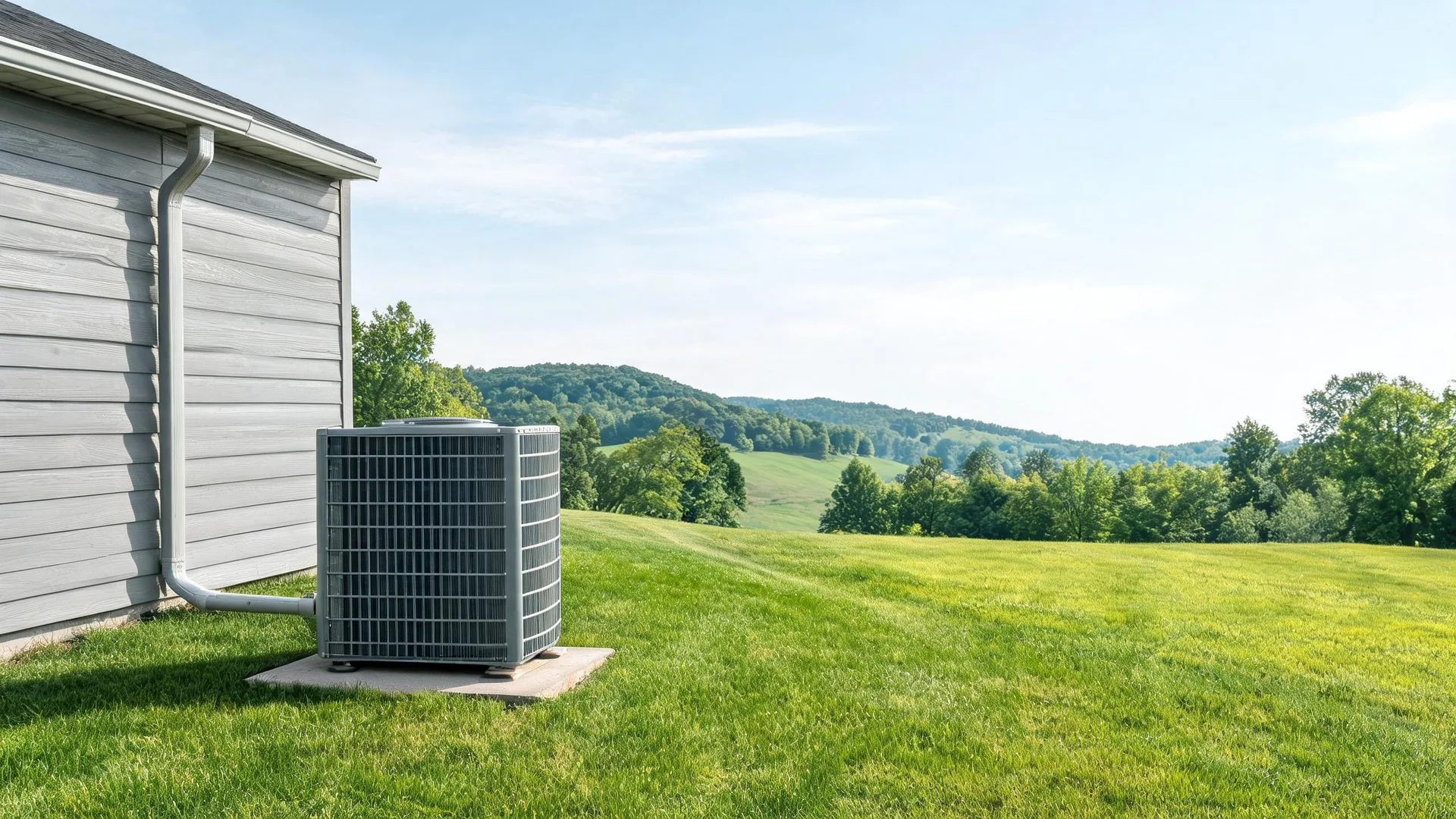
A dark gray heat pump unit mounted on a concrete pad next to a house with gray siding and a stone veneer wall.

A newer system is worth fixing, not replacing

If the heat pump came with the house and the house is newer, repair makes sense before anyone talks about replacing it. A reversing valve, a defrost control, a failed capacitor, these get fixed on their own. None of them means the system is done.

Check the thermostat settings first

Make sure the thermostat is actually set to heat and the fan is set to auto, not on. A fan left running constantly pulls room-temperature air through the vents between cycles, and that can feel like the system isn't heating when it actually is working fine.

Look at the outdoor unit and the breaker

Walk outside and see if the outdoor unit is running, iced over, or silent. Check that nothing is blocking it and that the breaker for it hasn't tripped. If the indoor side runs but the outdoor unit never comes on, that's worth telling the tech before they arrive, it narrows down what they're looking at.

A contactor pits and burns a little more each time it pulls in to start the compressor, and after enough cycles it sticks or stops closing at all. A capacitor loses its charge slowly the same way, so the compressor or fan motor strains to start instead of failing outright. Neither of those is about the system's age so much as how many times it has cycled on and off. Refrigerant itself doesn't wear out or get used up, so a low charge almost always points to a leak at a fitting, a coil, or a line, not something that comes from years of normal running. The outdoor unit takes the weather every day, so dirt and debris packed against the coil or a fan motor that's starting to struggle will show up as a lack of heat before anything indoors does. These are parts failing on their own, not the system reaching the end of its life.

A heat pump that won't be worth fixing usually tells you in more than one way at once. One repair on its own, a capacitor, a defrost board, a reversing valve, doesn't say much either way. The compressor is the part that matters most, because it's the one part a tech can't swap out for cheap, and a compressor that's failing or already gone usually means the rest of the system isn't far behind it. Age matters less than what's actually broken and what else is starting to go with it. A system that's needed a few unrelated repairs over a couple years is telling you something different than one that's run fine for a decade and just had its first problem.